Bedtime Routine Charts for Kids: Free Printable Templates That End Bedtime Battles
Visual step-by-step charts that help children wind down, follow their evening routine, and fall asleep independently
Why Bedtime Is the Hardest Transition of the Day
Bedtime is when everything falls apart. Your child was calm five minutes ago, and now they need water, another story, one more hug, and suddenly remember a school project due tomorrow. You are not alone — studies show that 25-50% of preschoolers and 40% of school-age children experience bedtime resistance at some point.
The core problem is not defiance. Children struggle with transitions, especially from stimulating activities to quiet rest. Their brains are still developing the executive function needed to sequence multi-step routines. A bedtime routine chart externalizes this sequence into a visible, predictable path from playtime to pillow.
When a child can see what comes next — bath, then pajamas, then teeth, then story, then lights out — the anxiety of "what happens now?" disappears. The chart becomes the authority, not you. Instead of arguing with a parent, the child follows a visual guide they helped create. Research from the American Academy of Pediatrics confirms that children with consistent bedtime routines fall asleep faster, wake less during the night, and sleep 30-60 minutes longer overall.
30-60 min
more sleep per night with a consistent bedtime routine
American Academy of Pediatrics
73%
of parents report fewer bedtime battles after introducing a visual chart
Journal of Family Psychology
3-5
ideal number of bedtime steps for toddlers (ages 2-4)
National Sleep Foundation
Age-Appropriate Bedtime Routine Checklist
Toddlers (Ages 2-3) — 3-4 steps
- Bath time (or wash hands and face)
- Put on pajamas (with help)
- Brush teeth (parent helps)
- Read one story together
- Goodnight hug and lights out
Preschoolers (Ages 4-5) — 5-6 steps
- Pick up toys and tidy room
- Bath or shower
- Put on pajamas independently
- Brush teeth (supervised)
- Choose and read two stories
- Use the potty one last time
- Goodnight routine (hug, kiss, lights out)
School-Age (Ages 6-8) — 6-8 steps
- Prepare school bag for tomorrow
- Lay out clothes for the morning
- Take a bath or shower
- Put on pajamas
- Brush and floss teeth
- Read independently for 15-20 minutes
- Lights out at agreed time
Tweens (Ages 9-12) — self-managed with chart
- Finish homework and pack school bag
- Lay out clothes for tomorrow
- Shower and personal hygiene
- Brush and floss teeth
- Read or journal for 15-30 minutes
- Devices off 30 minutes before bed
- Lights out independently
How to Create a Bedtime Routine Chart That Actually Works
- 1
Involve your child in choosing the steps
Sit down together and list what needs to happen between dinner and lights-out. When children help design their own bedtime routine chart, they feel ownership and are far more likely to follow it. Let them pick the order where possible — bath before pajamas or pajamas before teeth.
- 2
Keep it visual for younger kids
For toddlers and preschoolers (ages 2-5), use picture-based charts with photos or illustrations for each step. Words alone do not work for pre-readers. A visual bedtime routine toddler chart with real photos of your child doing each task is the most effective approach.
- 3
Print and laminate for durability
Download a free printable bedtime routine chart and laminate it so your child can check off steps with a dry-erase marker each night. The physical act of marking each task as done gives a sense of progress and accomplishment.
- 4
Post it where the routine starts
Hang the chart at your child's eye level in the bathroom or bedroom — wherever the first step happens. If bath is first, put it near the bathroom. The chart should be impossible to miss when the routine begins.
- 5
Be consistent for two weeks
It takes 10-14 days for a new routine to feel natural. Stick with the same steps in the same order every night, even on weekends. After the habit forms, you will find your child checking the chart on their own without reminders.
- 6
Adjust as your child grows
Review the bedtime routine chart every 3-6 months. As children mature, add steps (like independent reading) and remove ones they have outgrown (like parent-assisted teeth brushing). A sleep routine chart for kids should evolve with them.
Free Printable Bedtime Routine Chart Templates
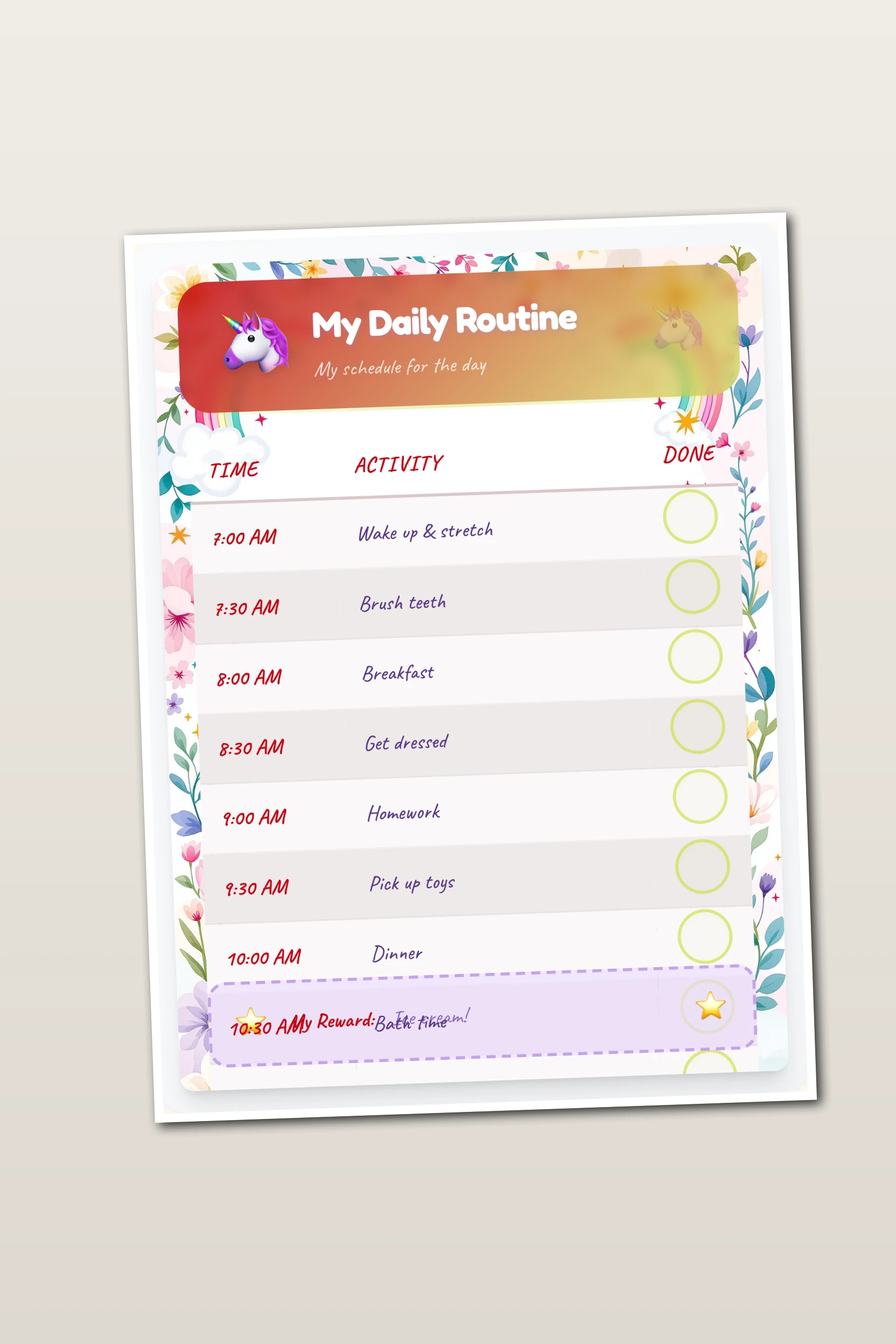
Glossy Unicorn Routine Board
Glossy Unicorn Routine Board — a 3d clay style routine schedule with unicorn theme. Unique colors and layout for kids.
Dreamy Dinosaur Flow Chart
Dreamy Dinosaur Flow Chart — a 3d clay style routine schedule with dinosaur theme. Unique colors and layout for kids.
Harmony Princess Time Planner
Harmony Princess Time Planner — a 3d clay style routine schedule with princess theme. Unique colors and layout for kids.
Screens Are the #1 Bedtime Routine Killer
Blue light from tablets, phones, and TVs suppresses melatonin production by up to 50%, making it physically harder for your child to feel sleepy. The National Sleep Foundation recommends all screens off at least 30-60 minutes before bed. Replace screen time with reading, drawing, or quiet play — and make "devices off" an explicit step on your night routine chart.
Why Visual Charts Work Better Than Verbal Reminders
If you have ever repeated "brush your teeth" five times in a row, you already know that verbal instructions fade instantly from a child's working memory. A bedtime routine chart works because it is always visible, always patient, and always consistent. It never raises its voice or changes the rules.
Child development research shows that visual cues activate different memory pathways than spoken words. When a child sees a picture of toothbrushing on their bedtime checklist, it triggers a learned motor sequence — they know what to do without being told. This is why a visual bedtime routine for toddlers is dramatically more effective than a spoken list of instructions.
There is also a powerful psychological effect: the chart removes you from the conflict. You are no longer the person telling them what to do — you are the helper pointing to the chart. "What does your chart say comes next?" is a question, not a command. This small shift reduces power struggles by turning the routine into a shared reference rather than a parental demand.
Download Your Free Bedtime Routine Chart
Choose from unicorn, dinosaur, princess, ocean, space, and fairy themes. Print, laminate, and start tonight.
Browse Routine TemplatesFrequently Asked Questions About Bedtime Routine Charts
Related Articles
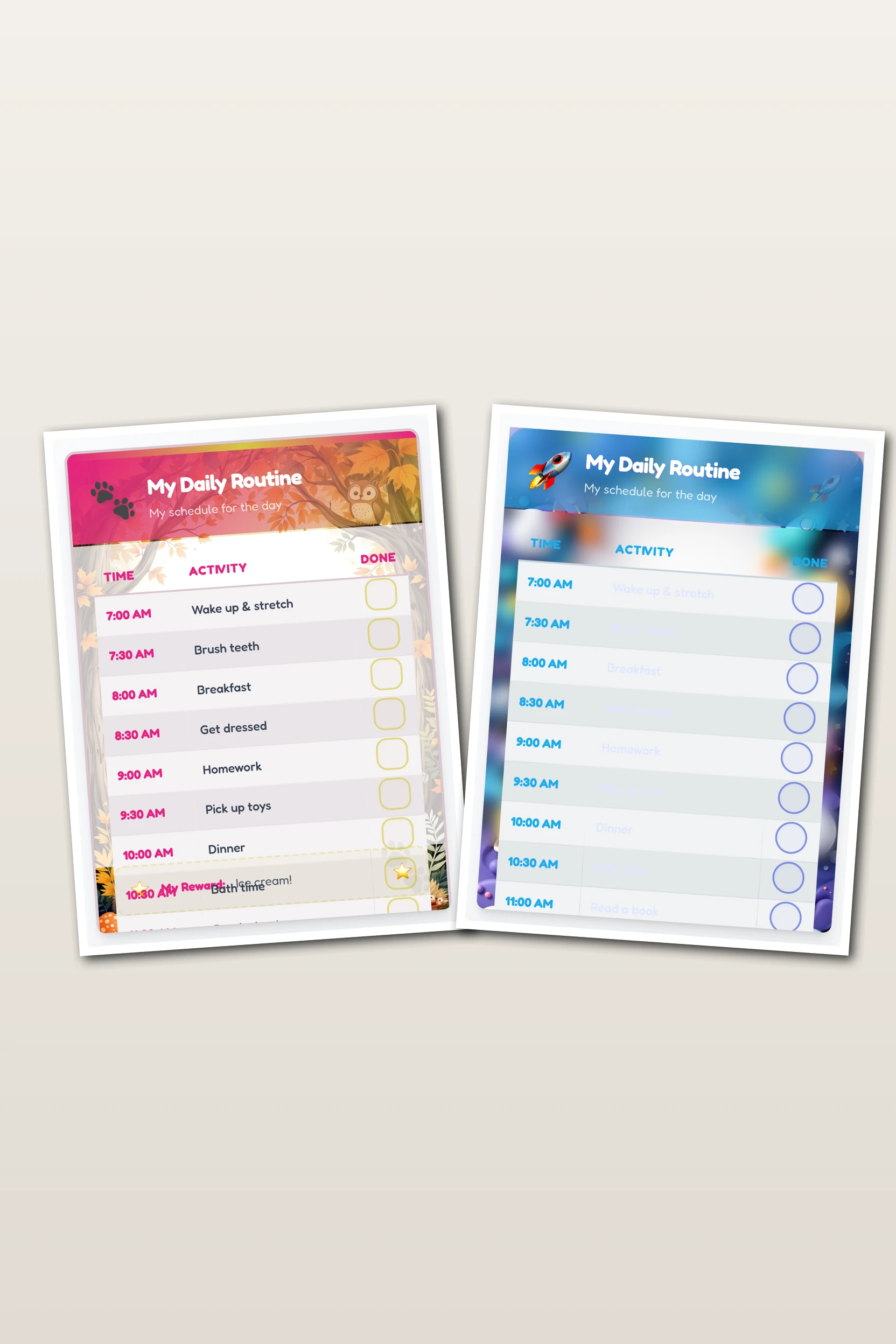
Morning Routine Charts for Kids: End the Before-School Chaos
Create a morning routine chart that gets kids ready on time without nagging. Visual step-by-step guides for toddlers through teenagers.
7 min read
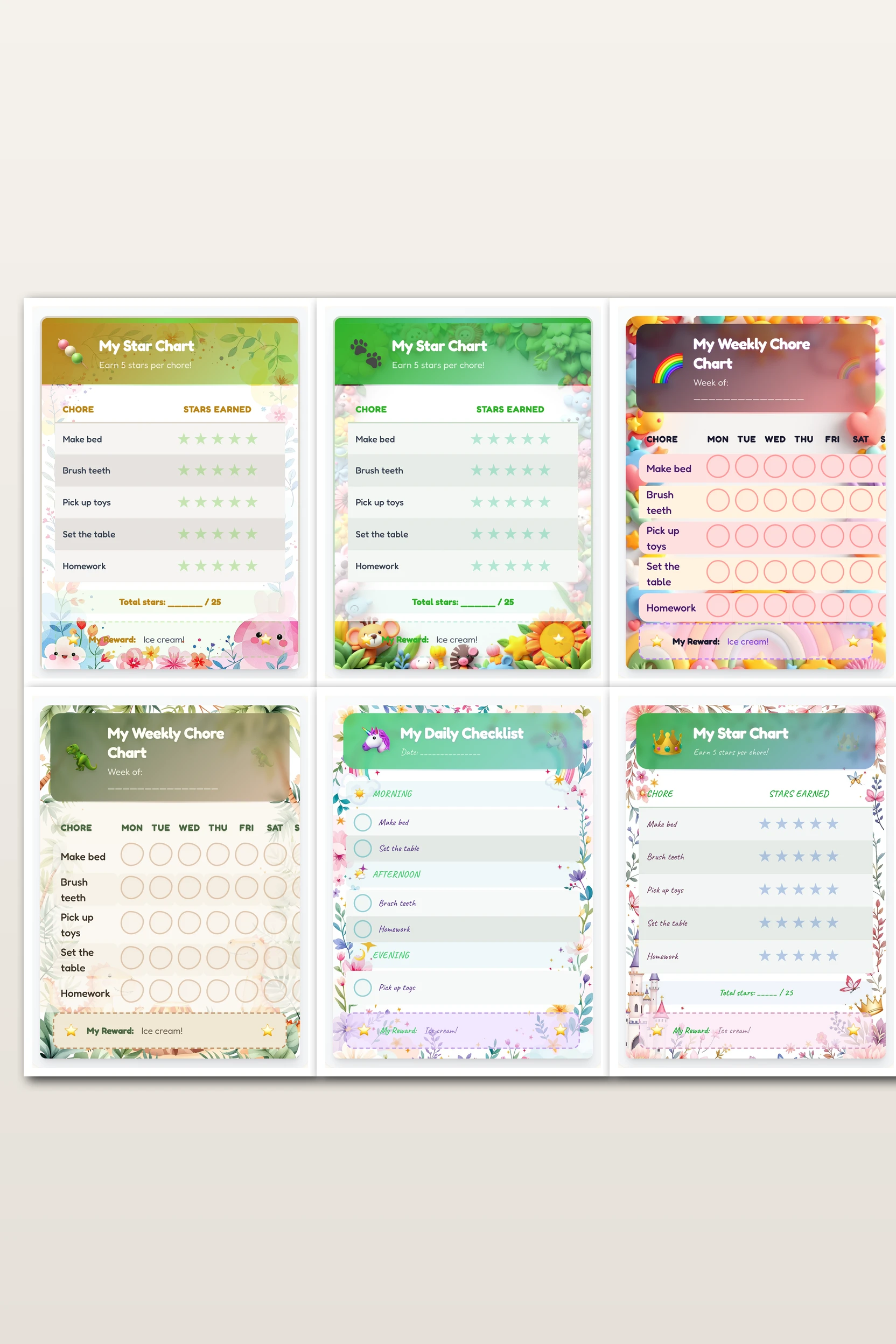
Best Chore Charts for Toddlers (Ages 2-4)
Age-appropriate chore charts designed specifically for toddlers. Simple tasks, visual cues, and star rewards that actually motivate little ones aged 2 through 4.
9 min read
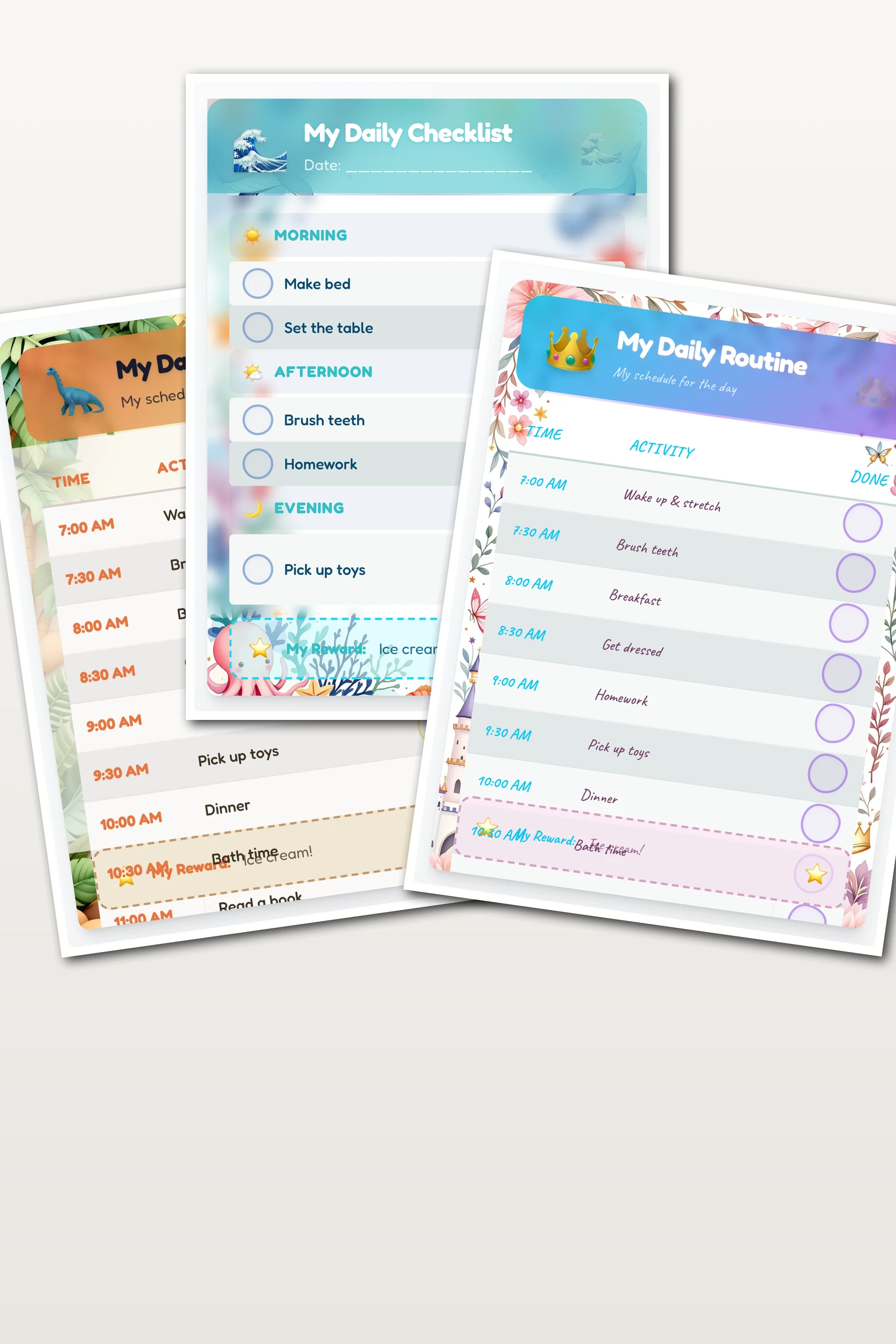
Building Lasting Habits With Chore Charts: The Parenting Science
How chore charts build lifelong habits in children — the psychology of routine, consistency, and intrinsic motivation explained for parents.
7 min read
Key Takeaways
- A consistent bedtime routine chart helps children fall asleep 30-60 minutes faster and reduces bedtime battles by up to 73%
- Match the number of steps to your child's age: 3-5 for toddlers, 5-6 for preschoolers, 6-8 for school-age, 7-10 for tweens
- Use picture-based charts for children under 5 — visual cues work far better than written instructions
- Involve your child in creating their chart so they feel ownership over their routine
- Turn off all screens 30-60 minutes before bed to protect natural melatonin production
- Stay consistent for at least two weeks — most families see significant improvement within 3-5 nights