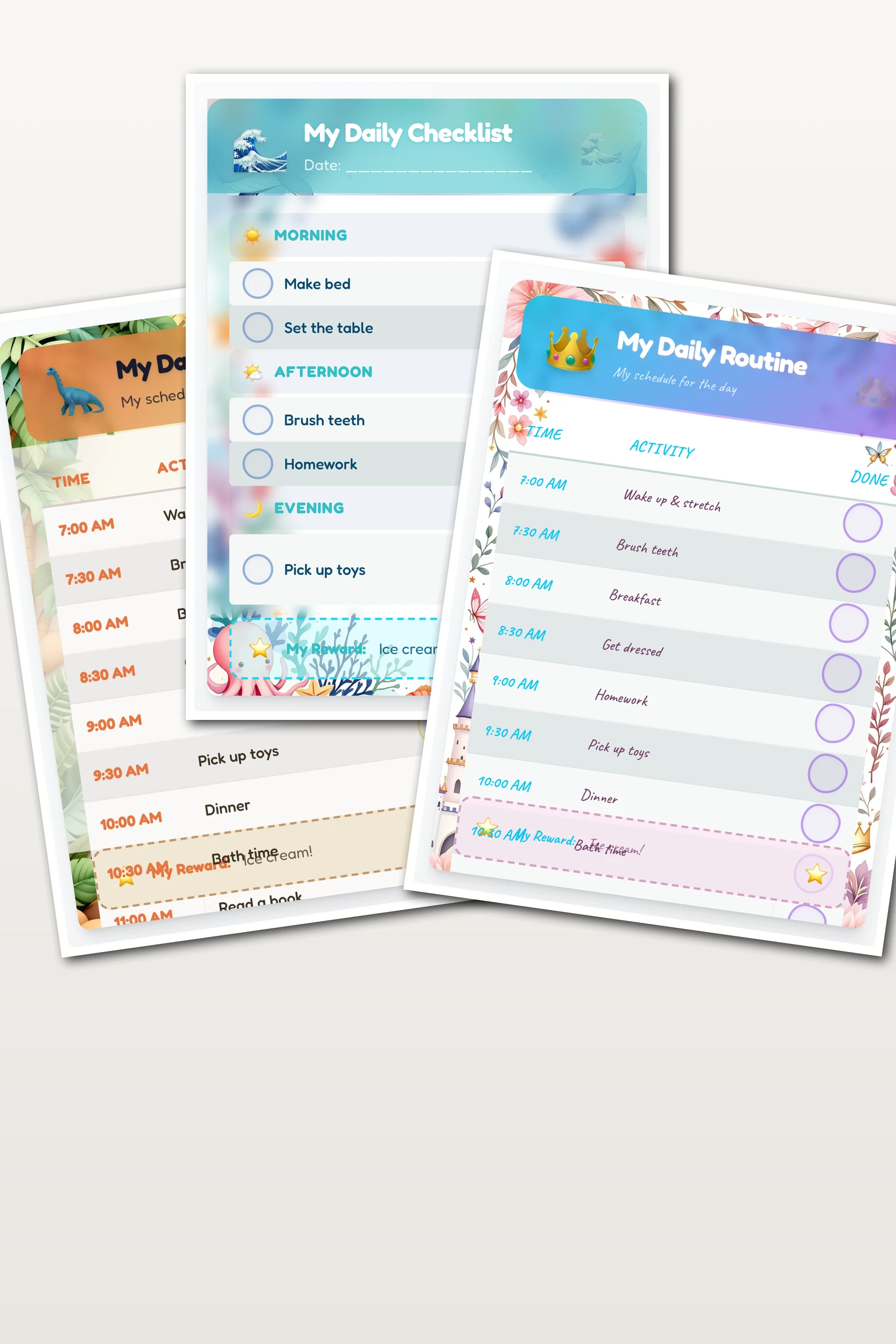
Building Lasting Habits With Chore Charts
The parenting science behind routines that stick — and why consistency matters more than enthusiasm
How Habits Form in Children's Brains
Habits are not built through willpower — they are built through repetition. Every time a child completes a task at the same time, in the same sequence, the neural pathway strengthens. After roughly 30-60 repetitions, the behavior becomes automatic.
This is why chore charts work: they externalize the sequence. The child does not need to remember what comes next — the chart tells them. Over time, the chart becomes unnecessary because the sequence has been encoded in their brain.
For children, habit formation is faster than for adults because their brains are more plastic. A 5-year-old who makes their bed every morning for 6 weeks will likely continue the habit even without the chart. The chart is scaffolding — it supports the structure until it can stand on its own.
66 days
average time for an adult habit to become automatic
European Journal of Social Psychology
30-40 days
estimated time for children due to brain plasticity
Developmental Psychology Review
90%
of daily actions are habitual, not deliberate
Duke University Study
The Three Phases of Chore Habit Formation
Phase 1: The Honeymoon (Days 1-7). Everything is new and exciting. The child loves their chart, eagerly places stickers, and completes tasks enthusiastically. This phase is easy but deceiving — the habit has not formed yet.
Phase 2: The Resistance (Days 8-21). Novelty fades. The child forgets, procrastinates, or outright refuses. This is the critical phase where most chore charts fail. Parents give up, assuming the chart does not work. But this resistance is normal and necessary — it is the brain's old patterns pushing back against new ones.
Phase 3: The Groove (Days 22-45+). If you push through resistance with calm consistency, something shifts. The child starts doing tasks without prompting. They might even remind you that they need to check their chart. The habit is forming. By day 45-60, the behavior feels natural.
The Day 14 Danger Zone
Most chore charts are abandoned between days 10 and 14. This is exactly when resistance peaks and parents conclude 'it is not working.' Push through this window with calm consistency. Do not increase pressure — just maintain the routine. The breakthrough usually comes in week 3.
Strategies for Each Phase
- 1
Honeymoon: Set expectations, not just excitement
Tell your child: 'This is going to be fun at first, and then some days it will feel boring. That is normal. We keep going anyway.' Setting this expectation prevents the surprise of Phase 2.
- 2
Resistance: Stay calm and consistent
Do not add more rewards to combat resistance. Do not lecture or punish. Simply maintain the routine: 'It is chore time. Which one would you like to start with?' Offer choices within the structure.
- 3
Groove: Celebrate and reduce scaffolding
When the habit takes hold, name it: 'You made your bed without anyone asking. That is a real habit now.' Begin reducing external rewards while increasing recognition of their independence.
Why Consistency Beats Intensity
A child who does 3 chores every single day builds stronger habits than one who does 10 chores three times a week. Consistency — same time, same sequence, same expectations — is the single most important factor in habit formation.
This is why daily chore charts outperform weekly ones for building habits. The daily repetition creates the neural pathway. Weekly charts are better for accountability, but the daily rhythm is where habits live.
If you can only commit to one thing, commit to this: the same 3 tasks, at the same time, every single day. No days off, no exceptions. After 6 weeks, those tasks will be automatic.
Recommended Chart Templates
Dinosaur Watercolor
Soft hand-painted dinosaur borders with earthy tones
Aqua Fins & Friends
Cool ocean watercolor border alive with tropical fish, playful turtles, and swirling seahorses in turquoise and seafoam tones. A refreshing underwater world frames this weekly chore chart for water-loving kids.
Tamagotchi Candy Club
A vibrant 90s retro-kawaii chore chart inspired by Tamagotchi-era Japanese stationery, bursting with hot magenta, electric teal, and sunshine yellow candy colors. Bold outlines, pixel-style star bursts, and vintage Sanrio bow motifs give every chore a nostalgic magical-girl sparkle.
Start the Habit Today
Print a daily checklist or weekly grid — free templates designed for consistent daily use
Browse TemplatesKey Takeaways
- 1Habits form through repetition, not willpower — aim for 30-45 days of consistency
- 2Expect three phases: Honeymoon, Resistance, and Groove
- 3The Day 14 danger zone is when most charts fail — push through with calm consistency
- 4Daily charts build habits faster than weekly ones
- 53 tasks every day beats 10 tasks three times a week
- 6The chart is scaffolding — it supports the habit until it can stand alone