Chores for Kindergarteners: 30+ Age-Perfect Tasks With Free Printable Charts
Simple, picture-friendly chores that build independence, confidence, and responsibility in 4- to 6-year-olds
Why Kindergarten Age Is the Perfect Time to Start Chores
Between ages four and six, something remarkable happens in your child's brain. They begin craving real responsibility. They want to help. They want to do it themselves. If you have ever watched a kindergartener insist on pouring their own cereal despite the inevitable mess, you have seen this developmental shift in action.
Maria Montessori called this the sensitive period for order and practical life skills. Children at the kindergarten stage are neurologically primed to learn routines, follow simple sequences, and take pride in completing tangible tasks. Their fine motor skills are developing rapidly, their attention span has stretched to 15-20 minutes, and they understand cause and effect well enough to connect effort with results.
Research from the University of Minnesota found that the best predictor of young adult success was whether children started doing chores at age three or four — not academic achievement, not IQ, not family income. Kindergarteners who do chores develop stronger executive function, better self-regulation, and a deeper sense of belonging within the family. The work does not need to be perfect. It needs to start.
The window matters because kindergarteners still see helping as a privilege, not a burden. A five-year-old who begs to wipe the table will become a ten-year-old who rolls their eyes at the same request — unless the habit is already deeply rooted. Starting chores for kindergarteners now means you are building on enthusiasm rather than fighting against resistance later.
30+ Age-Appropriate Chores for Kindergarteners
Self-Care (8 chores)
- Make their bed (pulling up the comforter counts)
- Get dressed independently
- Put dirty clothes in the hamper
- Brush teeth morning and night (supervised)
- Wash hands before meals without being reminded
- Hang up coat and backpack after school
- Put shoes on the shoe rack
- Comb or brush their own hair
Kitchen Helper (6 chores)
- Set the table (napkins, forks, and plates)
- Clear their own plate after meals
- Wipe the table with a damp cloth
- Help unload non-breakable items from the dishwasher
- Pour their own cereal and milk (with a small pitcher)
- Put groceries away on low shelves
Bedroom & Playroom (6 chores)
- Put toys back in bins after playtime
- Sort toys by type (cars in one bin, blocks in another)
- Put books back on the shelf
- Dust low surfaces with a microfiber cloth
- Pick up items from the floor before vacuuming day
- Help fold simple items like washcloths and towels
Outdoor & Pet Care (5 chores)
- Water plants with a small watering can
- Pick up sticks and leaves from the yard
- Fill a pet's water bowl
- Help bring in lightweight grocery bags
- Wipe outdoor furniture with a rag
Kindergartener
Can handle 3-5 daily chores, follows 2-3 step instructions, works independently for 10-15 minutes. Picture-based charts and sticker rewards work best at this age.
Kindergarten Chores by Difficulty Level
| Chore | Difficulty | Est. Time | Supervision |
|---|---|---|---|
| Put shoes on rack | Easy | 1 min | None |
| Put dirty clothes in hamper | Easy | 1 min | None |
| Hang up coat and backpack | Easy | 1 min | None |
| Make their bed | Easy | 3 min | None |
| Clear plate after meals | Easy | 2 min | Minimal |
| Wipe table with damp cloth | Medium | 3 min | Minimal |
| Set the table | Medium | 5 min | Minimal |
| Put toys in bins | Medium | 5-10 min | Occasional |
| Sort toys by type | Medium | 5-10 min | Occasional |
| Water plants | Medium | 5 min | Minimal |
| Help unload dishwasher | Challenging | 5-10 min | Supervised |
| Fold washcloths and towels | Challenging | 5-10 min | Guided |
| Pour cereal and milk | Challenging | 3 min | Nearby |
| Help put groceries away | Challenging | 5 min | Guided |
| Dust low furniture | Challenging | 5 min | Occasional |
How to Introduce Chores to Your Kindergartener
- 1
Make it a game, not a command
Kindergarteners learn through play. Turn chore time into a race against a sand timer, a matching game ("Can you find where all the blocks live?"), or a pretend scenario ("You are the chef — chefs always clean their station!"). When chores feel like play, resistance drops to almost zero. The goal is to build a positive emotional association with helping before the word "chore" ever feels like work.
- 2
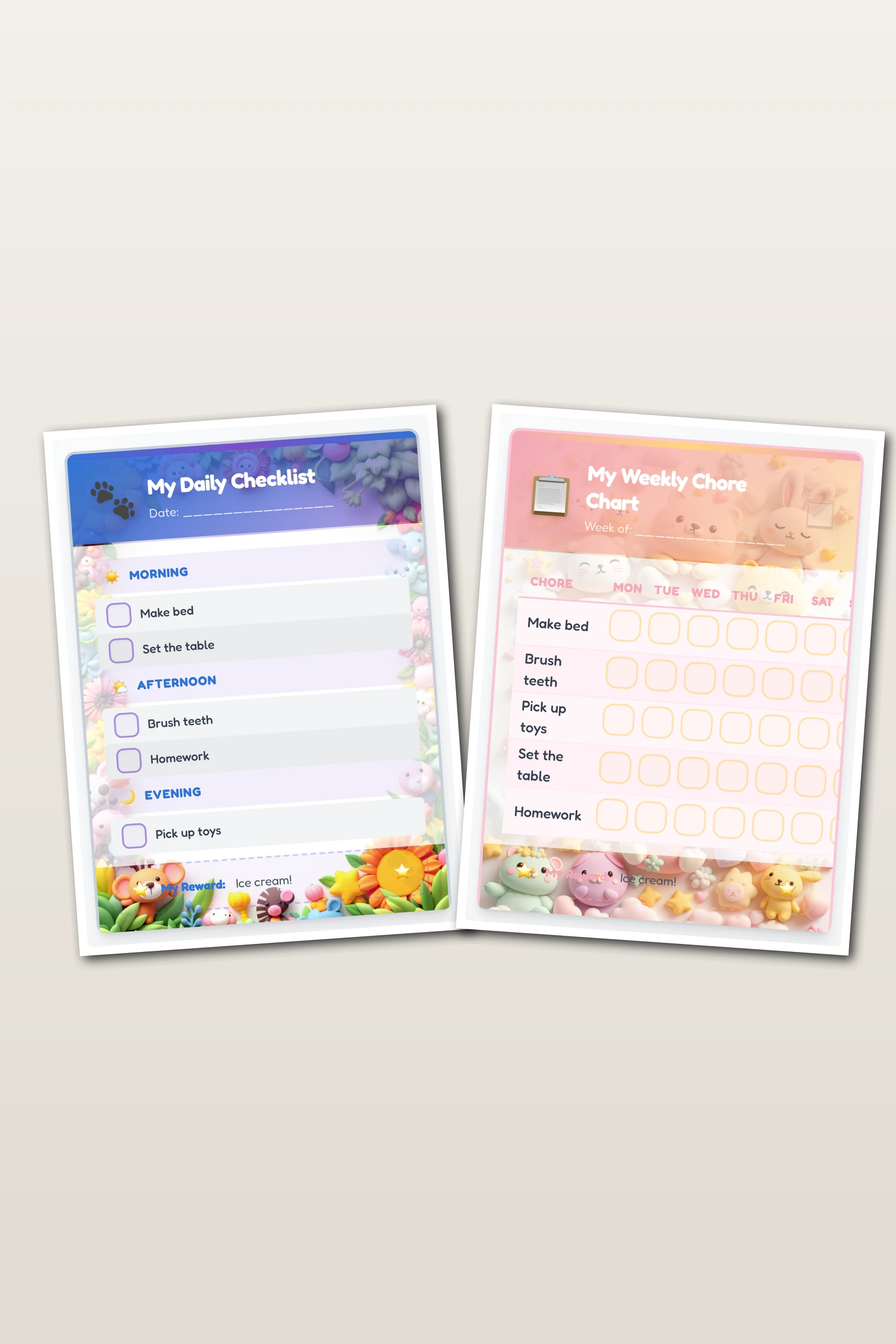
Use a picture-based chore chart
Most kindergarteners cannot read a written task list. A printable chore chart with picture cues for each task lets them see what needs doing without asking you. Print a chart with icons or photos for each chore — toothbrush for brushing teeth, a bed for making the bed, a plate for clearing the table. Hang it at their eye level and let them place a sticker next to each completed task.
- 3
Start with just one or two chores
Resist the urge to assign all 30 chores on day one. Pick one self-care chore (like making the bed) and one helping chore (like clearing their plate). Master those for two weeks before adding more. Kindergarteners build confidence through repetition and mastery. Piling on too many tasks too fast leads to overwhelm and the dreaded "I can't do it" spiral.
- 4
Celebrate effort, not perfection
A kindergartener's made bed will have lumpy pillows and a crooked comforter. That is fine. Praise the effort: "You made your bed all by yourself! That takes responsibility." Avoid remaking it in front of them — that teaches them their work does not matter. The habit matters more than the hospital corners. Perfection comes with years of practice.
- 5
Build a consistent routine
Attach chores to existing anchors in your kindergartener's day: morning chores before breakfast, after-school chores before screen time, evening chores before story time. When chores happen at the same time in the same order every day, they stop feeling like interruptions and start feeling like "just what we do." Consistency is the engine that turns tasks into lifelong habits.
Free Printable Chore Charts for Kindergarteners
Squishy Puff Pals
Adorable 3D clay-sculpted kawaii animals bounce across a creamy pastel canvas in coral pink and butter yellow. Every row feels like a plush toy shelf with glossy rounded shapes and soft marshmallow glow.
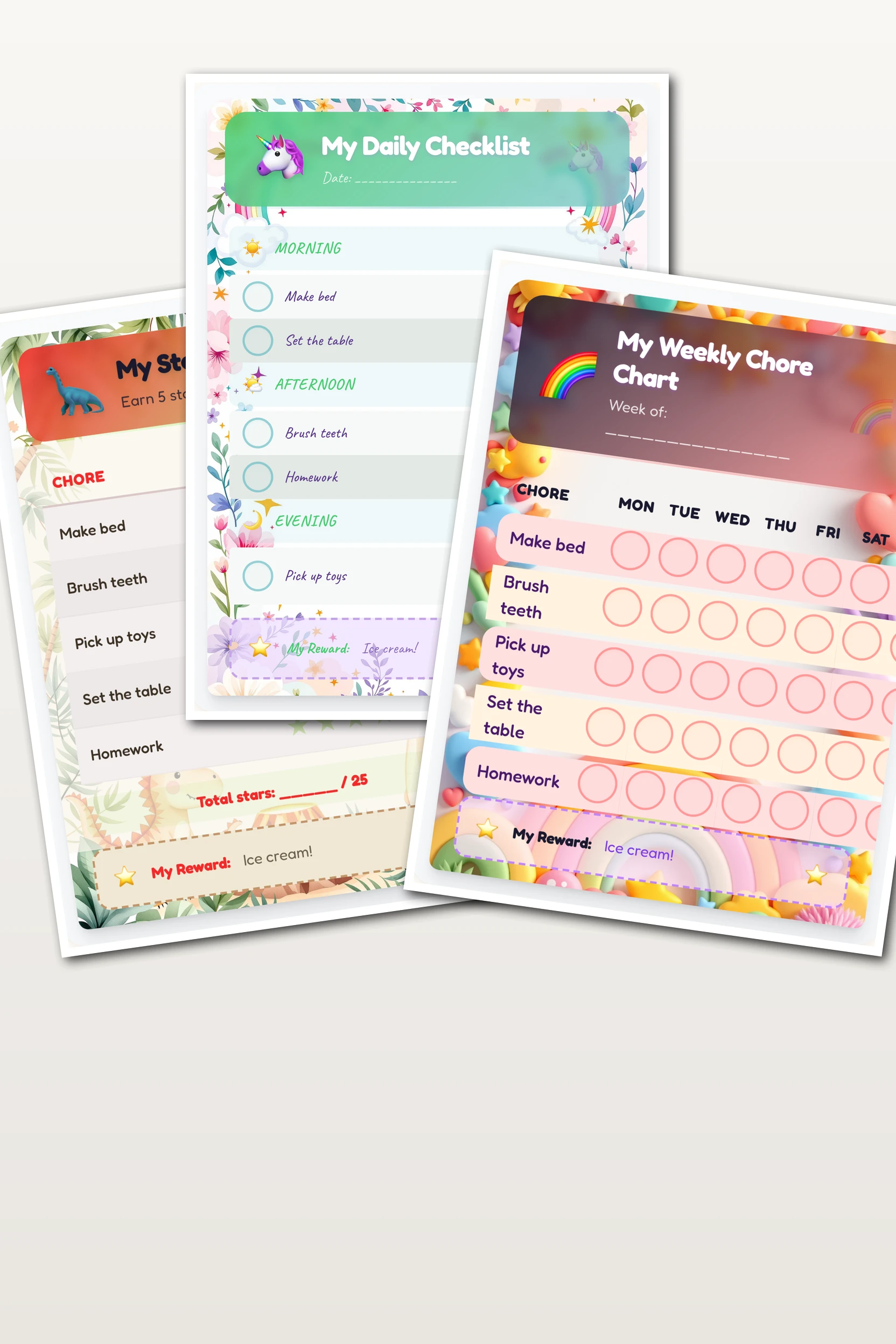
Rainbow Week
Bold rainbow rows where each chore has its own vibrant color
Paws & Whiskers Watercolor
Dreamy watercolor border of cuddly puppies, kittens, bunnies, and hamsters in warm honey and blush pink tones. Paw prints and tiny hearts frame a cozy pet-lovers chore chart.
Handling "I Don't Want To!" — The Kindergartener's Favorite Phrase
Resistance is normal and healthy. When your kindergartener pushes back, avoid power struggles. Instead, try the choice technique: "Do you want to put your shoes away first or hang up your coat first?" Both options lead to chores getting done, but the child feels in control. If the meltdown is real, acknowledge the feeling ("I know you would rather play"), set the boundary ("We do our chores before screen time"), and stay calm. Kindergarteners mirror your energy — if you treat chores as no big deal, they will too. For persistent resistance, try doing the chore together. "Let's race — I will wipe this side of the table, you wipe that side." Connection beats correction every time at this age.
Frequently Asked Questions About Kindergarten Chores
Related Articles
Chore Charts for 5-Year-Olds: From Helper to Independent Doer
30 age-appropriate chores for 5-year-olds with expert tips on weekly charts, natural consequences, and building independence at kindergarten age.
8 min read
Chore Charts for 3-Year-Olds: Building Independence One Task at a Time
A complete guide to introducing chore charts to your 3-year-old. Includes 28 age-appropriate chores, step-by-step introduction tips, and free printable chart recommendations.
7 min read
Age-Appropriate Chores for Elementary Kids (5-8)
A complete guide to chores for elementary-age children. Which tasks build responsibility at each age, plus strategies for pushback, allowance, and sibling fairness.
10 min read
Key Takeaways
- Kindergarteners (ages 4-6) are developmentally primed for chores — their desire to help is at its peak
- Start with 2-3 simple chores and build to 4-5 daily tasks over several weeks
- Use picture-based printable chore charts since most kindergarteners cannot yet read task lists
- Celebrate effort over perfection — a lumpy made bed still counts as a win
- Attach chores to daily anchors (before breakfast, after school, before screen time) to build lasting habits
- Rotate chart themes and chore assignments every few weeks to keep kindergarteners motivated