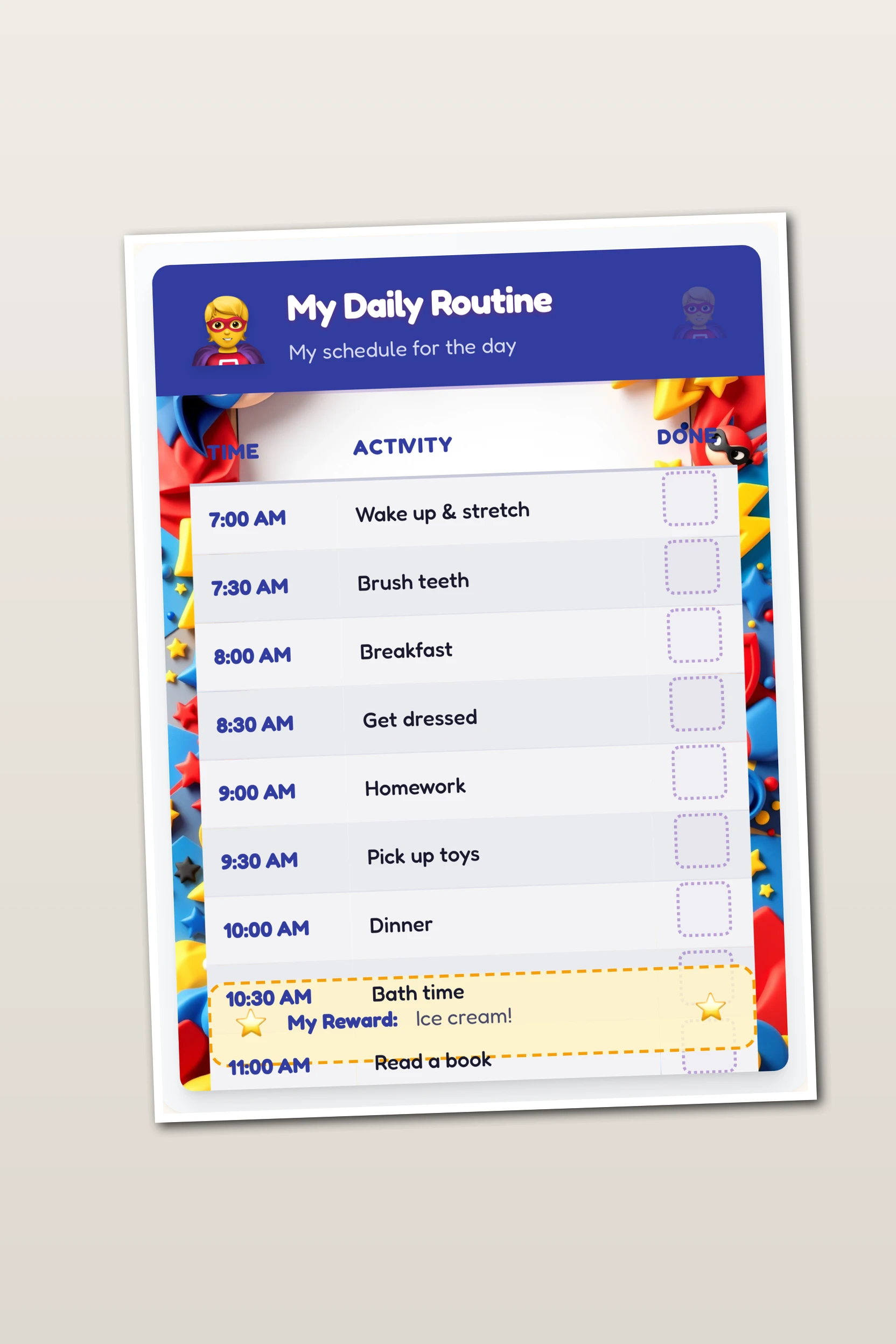
Daily Routine Charts for Kids
Visual schedules for morning, afternoon, and bedtime that help children build independence and reduce daily chaos
Why Daily Routine Charts Transform Family Mornings
Every parent has lived through the morning scramble. The clock is ticking, the bus arrives in ten minutes, and your child is standing in the hallway with one sock on, staring at the ceiling. You have already repeated brush your teeth three times. Sound familiar? You are not alone, and the solution is simpler than you think: a daily routine chart for kids.
Children are not being deliberately slow or defiant when they stall during transitions. Developmental psychologists have long established that kids under 10 have limited executive function, which is the cognitive skill responsible for planning, sequencing, and self-monitoring. A visual daily schedule externalizes that mental load, turning an invisible sequence of tasks into something concrete they can see and follow step by step.
Research from the American Academy of Pediatrics confirms that children with predictable daily routines show lower levels of cortisol and fewer behavioral outbursts. When kids know exactly what comes next, anxiety drops. There are no surprises, no arguments about the order of tasks, and fewer power struggles over what needs to happen before screen time. The chart becomes the authority rather than the parent, which removes much of the friction from daily transitions.
The best part is that routine charts work across every age group. Toddlers respond to picture-based charts with three to five steps. Preschoolers thrive with icon-plus-word formats covering five to seven items. School-age children can manage full text-based checklists with eight to ten tasks spanning the entire day. The key is matching the format to your child's developmental stage and keeping expectations realistic.
Daily Routine Tasks by Time of Day
Morning Routine
- Wake up and stretch
- Make bed and tidy room
- Get dressed with clothes laid out the night before
- Eat breakfast and clear dishes
- Brush teeth and wash face
- Pack school bag and check homework folder
- Put on shoes and jacket
Afternoon Routine
- Unpack school bag and place lunchbox in kitchen
- Have a healthy snack
- Complete homework or reading time
- Free play or outdoor activity
- Help set the table or assist with dinner prep
- Tidy up play area before dinner
Evening Routine
- Bath or shower time
- Put on pajamas
- Brush teeth and floss
- Pick out clothes for tomorrow
- Read together or quiet story time
- Goodnight hugs and lights out
Free Printable Daily Routine Templates
Squishy Puff Pals
Adorable 3D clay-sculpted kawaii animals bounce across a creamy pastel canvas in coral pink and butter yellow. Every row feels like a plush toy shelf with glossy rounded shapes and soft marshmallow glow.
Aqua Fins & Friends
Cool ocean watercolor border alive with tropical fish, playful turtles, and swirling seahorses in turquoise and seafoam tones. A refreshing underwater world frames this weekly chore chart for water-loving kids.
Hazy Fairy Daily Routine
Hazy Fairy Daily Routine — a gradient style routine schedule with fairy theme. Unique colors and layout for kids.
How to Introduce a Routine Chart Without Resistance
The biggest mistake parents make with routine charts is unveiling a finished chart and expecting instant compliance. Children are far more likely to follow a system they helped create. Sit down together on a weekend morning, talk through what needs to happen each day, and let your child choose the order of non-time-sensitive tasks. When they have ownership over the chart, it feels collaborative rather than dictatorial.
Start with just one time block rather than overhauling the entire day at once. Most families find the morning routine to be the highest-friction period, so begin there. Once your child consistently follows the morning chart for two to three weeks, introduce the afternoon or bedtime block. This gradual approach prevents overwhelm and lets small successes build confidence.
Laminate the chart and provide a dry-erase marker so your child can physically check off each task. The act of marking completion triggers a small dopamine reward in the brain, which reinforces the behavior. Hang the chart at your child's eye level in the location where the routine begins, such as the bathroom mirror for the morning routine or the bedroom door for bedtime.
Keep Routines Flexible, Not Rigid
A daily routine chart works best when it provides structure without becoming a straitjacket. Build in five to ten minutes of buffer time between tasks, allow your child to choose the order of non-critical steps, and accept that some days will not go perfectly. When kids feel the routine has breathing room, they resist it less and internalize it faster. The goal is a predictable rhythm, not a military schedule.
Frequently Asked Questions About Daily Routine Charts
Start Your Family's Daily Routine Today
Browse our collection of free printable daily routine charts designed for every age group. Download, print, and watch the morning chaos disappear.
Browse Daily Routine TemplatesRelated Articles
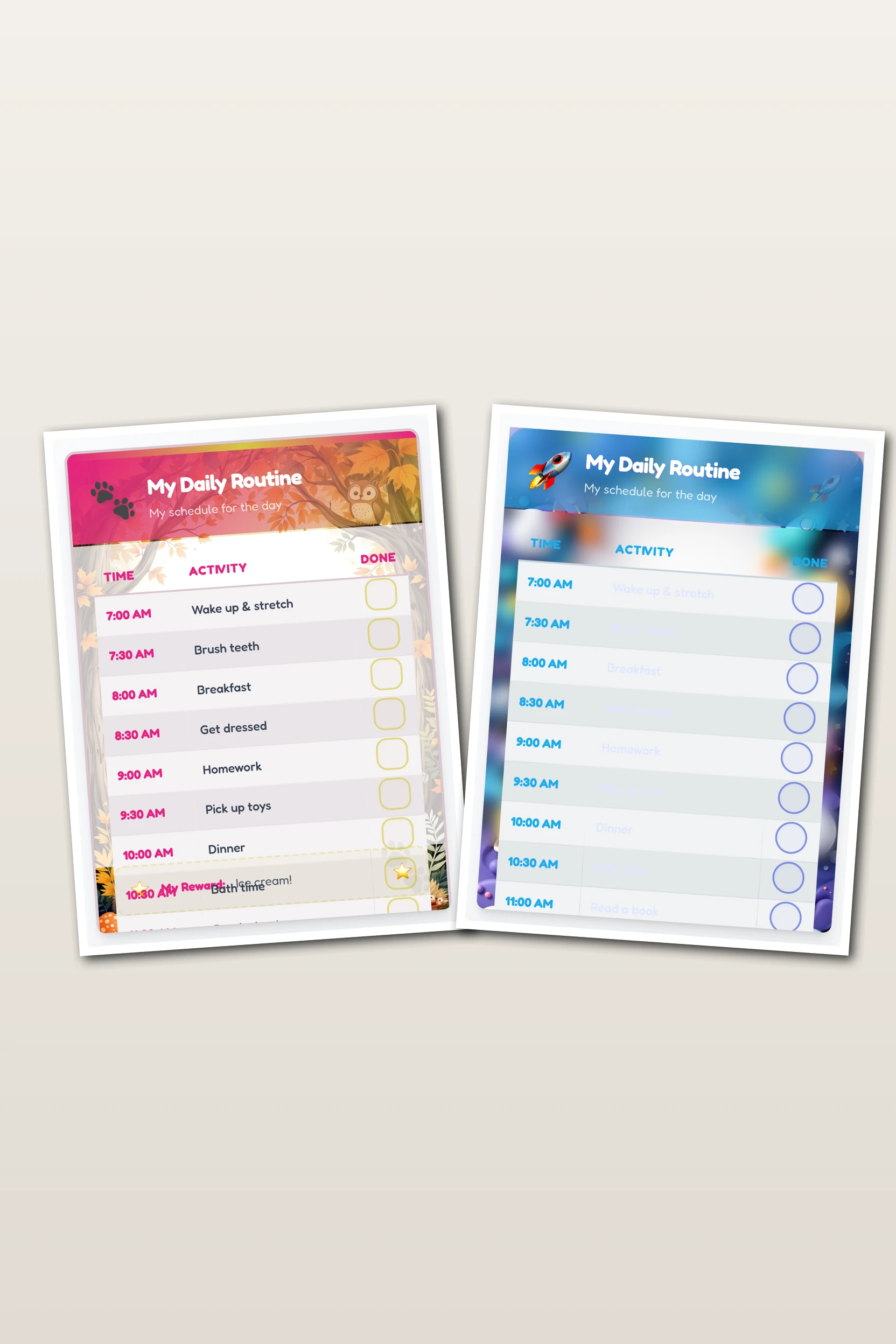
Morning Routine Charts for Kids: End the Before-School Chaos
Create a morning routine chart that gets kids ready on time without nagging. Visual step-by-step guides for toddlers through teenagers.
7 min read
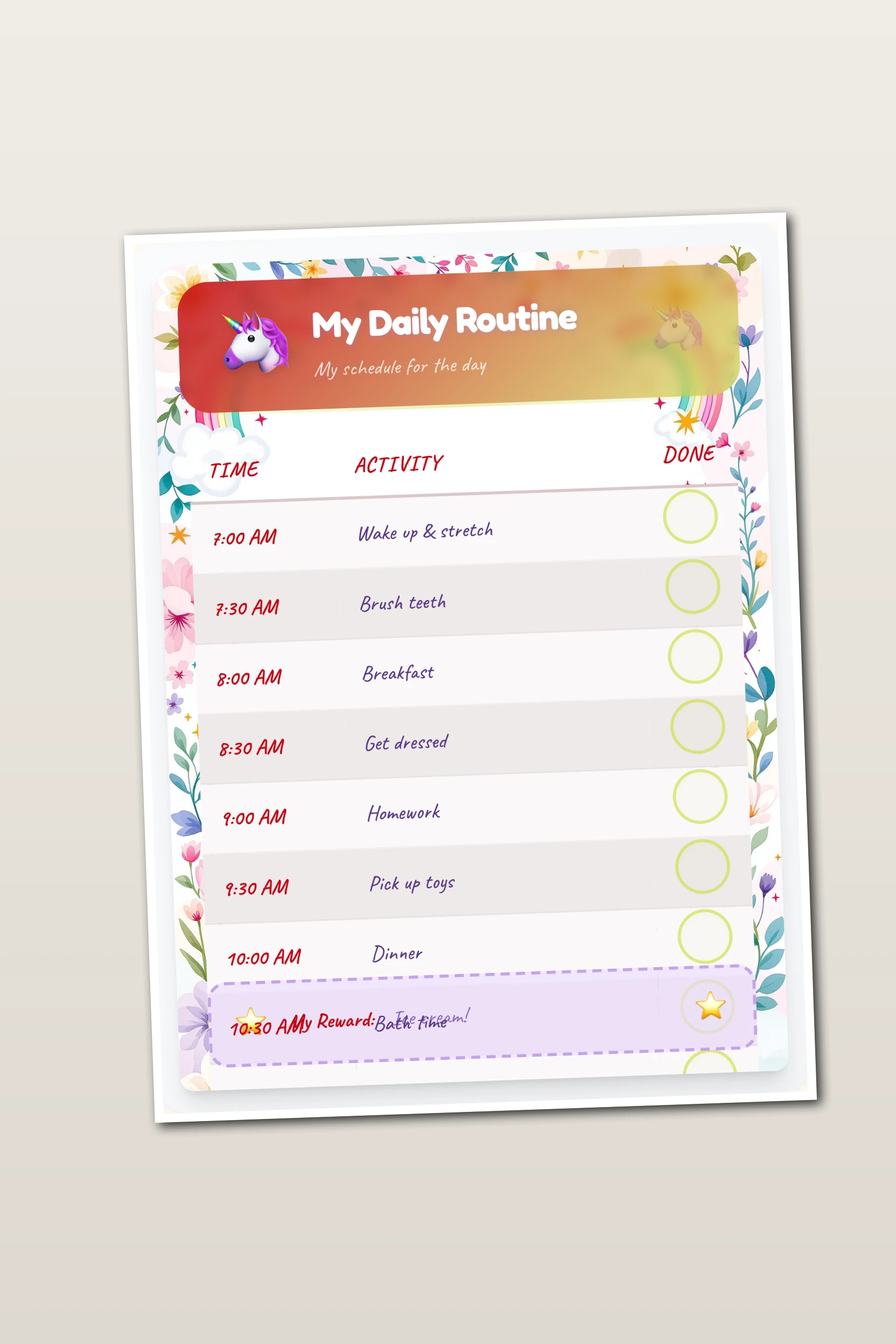
Bedtime Routine Charts for Kids: Free Printable Templates That End Bedtime Battles
End bedtime battles with free printable bedtime routine charts for kids ages 2-12. Visual checklists help toddlers and children follow evening routines independently.
8 min read