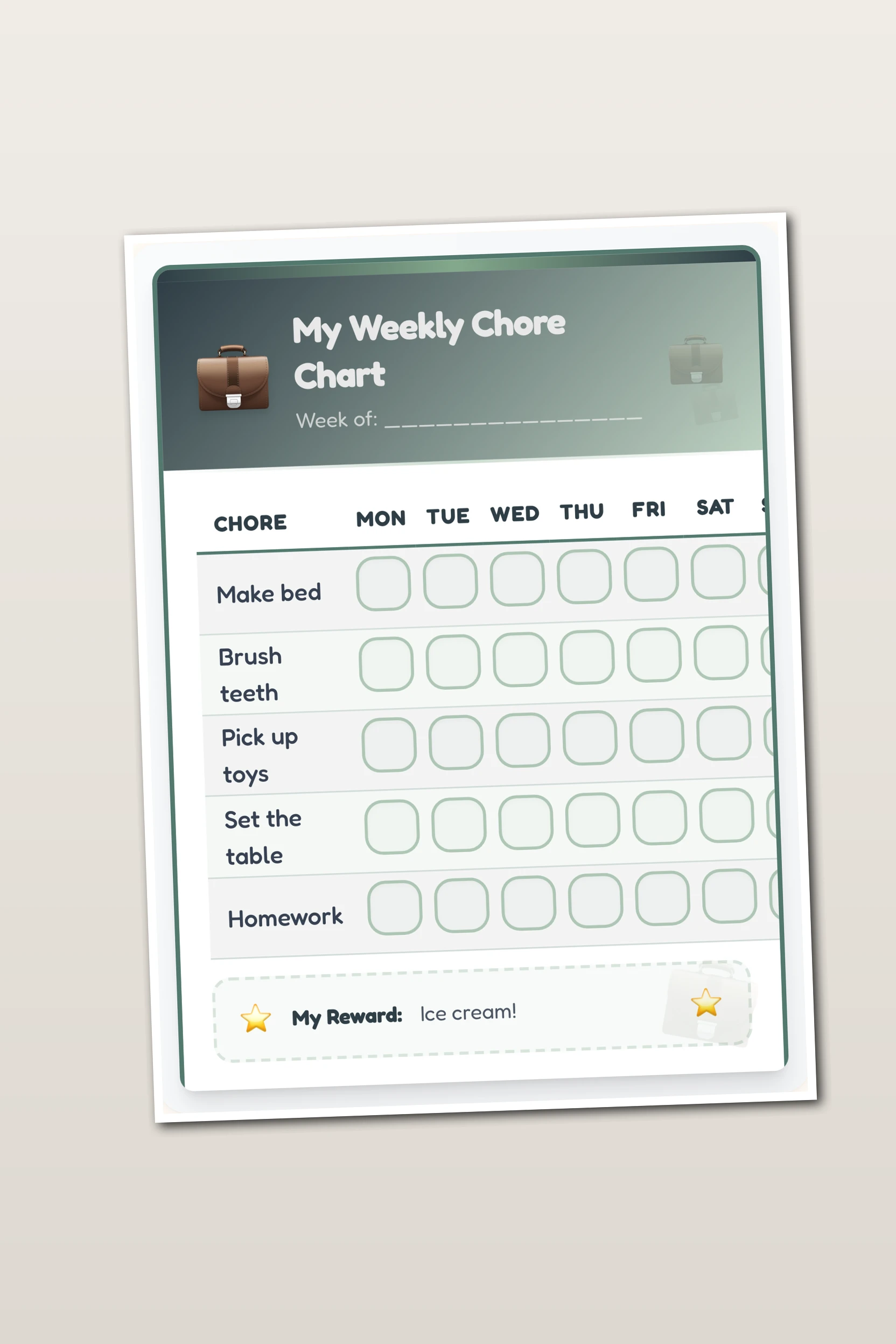
How to Make a Chore Chart That Actually Works
A practical guide for parents who are tired of chore charts that get ignored after day three
Why Most Chore Charts Fail (And How Yours Won't)
Most chore charts fail for one of three reasons: too many tasks, no clear reward system, or the chart was designed by the parent without any input from the child. The result is a beautifully designed chart that hangs on the fridge untouched after the first week.
The charts that work share common traits: they are simple, visual, age-appropriate, and the child feels ownership over them. The format matches the child's developmental stage, the tasks are achievable, and there is a clear connection between effort and recognition.
This guide walks you through building a chart from scratch that avoids every common pitfall. Whether your child is 3 or 13, these principles apply.
7 Steps to a Chore Chart That Sticks
- 1
Step 1: Choose the right format for your child's age
Ages 3-4: picture-based daily chart with 2-3 tasks. Ages 5-7: weekly grid with 4-5 tasks and sticker rewards. Ages 8-10: weekly checklist they manage themselves. Ages 11+: family task board or digital shared list.
- 2
Step 2: Pick 3-5 age-appropriate tasks (no more)
The biggest mistake is overloading the chart. Start with tasks your child already does sometimes and formalize them. Add new tasks one at a time, no more than one per week.
- 3
Step 3: Involve your child in the design
Let them choose the theme, colors, or stickers. If they help create it, they are invested. Ask: 'Which chores do you think you can handle?' Their answer reveals what they are ready for.
- 4
Step 4: Place the chart at their eye level
Not on top of the fridge — at their height. In their bedroom, on their door, or at their workstation. The chart should be in their space, not yours.
- 5
Step 5: Set up a simple reward system
Ages 3-5: stickers and verbal praise. Ages 6-8: weekly privilege (choose dinner, extra screen time). Ages 9+: allowance for extras beyond basic chores. Keep rewards small and consistent.
- 6
Step 6: Review together daily (2 minutes)
Each evening, spend 2 minutes looking at the chart together. Celebrate completions, problem-solve missed tasks. No lectures — just connection and accountability.
- 7
Step 7: Refresh the chart monthly
Print a fresh chart each month. Add one new chore, remove one mastered one. Change the theme if interest wanes. A chart that evolves stays relevant.
The Number One Rule
Never start with more than 5 tasks. A chart with 10 chores looks impressive but guarantees failure. Start with 3, build to 5, and only add more when completion is consistent. Less is more.
Chart Format Comparison
| Format | Best Age | Pros | Cons |
|---|---|---|---|
| Daily Checklist | 3-5 | Simple, immediate feedback | No weekly overview |
| Weekly Grid | 5-10 | Shows patterns, builds streaks | Can feel overwhelming if too many tasks |
| Star/Sticker Chart | 3-7 | Highly visual, very motivating | Can lose effectiveness over time |
| Reward Tracker | 5-10 | Goal-oriented, teaches delayed gratification | Needs clear milestones |
| Family Task Board | 10+ | Fair distribution visible to all | Less personal, more administrative |
Common Mistakes to Avoid
Mistake 1: Making it all about perfection. A messily made bed still counts. If you redo their work in front of them, they learn their effort does not matter.
Mistake 2: Inconsistent enforcement. If chores are optional on busy days, they become optional every day. Consistency is more important than any reward system.
Mistake 3: Using chores as punishment. 'Go clean your room because you misbehaved' turns chores into negative experiences. Chores should be routine contributions, not consequences.
Mistake 4: Comparing siblings. 'Your sister already finished her chores' creates resentment, not motivation. Each child's chart is their own.
Skip the DIY — Use a Free Template
Professionally designed chore charts in 8 formats and dozens of themes — ready to print
Browse Free TemplatesRecommended Chart Templates
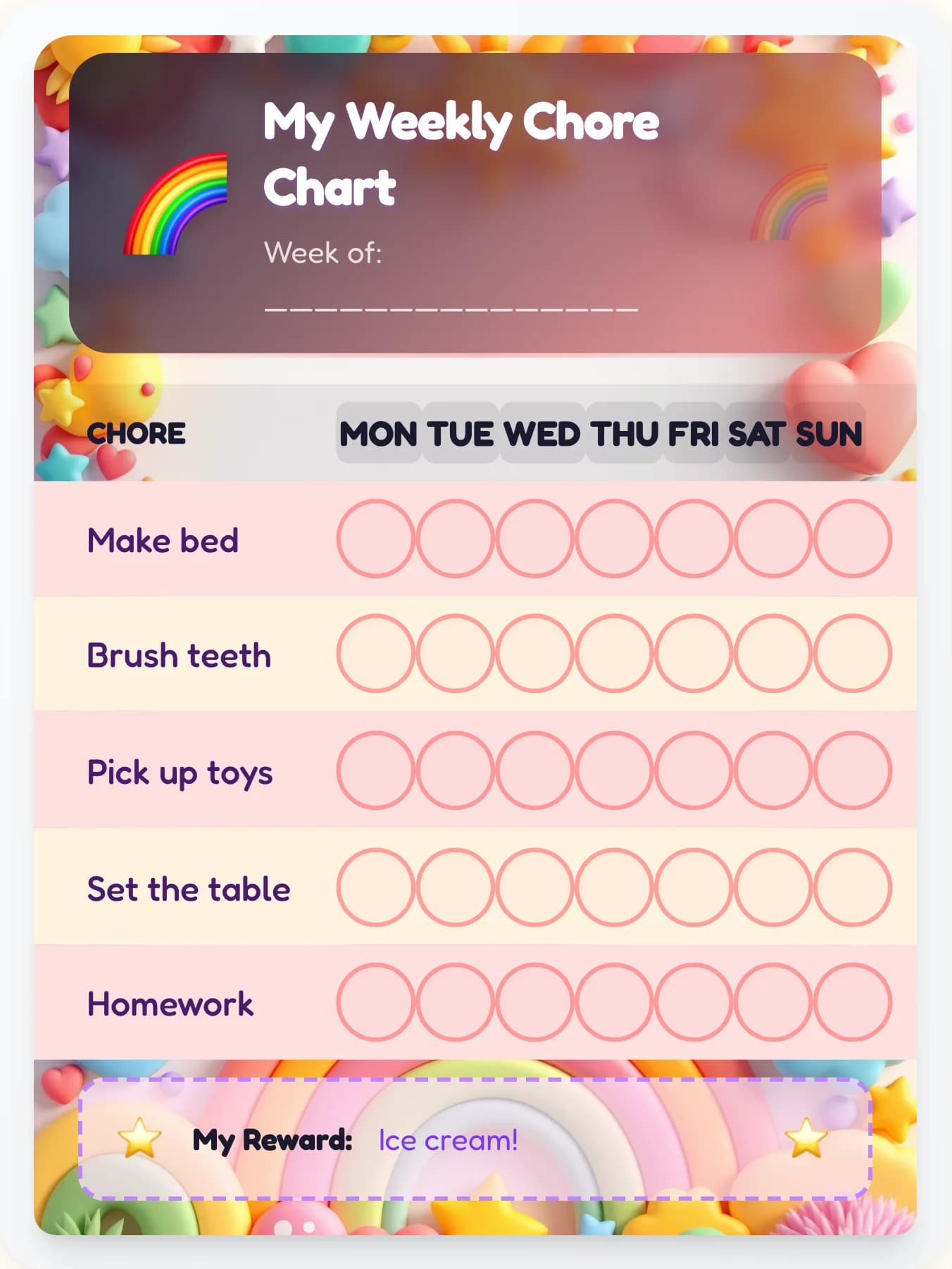
Rainbow Week
Bold rainbow rows where each chore has its own vibrant color
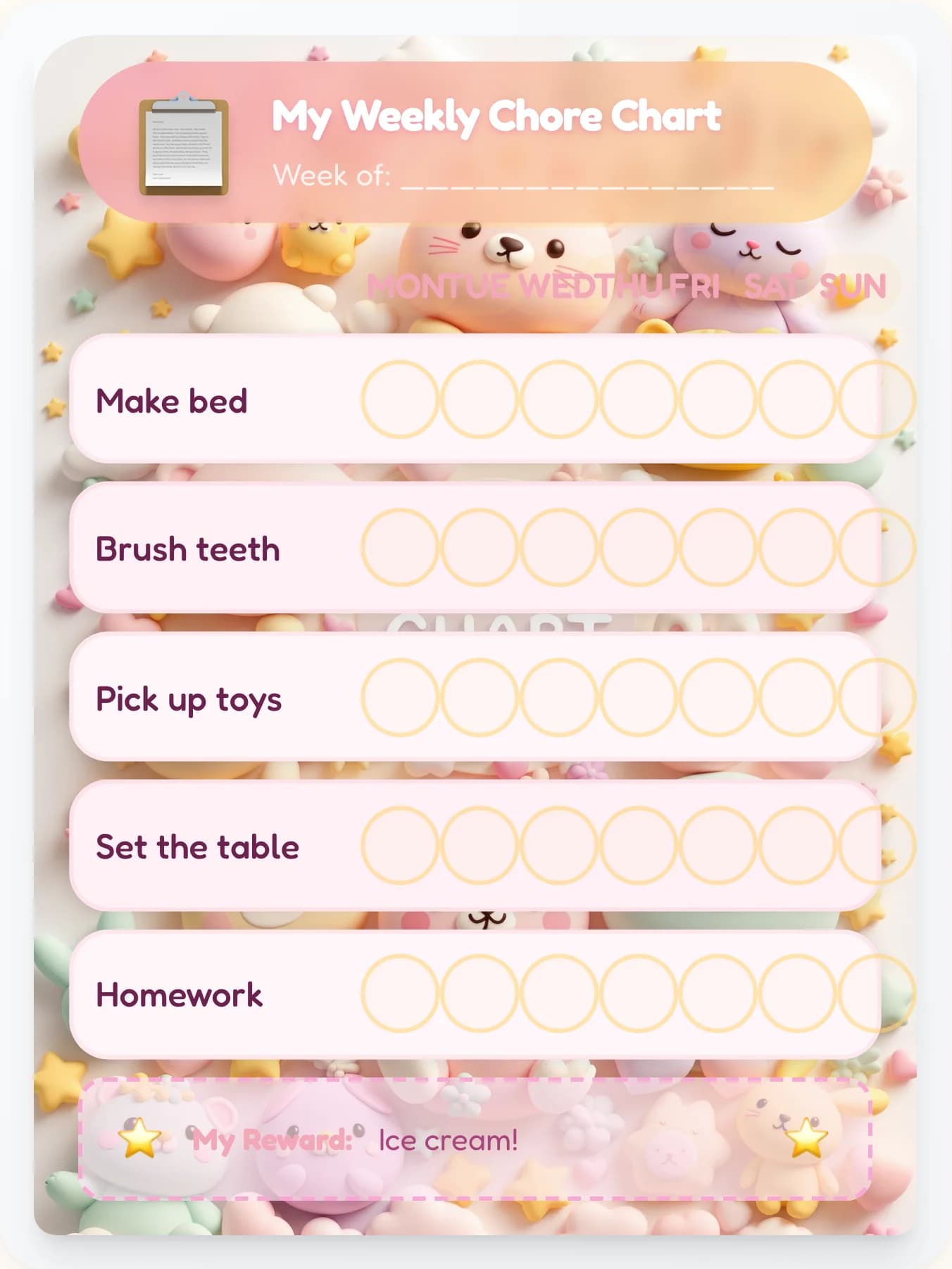
Squishy Puff Pals
Adorable 3D clay-sculpted kawaii animals bounce across a creamy pastel canvas in coral pink and butter yellow. Every row feels like a plush toy shelf with glossy rounded shapes and soft marshmallow glow.
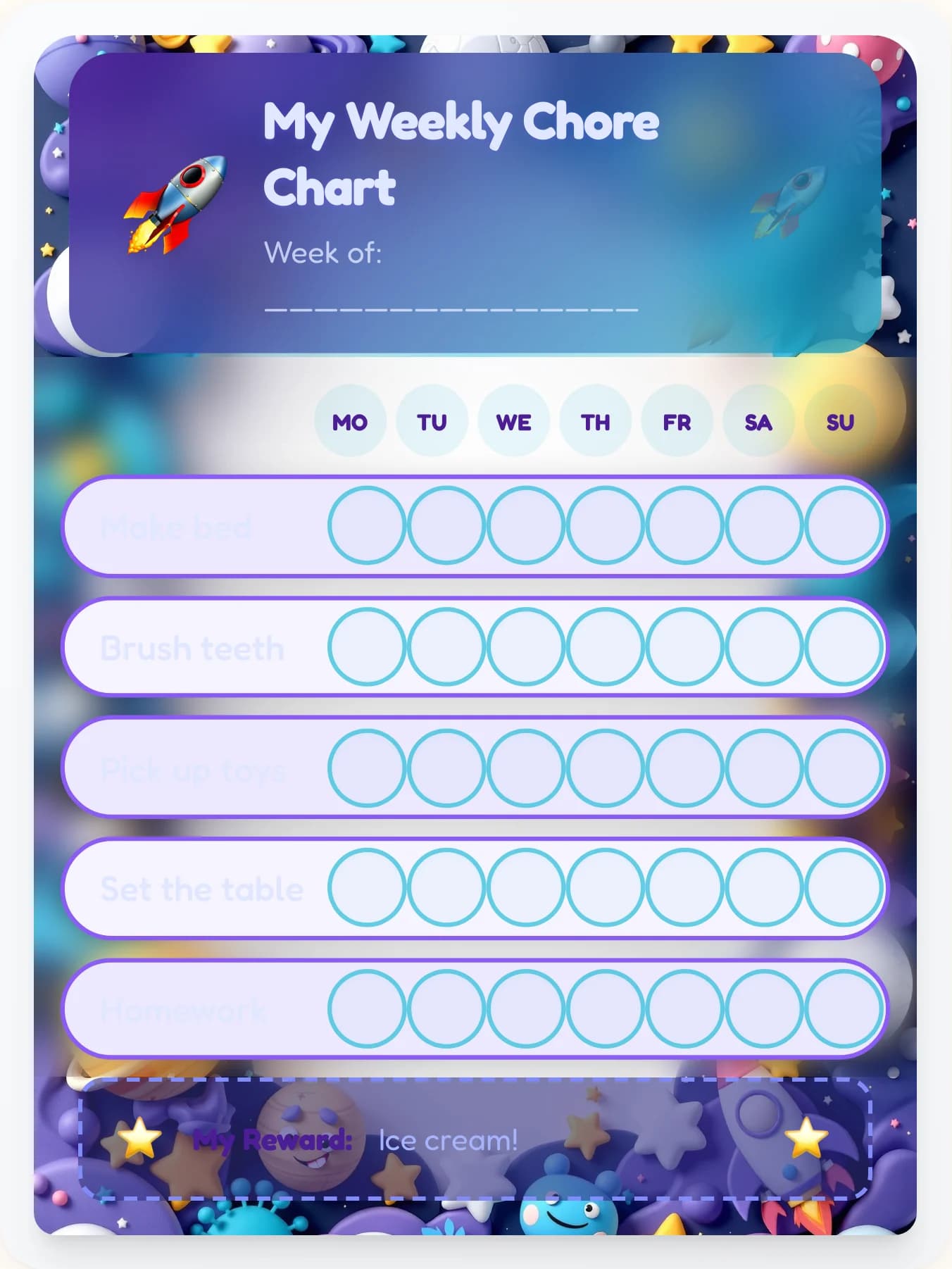
Space 3D Clay
Pixar-style 3D clay rockets and planets
Frequently Asked Questions
Key Takeaways
- 1Start with 3-5 tasks maximum — never overload the chart
- 2Involve your child in choosing the theme and tasks
- 3Place the chart at their eye level in their space
- 4Review together daily for 2 minutes — celebrate, don't lecture
- 5Refresh the design monthly to maintain interest
- 6Consistency matters more than any reward system