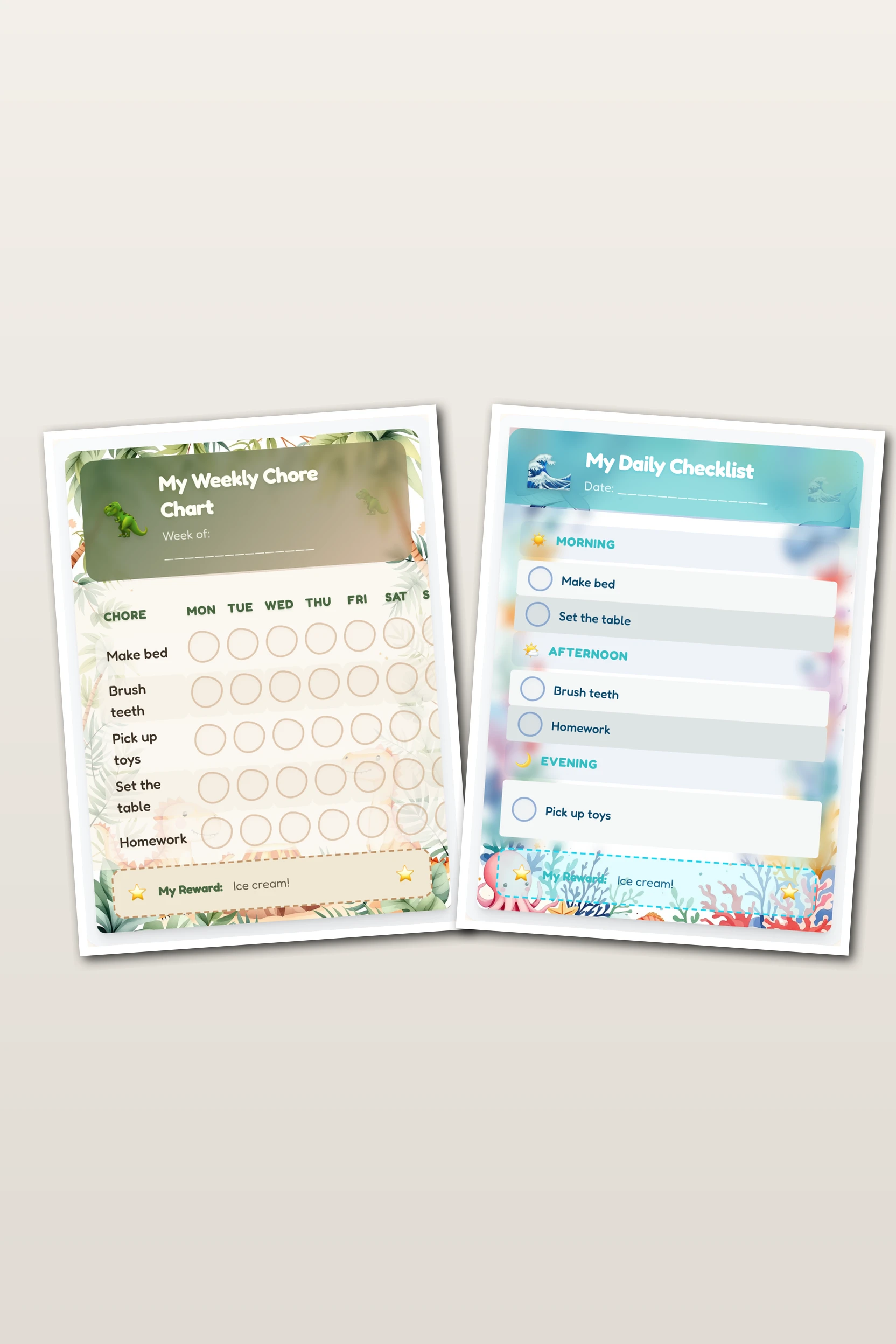
Weekly vs Daily Chore Charts: Which Format Is Right for Your Family?
Two proven formats, different strengths — here is how to choose
The Format Question Every Parent Faces
You have decided to use a chore chart. Great. But should it track one day at a time or show the whole week? This seemingly simple choice significantly affects how your child interacts with the chart and how quickly habits form.
The answer depends on three things: your child's age, their personality, and what you are trying to achieve. A 3-year-old learning their first chores needs a different format than a 9-year-old managing a full weekly schedule.
Both formats work. Neither is universally better. But one will be significantly more effective for your specific child — and choosing wrong can mean the difference between a chart that sticks and one that gets ignored.
Daily Checklist Format
Pros
Cons
Best for ages 3-6, routine-focused tasks (morning/bedtime), and children who get overwhelmed by too much information.
Weekly Grid Format
Pros
Cons
Best for ages 5-12, children who are motivated by streaks and completion, and families wanting to track consistency over time.
Quick Comparison
| Feature | Daily Checklist | Weekly Grid |
|---|---|---|
| Best age | 3-6 | 5-12 |
| Tasks visible | Today only | All 7 days |
| Printing frequency | Daily | Weekly |
| Streak tracking | No | Yes |
| Pattern visibility | No | Yes |
| Setup complexity | Very easy | Moderate |
| Satisfaction type | Daily completion | Weekly achievement |
The Hybrid Approach
Use both! Post a daily checklist in the bathroom for the morning routine and a weekly grid on the fridge for general chores. The daily list handles sequencing, the weekly grid handles accountability. Many families find this combination more effective than either alone.
Try Both Formats Free
Daily checklists and weekly grids in every theme — print one of each and see what works
Browse All FormatsRecommended Chart Templates
Minimal Flat
Clean geometric borders with muted tones
Dinosaur Watercolor
Soft hand-painted dinosaur borders with earthy tones
Squishy Puff Pals
Adorable 3D clay-sculpted kawaii animals bounce across a creamy pastel canvas in coral pink and butter yellow. Every row feels like a plush toy shelf with glossy rounded shapes and soft marshmallow glow.
Format Questions
Key Takeaways
- Daily checklists work best for ages 3-6 and routine sequences
- Weekly grids work best for ages 5-12 and consistency tracking
- The hybrid approach (daily for routines + weekly for chores) often works best
- Switch formats freely if one is not working — keep the same tasks
- Consider your child's personality: detail-oriented kids prefer daily, big-picture kids prefer weekly