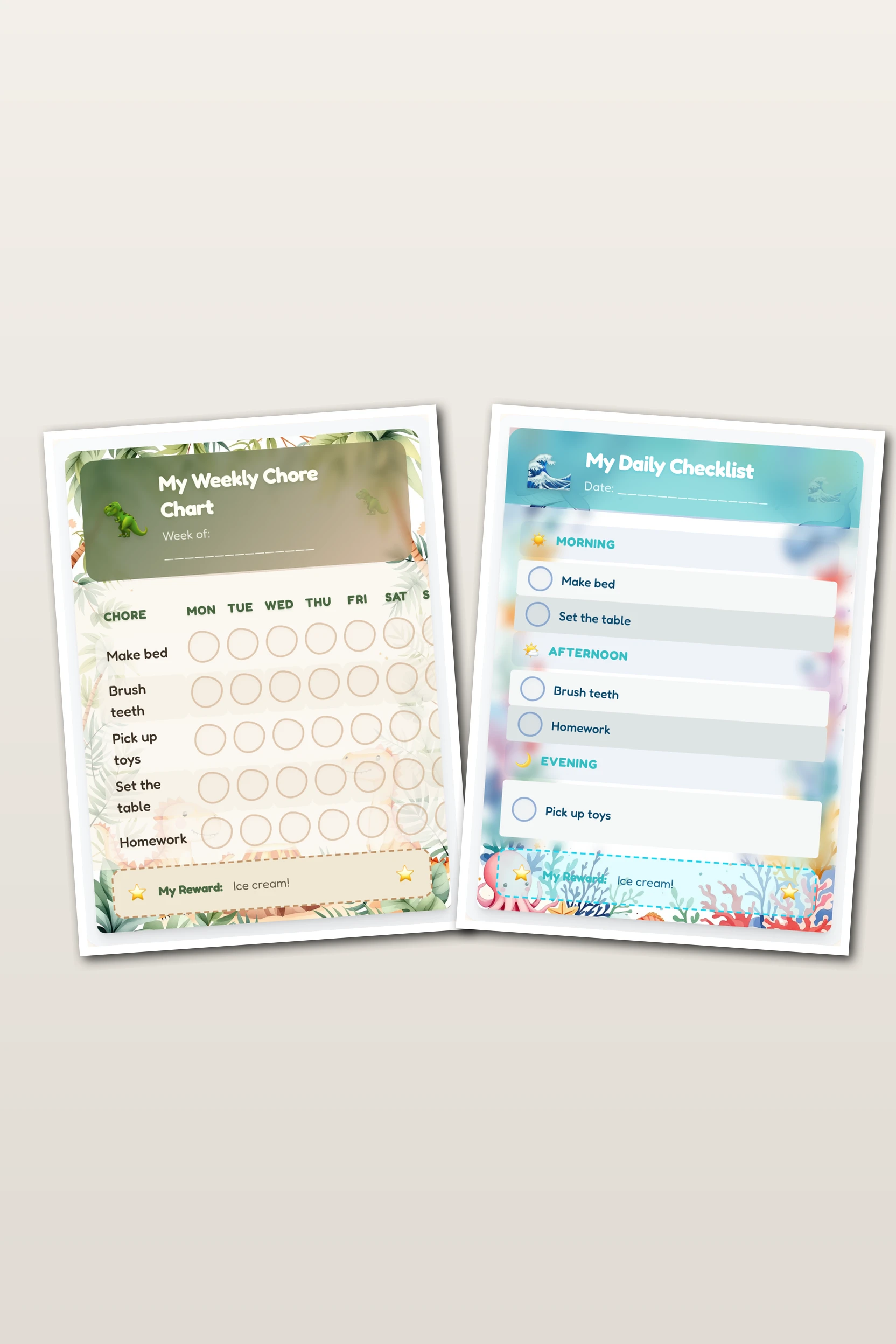
Tablas de tareas semanales vs diarias: ¿Cuál es la indicada para tu familia?
Dos formatos comprobados, fortalezas diferentes — aquí te mostramos cómo elegir
La pregunta sobre formato que todo padre enfrenta
Ya has decidido usar una tabla de tareas. ¡Qué bien! Pero ¿debería rastrear un día a la vez o mostrar la semana completa? Esta decisión que parece sencilla afecta significativamente cómo tu hijo interactúa con la tabla y cuán rápidamente se forman los hábitos.
La respuesta depende de tres cosas: la edad de tu hijo, su personalidad y qué quieres lograr. Un niño de 3 años aprendiendo sus primeras tareas necesita un formato diferente al de un niño de 9 años que maneja un horario semanal completo.
Ambos formatos funcionan. Ninguno es universalmente mejor. Pero uno será significativamente más efectivo para tu hijo — y elegir mal puede ser la diferencia entre una tabla que se mantiene y una que se olvida.
Daily Checklist Format
Pros
Cons
Best for ages 3-6, routine-focused tasks (morning/bedtime), and children who get overwhelmed by too much information.
Weekly Grid Format
Pros
Cons
Best for ages 5-12, children who are motivated by streaks and completion, and families wanting to track consistency over time.
Quick Comparison
| Feature | Daily Checklist | Weekly Grid |
|---|---|---|
| Best age | 3-6 | 5-12 |
| Tasks visible | Today only | All 7 days |
| Printing frequency | Daily | Weekly |
| Streak tracking | No | Yes |
| Pattern visibility | No | Yes |
| Setup complexity | Very easy | Moderate |
| Satisfaction type | Daily completion | Weekly achievement |
The Hybrid Approach
Use both! Post a daily checklist in the bathroom for the morning routine and a weekly grid on the fridge for general chores. The daily list handles sequencing, the weekly grid handles accountability. Many families find this combination more effective than either alone.
Try Both Formats Free
Daily checklists and weekly grids in every theme — print one of each and see what works
Browse All FormatsRecommended Chart Templates


Preguntas sobre el Formato
Key Takeaways
- Daily checklists work best for ages 3-6 and routine sequences
- Weekly grids work best for ages 5-12 and consistency tracking
- The hybrid approach (daily for routines + weekly for chores) often works best
- Switch formats freely if one is not working — keep the same tasks
- Consider your child's personality: detail-oriented kids prefer daily, big-picture kids prefer weekly