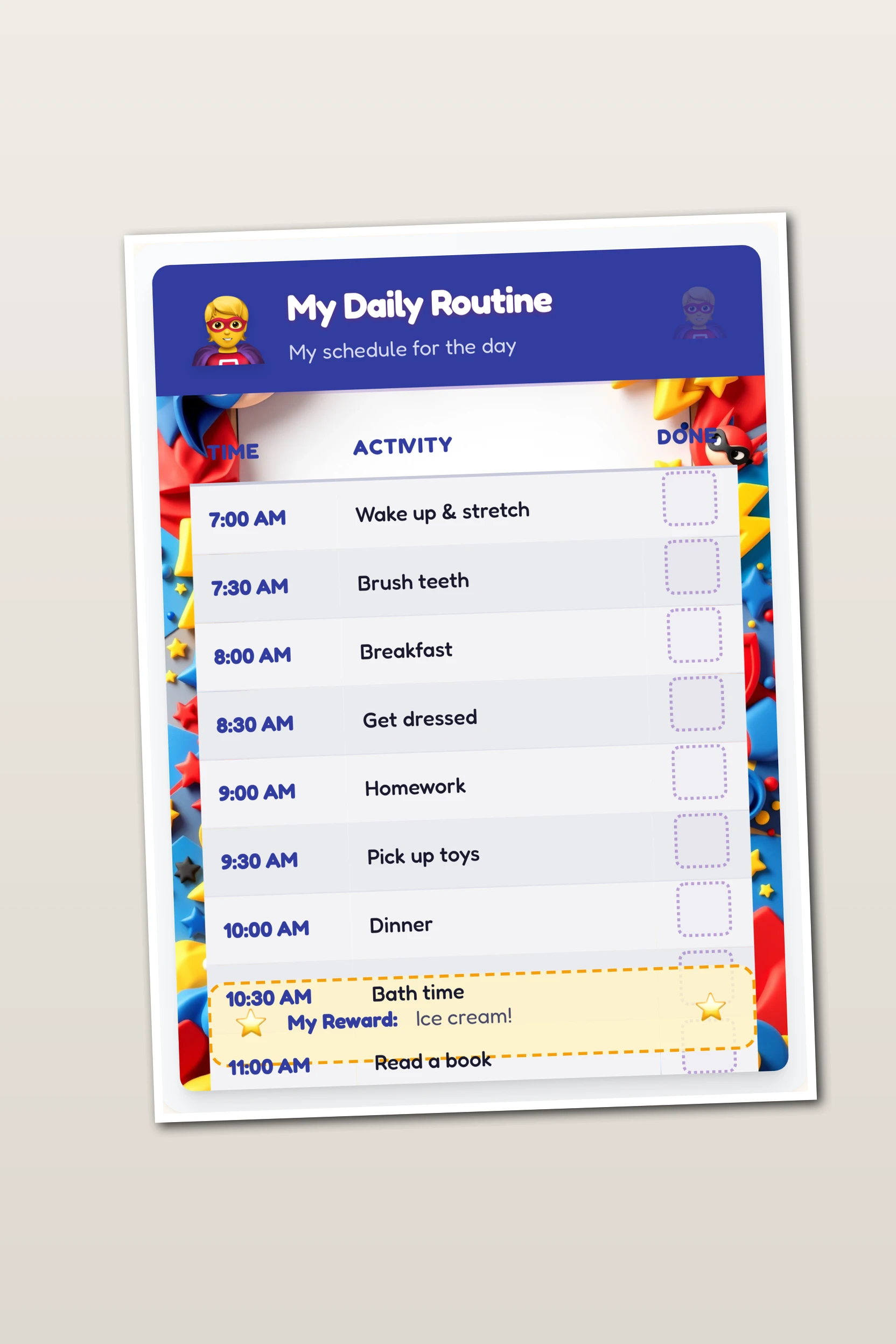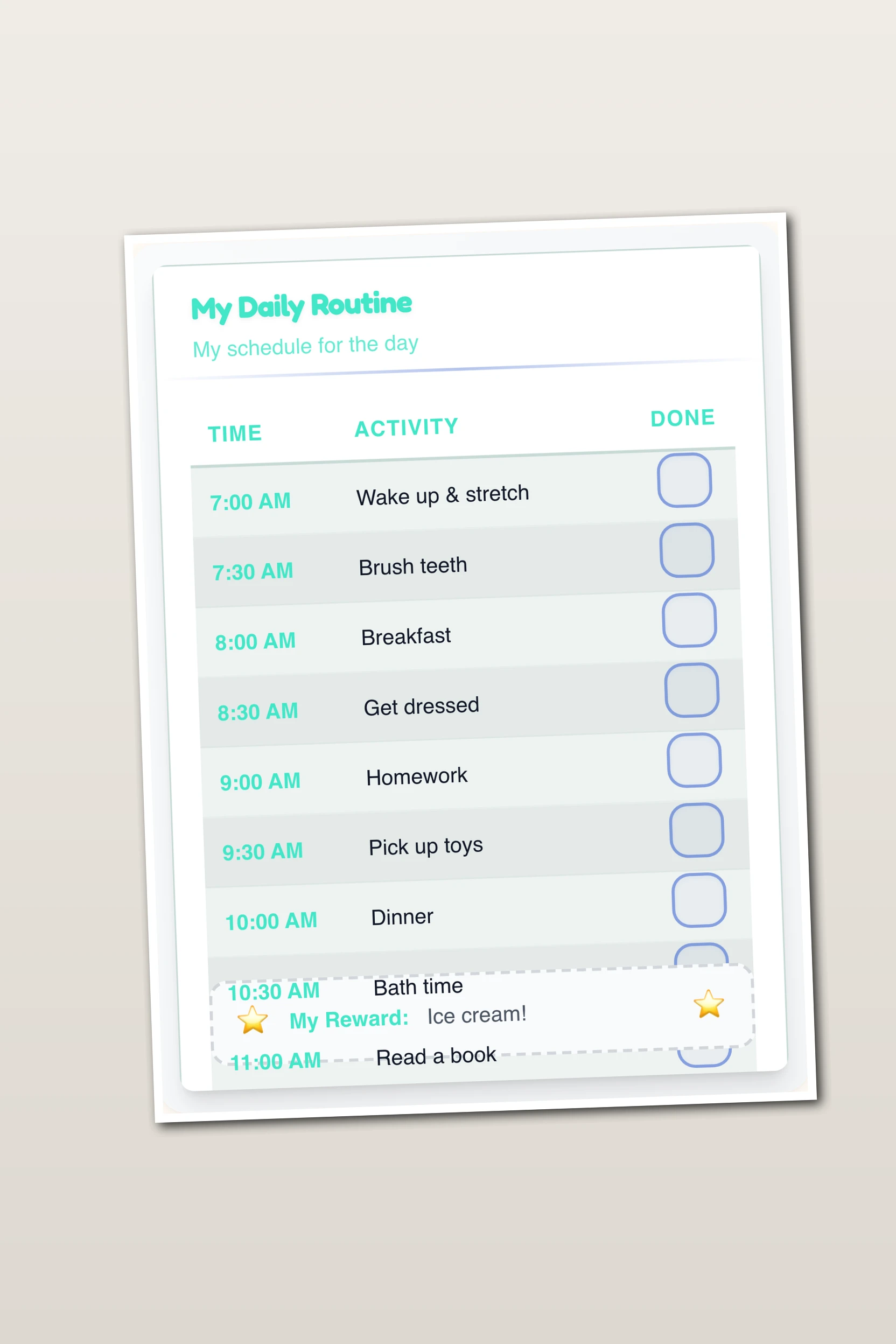
아이를 위한 방과 후 루틴 차트
아이들이 적은 스트레스와 더 높은 생산성으로 학교 모드에서 가정 생활로 전환하는 데 도움이 되는 체계적인 방과 후 루틴
방과 후 루틴이 생각보다 더 중요한 이유
The hours between 3 PM and dinner are often the most chaotic in a family's day. Your child walks through the door after six hours of structured learning, drops their backpack in the middle of the floor, and asks for a snack while simultaneously requesting screen time. Meanwhile, homework sits untouched, the lunchbox is still packed, and you are trying to start dinner. Without a plan, this window becomes a daily source of conflict.
An after-school 루틴 차트 transforms this chaotic transition into a predictable sequence that children can follow independently. The reason this time period is so challenging is that children experience a massive shift in expectations. At school, every minute is structured by teachers. At home, they suddenly have freedom but no framework. An after-school routine provides just enough structure to bridge that gap without making home feel like an extension of school.
Studies on childhood self-regulation show that the after-school period is when children are most emotionally depleted. They have spent the day managing social interactions, following rules, and concentrating on academic tasks. Coming home to a clear, visual routine reduces decision fatigue because they do not have to figure out what comes next. The chart tells them, and that predictability is genuinely calming for tired young minds.
The most effective after-school routines include four phases: arrival and decompression, a recharge period, focused work time, and free time earned after responsibilities are complete. This sequence respects the child's need to wind down while ensuring that homework and chores get done before the evening disappears into unstructured play.
4단계 방과 후 루틴
Phase 1: Arrival
- Hang up backpack and jacket in their designated spot
- Place lunchbox on the kitchen counter
- Remove shoes and put them by the door
- Hand any papers or permission slips to a parent
- Wash hands
Phase 2: Recharge
- Eat a healthy snack at the table
- Share one thing that happened at school today
- 15-20 minutes of free choice: outdoor play, drawing, or quiet activity
- No screens during recharge time
Phase 3: Homework and Chores
- Complete all homework assignments at a designated workspace
- Read independently for 15-20 minutes
- Do one assigned household chore
- Pack finished homework back into the school bag
- Check tomorrow's schedule and prepare any needed materials
Phase 4: Free Time
- Earned after phases 1-3 are complete
- Choose from approved activities: play, crafts, or limited screen time
- Help with dinner preparation if interested
- Begin winding down 30 minutes before bedtime routine starts
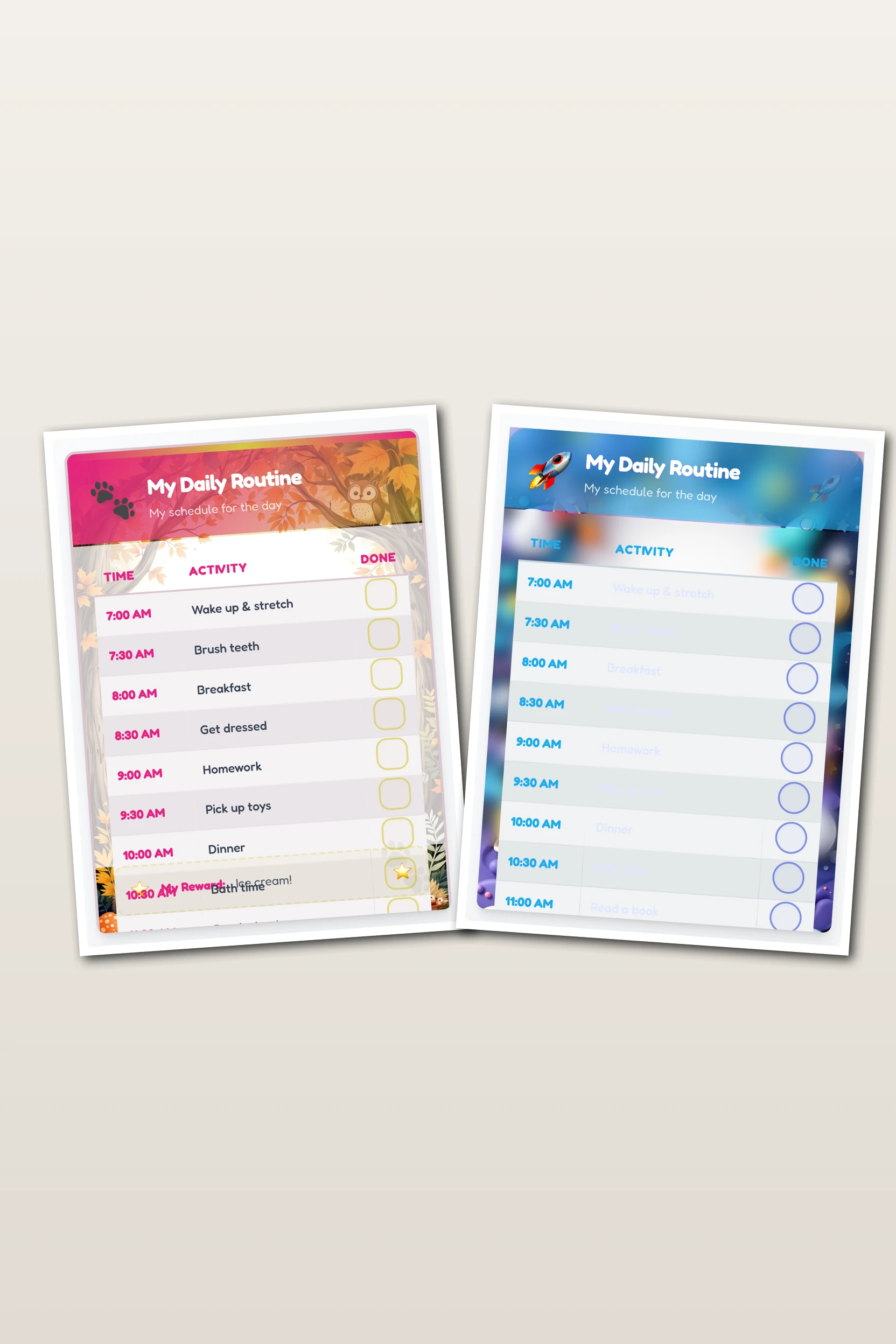
무료 인쇄 가능한 After School 루틴 차트s
Paws & Whiskers Watercolor
Dreamy watercolor border of cuddly puppies, kittens, bunnies, and hamsters in warm honey and blush pink tones. Paw prints and tiny hearts frame a cozy pet-lovers chore chart.
Squishy Puff Pals
Adorable 3D clay-sculpted kawaii animals bounce across a creamy pastel canvas in coral pink and butter yellow. Every row feels like a plush toy shelf with glossy rounded shapes and soft marshmallow glow.
Autumn Woodland Tales
A warm storybook border of illustrated woodland animals — curious foxes, wise owls, hedgehogs among mushrooms, and fawns peeking through golden autumn leaves. Premium childrens book illustration quality with rich brushwork and autumnal charm.
방과 후 루틴을 지속시키기
새로운 루틴의 처음 2주가 가장 힘듭니다. 아이들은 경계를 시험하고, 단계를 잊고, 구조에 저항할 것입니다
Place the after-school 루틴 차트 right where your child enters the house, whether that is the front door, the mudroom, or the garage entrance. The chart should be the first thing they see when they walk in. Eye level matters enormously. If they have to look up or search for the chart, they will skip it. Visibility equals compliance.
Build in a genuine reward for completing all four phases. This does not need to be material. Many families find that the free time in phase four is reward enough. Others use a simple sticker system where five completed days earns a special weekend activity. The reward should be immediate enough that young children can connect it to their effort but not so frequent that it loses meaning.
간식 먼저 규칙이 모든 것을 바꿉니다
배고픈 아이에게 숙제를 하라고 하지 마세요. 학교에 있는 동안 혈당이 크게 떨어지고, 배고프게 집에 돌아온 아이들은 더 짜증스럽고, 집중력이 떨어지며, 어떤 구조화된 활동도 더 저항하려 합니다. 항상 방과 후 루틴은 식탁에서 먹는 영양가 있는 간식으로 시작하세요. 단백질과 복합 탄수화물이 가장 좋습니다: 사과 슬라이스와 땅콩버터, 치즈와 크래커, 또는 그래놀라를 얹은 요구르트. 먹고 잠시 재충전하면, 훨씬 더 집중력 있게 숙제에 임합니다.