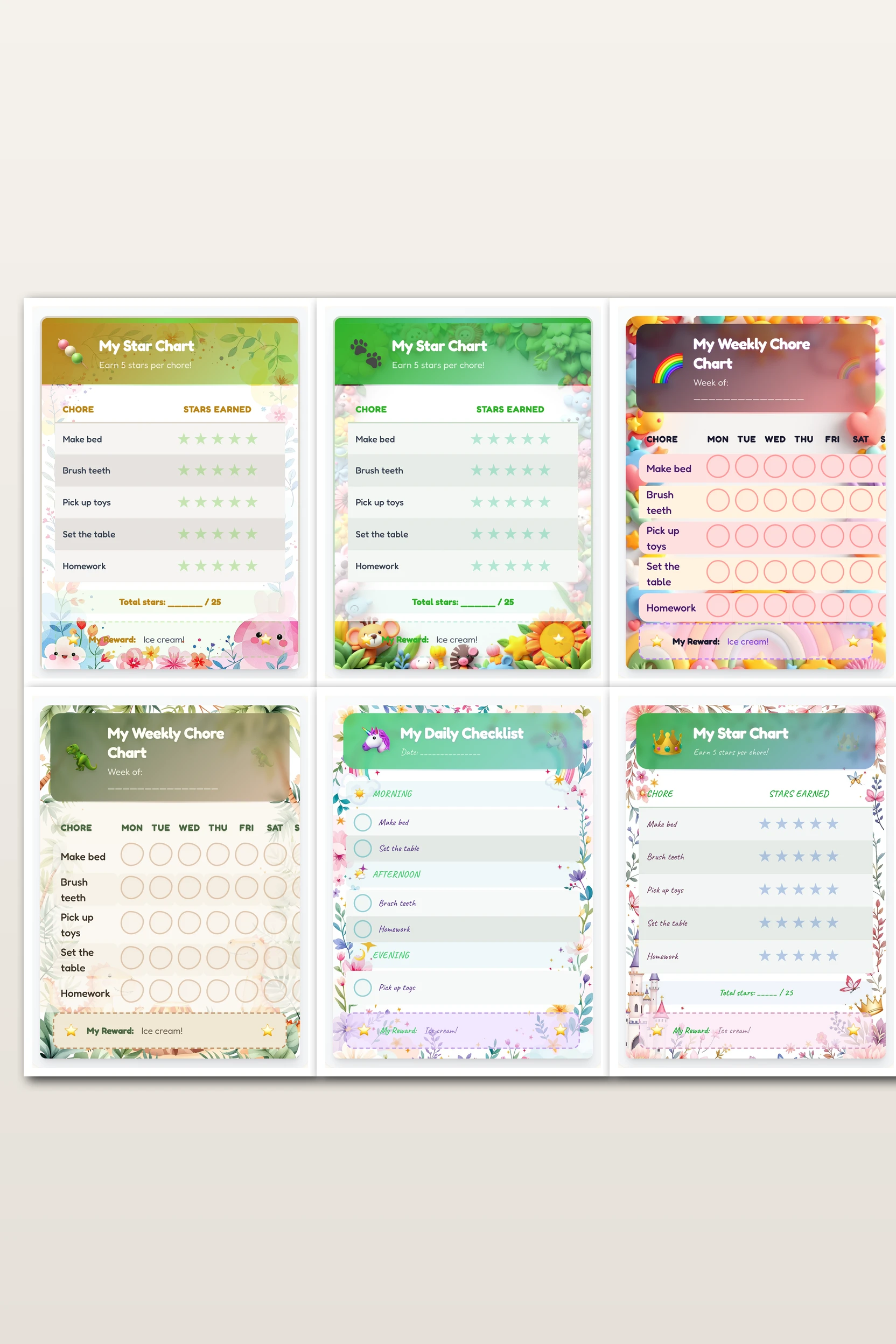
유아를 위한 최고의 집안일 차트 (2~4세)
실제로 어린 아이들에게 동기를 부여하는 간단한 과제, 시각적 단서, 별 보상 — 아동 발달 연구로 뒷받침되고 실제 부모들이 검증한.
지저분함이 핵심입니다
Your two-year-old wants to help unload the dishwasher. She grabs a plastic cup with both hands, carries it three steps, drops it, picks it up again, and deposits it on the counter with the concentration of a neurosurgeon. The whole operation takes forty-five seconds per cup. You could have emptied the entire dishwasher in the time she handles four items.
Let her. That clumsy, inefficient, maddening process is the entire point. At two, three, and four years old, chores are not about getting the house clean. They never were. They are about building the neural pathways that connect effort to outcome, action to completion, work to satisfaction. Every time a toddler finishes a task and sees a sticker go on a chart, a tiny loop closes in their brain: I did something, and it counted.
Child development experts broadly agree: kids who start helping around the house early tend to develop stronger self-discipline and a better work ethic as they grow up. The specifics matter less than the pattern. Not complex chores. Not many chores. Just some participation in household work, early and consistently.
유아가 실제로 할 수 있는 것: 현실적인 목록
Age 2 — First Steps
- 장난감을 통에 넣으세요 (정리하지 않아도 되고 그냥 넣기만 하면 됩니다)
- Throw a diaper into the trash can
- Place dirty clothes into the hamper (if the hamper is on the floor)
- Carry unbreakable dishes from the table to the counter (one at a time)
- Help wipe a table with a damp cloth (pushing the cloth around counts)
Age 3 — Growing Independence
- Pick up books and put them on a low shelf
- Help sort silverware from the dishwasher (forks with forks, spoons with spoons)
- Feed a pet by scooping food into a bowl
- Put shoes in a designated spot by the door
- Water a plant with a small watering can
Age 4 — Multi-Step Tasks
- Make their bed (pulling up the comforter counts)
- Set the table with plates and napkins (not glasses or breakable items)
- Clear their own plate after meals
- Match clean socks into pairs
- Put groceries onto low shelves or in a drawer
이 나이에 별 차트가 효과적인 이유
Toddlers cannot read a weekly grid. They cannot process a point system or delayed rewards. But they absolutely understand the immediate satisfaction of peeling a sticker and placing it on a chart. That sensory, tactile moment — the peel, the press, the visual result — is perfectly matched to how two-to-four-year-olds process achievement.
A 별 차트 for toddlers should have three elements: a picture of the chore (so they can identify it without reading), a space for the sticker (large enough for their motor skills), and no more than two or three rows. Every additional row adds complexity a toddler does not need. Two chores per day, every day, for a month, is sixty completed tasks. That is plenty.
The sticker itself matters. Use large, easily peelable stickers. Dollar store sticker sheets work perfectly. Let the child pick which sticker goes on, even if they choose the "wrong" one. The point is not accuracy. The point is the ritual of completing a task and marking it done.
부모들이 유아 집안일에서 저지르는 세 가지 실수
1) 한꺼번에 너무 많은 집안일 — 다섯 가지가 아니라 딱 하나부터 시작하세요. 첫 번째가 자동으로 몸에 배고 나서야(1~2주 후) 두 번째를 추가하세요. 다섯 살 미만 아이에게는 하루 세 가지가 최대입니다. 2) 어른 수준의 결과를 기대하는 것 — 유아가 "정돈한" 침대는 울퉁불퉁하고 삐뚤어도 됩니다. 그게 바로 정돈한 침대입니다. 아이가 나간 뒤 부모가 다시 정리하면, 아이는 자신의 노력이 충분하지 않다고 배우게 됩니다. 3) 루틴의 일관성 부족 — 집안일 시간은 매일 같은 시점에 이루어져야 합니다: 아침 식사 후, 스크린 타임 전, 또는 목욕 직후. 사흘 연속으로 빠지면 사실상 처음부터 다시 시작하는 셈입니다.
차트 만들기: 형식과 디자인 팁
Keep the chart at the child's eye level. This seems obvious but most charts end up at adult eye level on the fridge. A toddler should be able to walk up to their chart, see it clearly, point to the chores, and place their stickers without needing to be lifted up. Use a low section of the wall, the bottom of a cabinet door, or a small easel at their height.
Use pictures instead of words. A simple icon of a bed means "make your bed." A drawing of a hamper means "put clothes in the hamper." Text is meaningless to a pre-reader, and even early readers process images faster. Our toddler templates use large, clear icons for exactly this reason.
Print a fresh chart every week. A chart with three weeks of stickers on it loses its visual impact. A crisp, new chart with empty sticker spots is an invitation. The fresh start effect is real and it works especially well on young children. Sunday evening, print the new chart. Monday morning, start fresh.
Rewards Without Bribery: A Better System
- 1
Understand the Difference
뇌물 주기는 즉흥적입니다("장난감 지금 당장 치워, 그러면 쿠키 줄게"). 보상 시스템은 선제적이고 체계적입니다("오늘 스티커를 다 채우면 취침 동화책을 네가 고를 수 있어").
- 2
시간 기반 보상 선택하기
취침 시 추가 동화책, 방문할 공원 선택, 차 안에서 음악 선택, 저녁 요리 돕기(아이들은 이것을 특권으로 봄), 또는 욕조에서 5분 추가 물놀이. 이것들은 비용이 전혀 들지 않고 유대감을 강화합니다.
- 3
음식과 스크린 보상 피하기
집안일 완료를 사탕과 연결하면 건강하지 않은 패턴이 생깁니다. '집안일 다 하면 아이패드 줄게'라고 하면 아이패드가 주인공이 되고 집안일은 짜증나는 장애물이 됩니다. 완료 자체가 보람 있게 느껴지길 원해야 합니다.
유아 집안일에 관한 자주 묻는 질문
유아를 위한 최고의 템플릿
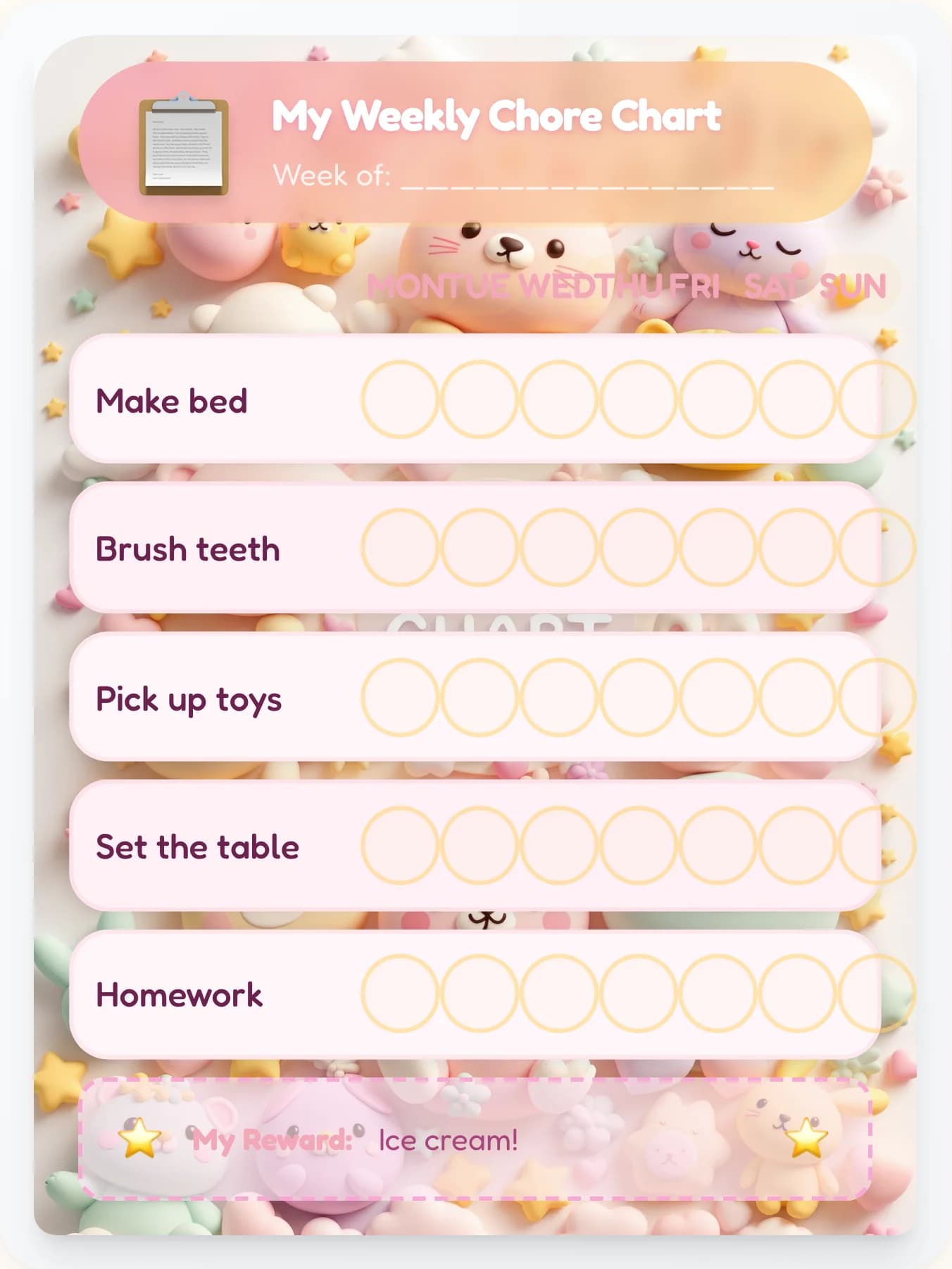
Squishy Puff Pals
Adorable 3D clay-sculpted kawaii animals bounce across a creamy pastel canvas in coral pink and butter yellow. Every row feels like a plush toy shelf with glossy rounded shapes and soft marshmallow glow.
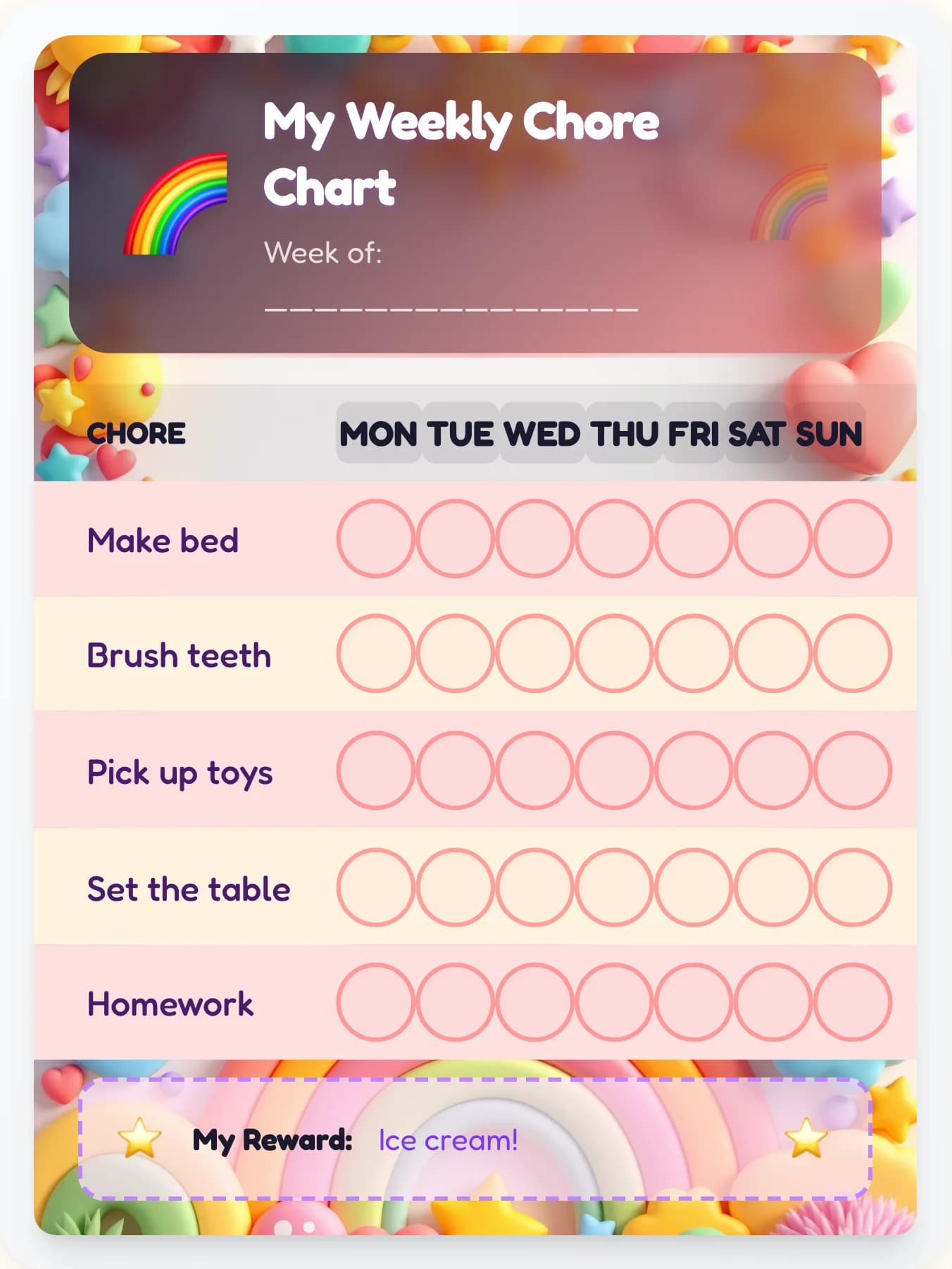
Rainbow Week
Bold rainbow rows where each chore has its own vibrant color
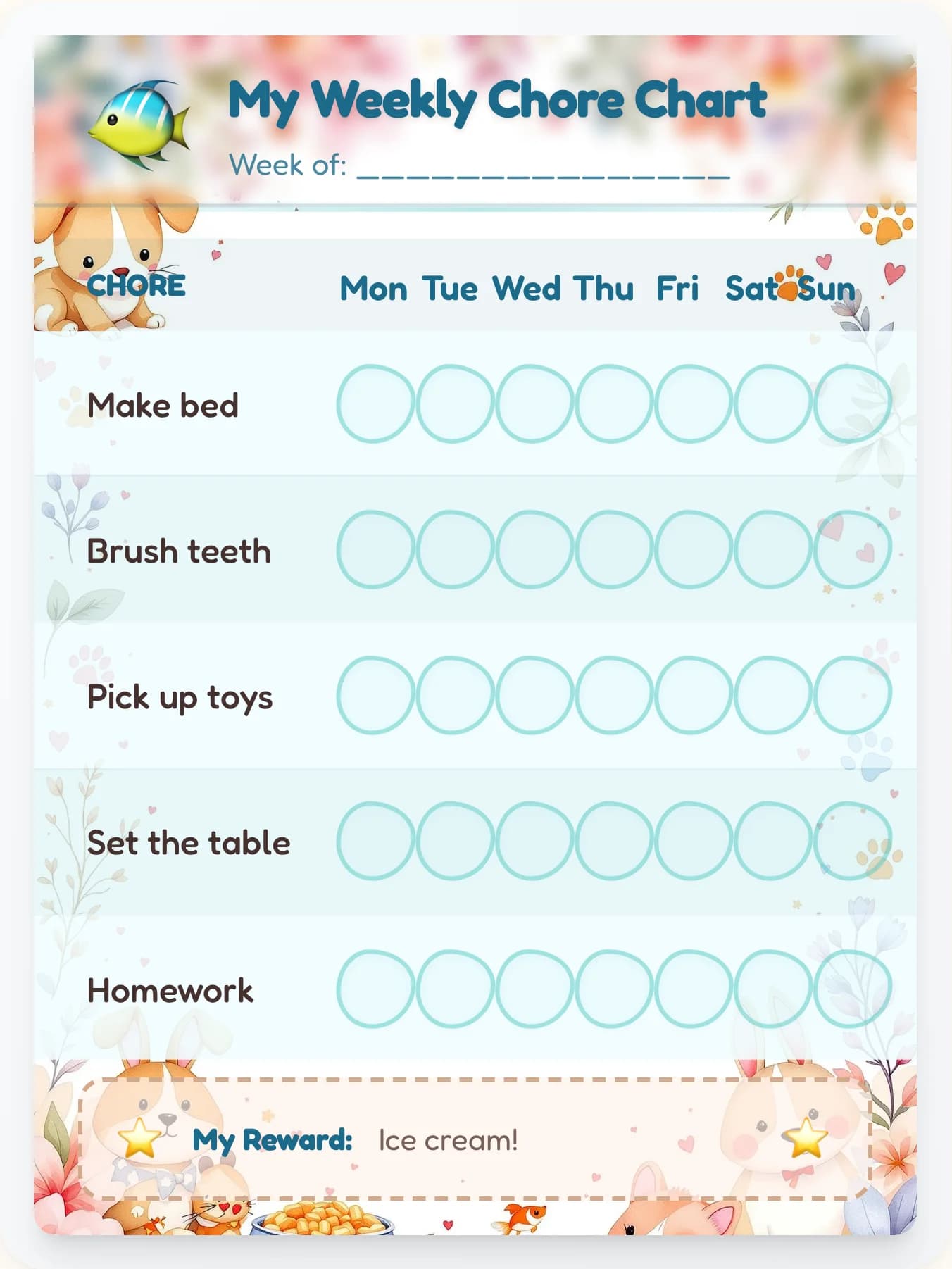
Aqua Fins & Friends
Cool ocean watercolor border alive with tropical fish, playful turtles, and swirling seahorses in turquoise and seafoam tones. A refreshing underwater world frames this weekly chore chart for water-loving kids.
Getting Started Today
Open the chart editor on our site and select a toddler preset. Pick a dinosaur, rainbow, or animal theme. Add your child's name and choose two simple chores from the preset list. Print it, hang it at your child's eye level, and buy a sheet of star stickers.
Tomorrow morning after breakfast, walk your toddler to the chart and do the first chore together. Place the sticker together. That is it. That is the entire system on day one. Everything else builds from that single moment of "I did it, and here is my star to prove it."
핵심 요점
- 다섯 가지가 아닌 하나의 집안일로 시작하기 — 첫 번째가 자동화된 후에만 더 추가하기
- 유아 눈높이에 걸린 큰 스티커 자리가 있는 그림 기반 차트 사용하기
- 두 살짜리는 장난감을 통에 넣고 깨지지 않는 그릇을 들 수 있습니다; 네 살짜리는 침대를 정리하고 식탁을 차릴 수 있습니다
- 별 스티커는 유아의 뇌 발달에 맞는 즉각적이고 촉각적인 보상을 제공합니다
- 음식이나 스크린 타임보다 시간 기반 보상(추가 동화책, 공원 선택)을 선택하세요
- '백지 효과'를 위해 매주 새 차트 인쇄하기
- 거부할 때 침착하게 유지하세요 — 다음 활동은 집안일이 완료될 때까지 기다리면 됩니다
- 결과의 완벽함보다 타이밍의 일관성이 더 중요합니다