아이 집안일 차트를 위한 최고의 보상 시스템
모든 나이의 아이들에게 실제로 동기를 부여하는 것 — 아동 발달 연구로 뒷받침
집안일 보상의 과학
Rewards work — but only when matched to the child's developmental stage. A 스티커 차트 motivates a 4-year-old because they crave immediate, tangible feedback. The same stickers bore a 9-year-old who needs something more meaningful.
The goal of any reward system is to bridge the gap between effort and satisfaction until intrinsic motivation develops. Young children need external rewards because they cannot yet feel the internal satisfaction of a job well done. By age 10-12, many children have internalized the habit and need fewer external incentives.
The key principle: rewards should decrease in frequency as the habit strengthens. Start with daily rewards, shift to weekly, then to occasional recognition. The 집안일 차트 itself becomes the reward — the satisfaction of a fully checked week.
연령대별 최고의 보상
2-4
Stickers, stamps, high-fives, dance parties, verbal praise
Money (they don't understand it), delayed rewards
5-7
Chart completion prizes, choosing dinner, extra story, screen time bonus
Large toys (sets expectations too high), food as reward
8-10
Privileges (later bedtime, friend sleepover, pick family movie), small allowance for extras
Paying for basic chores (creates entitlement)
11-13
Earned allowance for extras, device time, independence (walk to friend's house)
Excessive screen time rewards (creates dependency)
14-17
Money for above-and-beyond tasks, car privileges, social freedom
Tying all money to chores (basic contributions should be expected)
용돈 논쟁: 집안일에 대해 돈을 줘야 할까요?
This is the most debated topic in parenting circles. Research supports a middle ground: basic chores are unpaid family contributions, extra tasks can earn money.
기본 집안일 — 침대 정리, 접시 치우기, 방 정돈 — 은 모든 가족이 하는 일입니다. 이것에 돈을 주면
Extra chores — washing the car, organizing the garage, deep cleaning the bathroom — can be paid tasks. This teaches the work-for-pay concept without undermining the 'we all contribute' foundation. Think of it as the difference between doing your own laundry (expected) and doing the neighbor's yard work (a job).
The 80% Rule
주간 보상 기준을 100%가 아닌 80%로 설정하세요. 완벽한 한 주가 필요하다면, 나쁜 월요일 하나가 한 주 전체를 망치고 동기가 무너집니다. 80% 기준은 몇 가지 과제를 빠뜨려도 여전히 성공할 수 있음을 의미합니다. 이것이 실수 후에도 계속 노력하게 합니다.
오래 지속되는 보상 시스템 설정하기
- 1
일일 및 주간 보상 정의하기
매일: 말로 하는 칭찬과 체크 표시/스티커. 매주: 80% 목표 달성으로 얻는 특권. 매월: 꾸준한 완료에 대한 특별 활동.
- 2
차트에서 보상을 볼 수 있게 하기
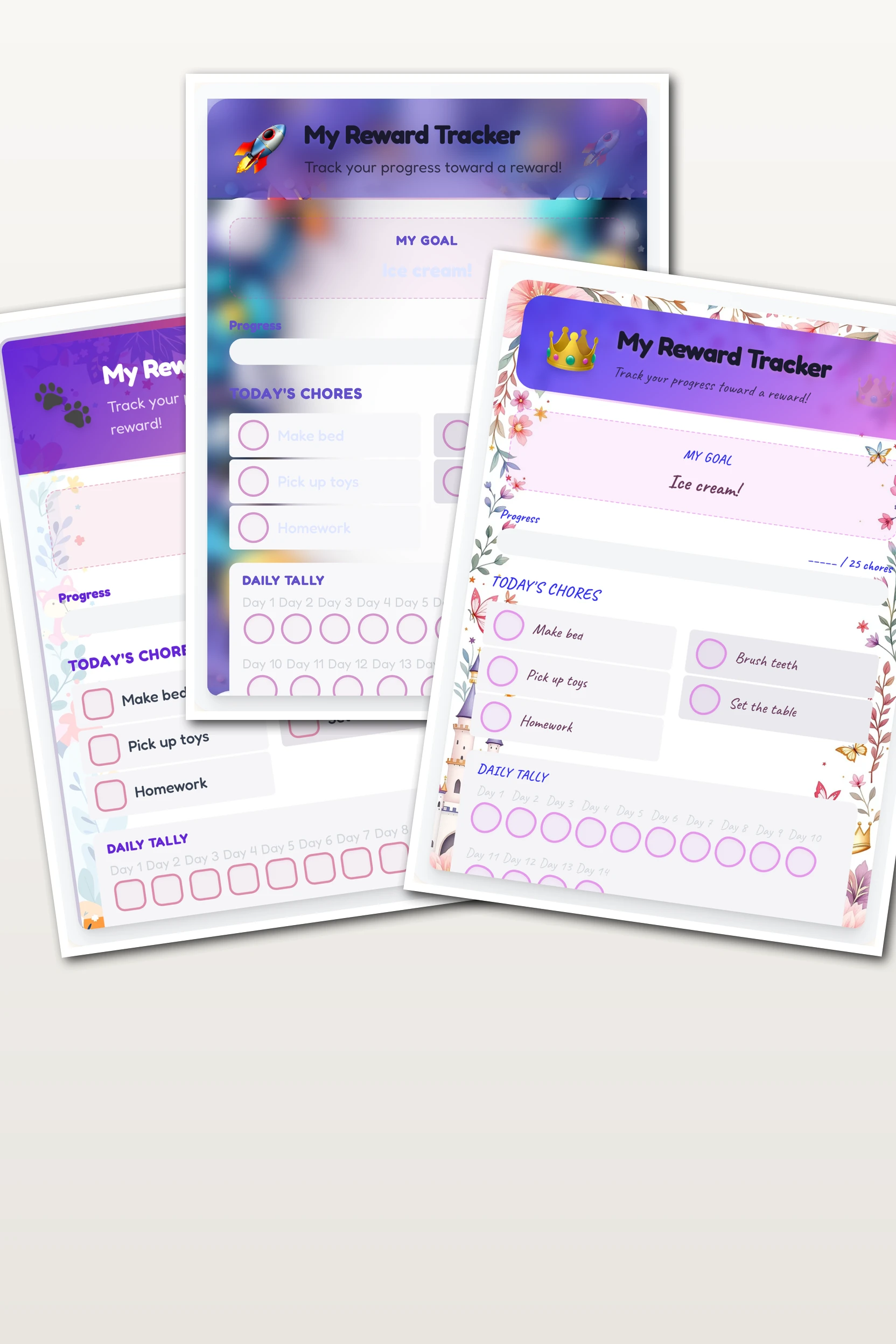
하단에 보상 트래커를 추가하세요 — 진행 바, 디딤돌, 또는 보석 모으기 형식으로. 아이들은 목표에 얼마나 가까이 왔는지 볼 필요가 있습니다.
- 3
Celebrate weekly wins together
일요일 저녁 점검: 체크 수를 세고, 성공을 축하하며, 특권을 수여하세요. 계산 연습이 아닌 가족 의식으로 만드세요.
- 4
시간이 지남에 따라 외적 보상 줄이기
2~3개월간 일관성을 유지한 후, 주간 보상에서 격주, 그리고 월간 보상으로 전환하세요. 습관이 점차 그 자체로 보상이 되어야 합니다. 동기가 떨어지면 일시적으로 보상을 다시 늘리세요.
“The best reward for doing chores is not a toy or a treat — it is the child's growing belief that they are capable and their contributions matter.”
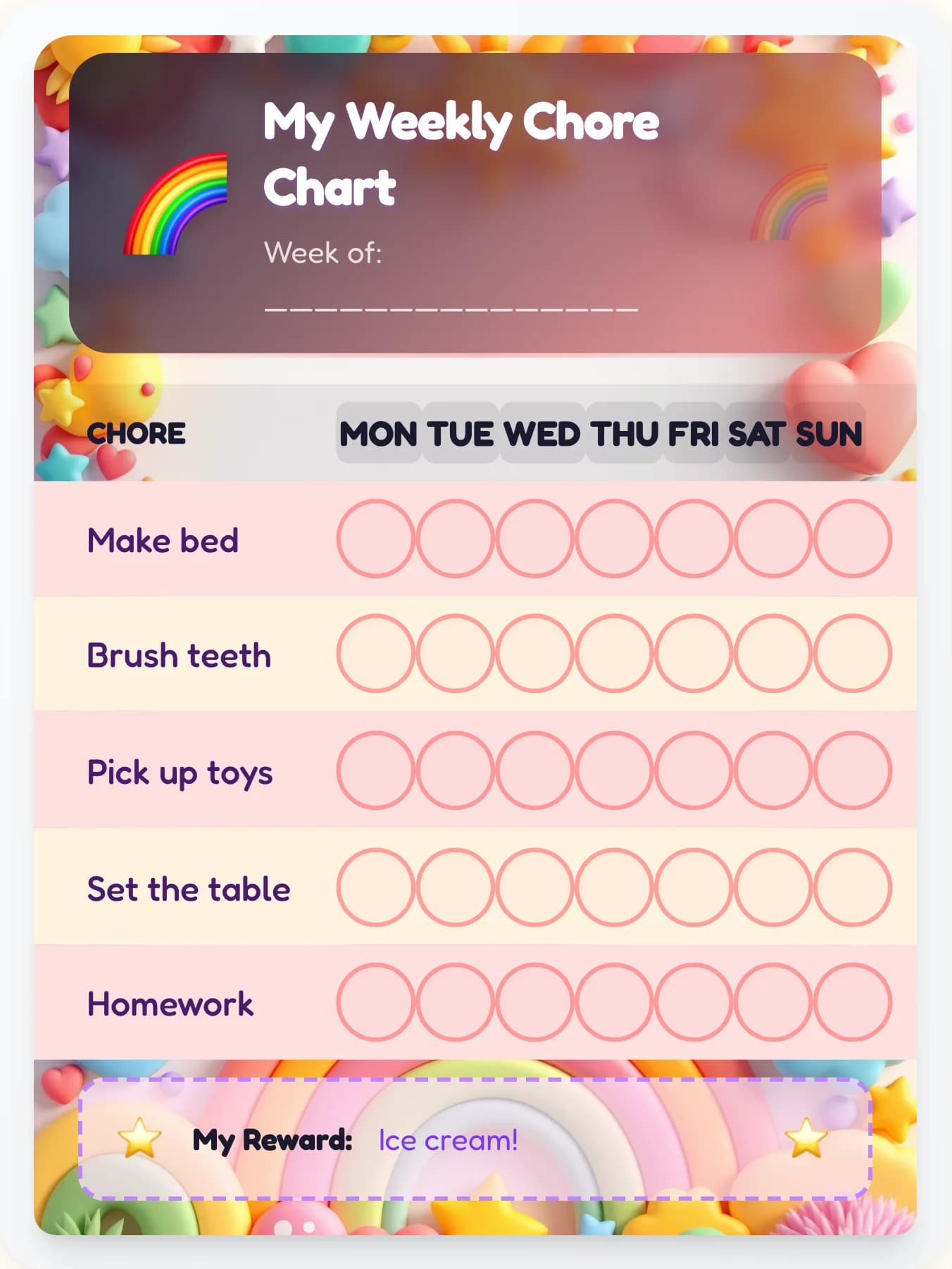
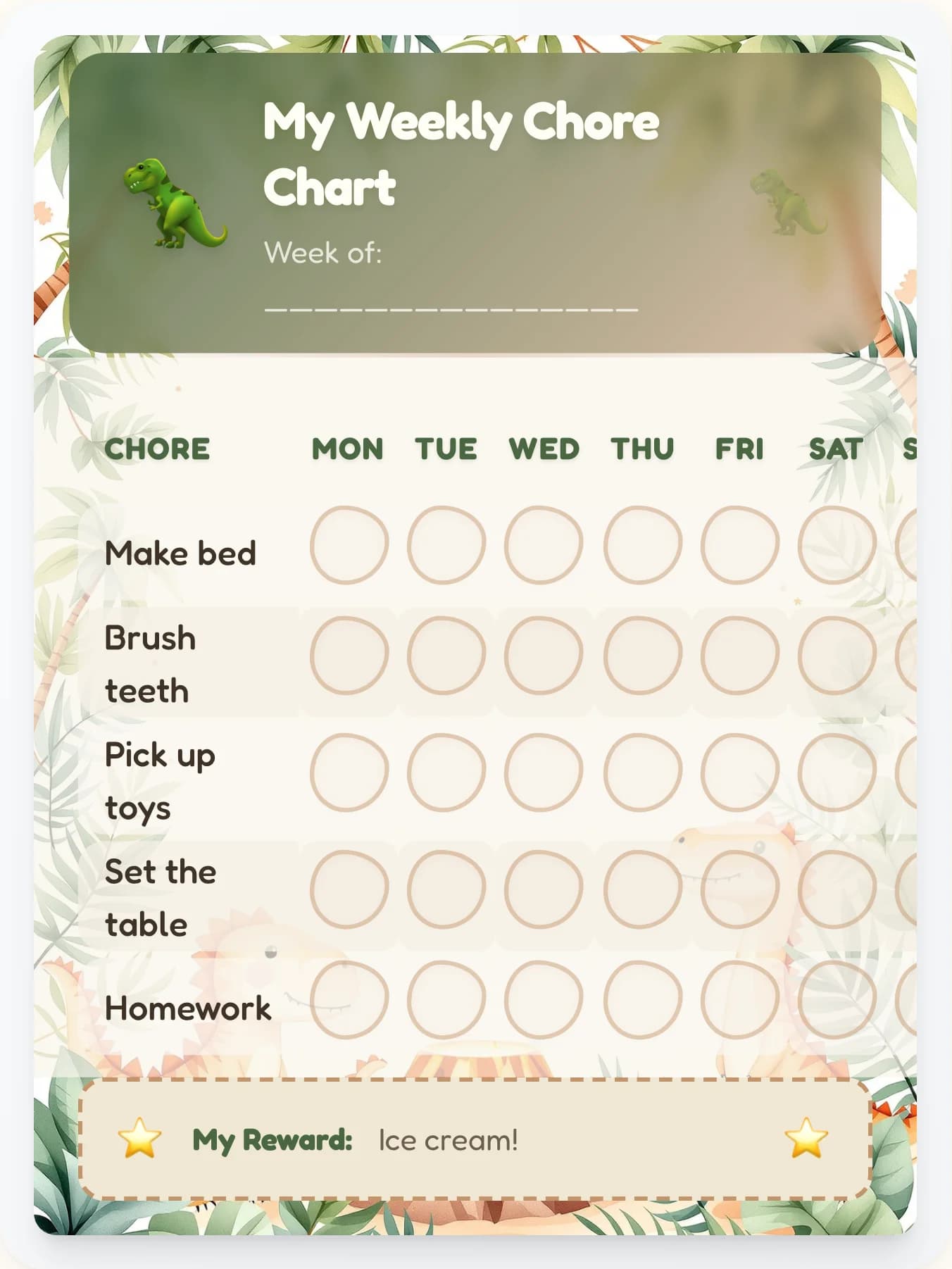
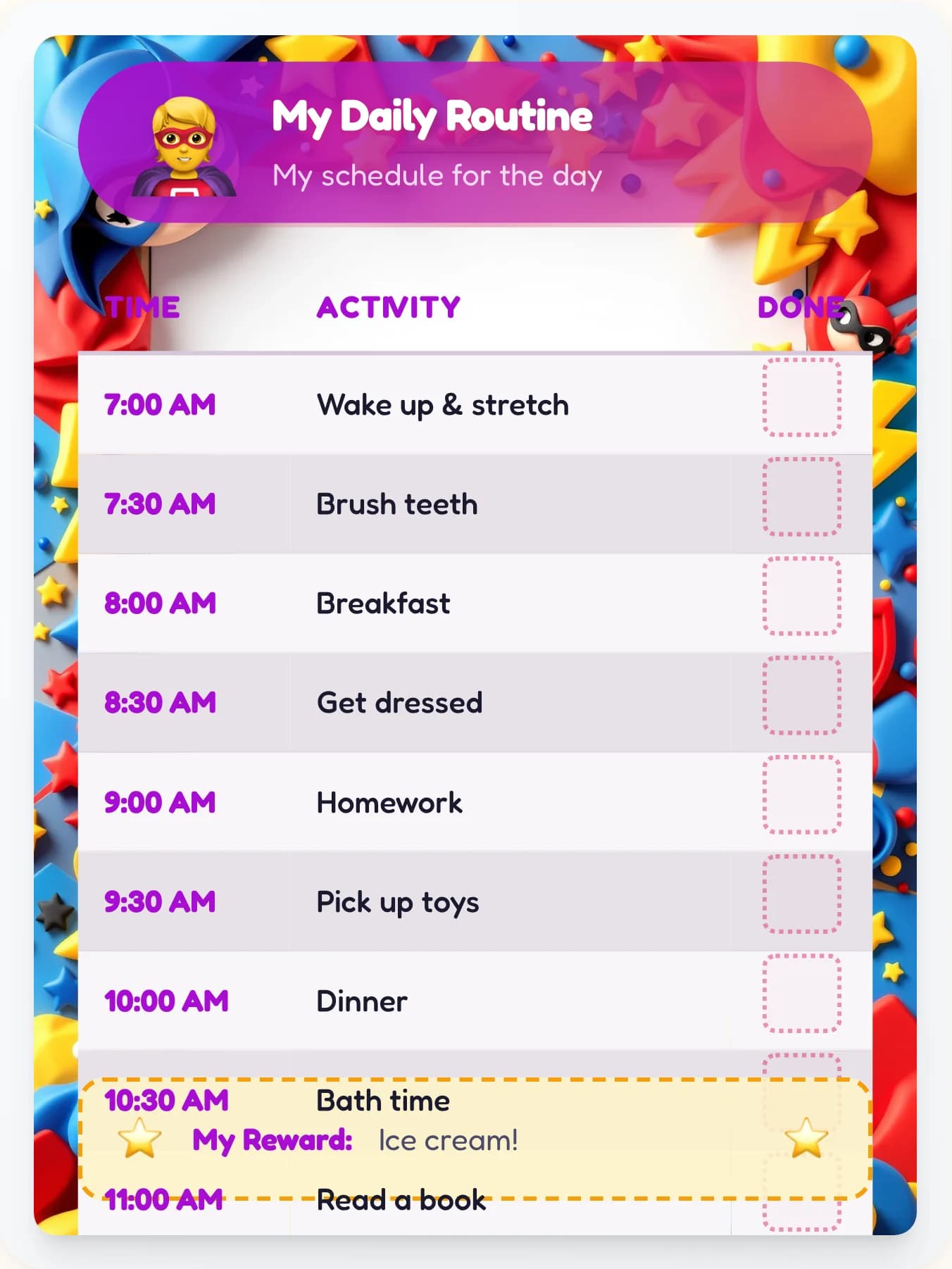
최고의 보상 차트 템플릿
Common Questions
핵심 요점
- 아이의 발달 단계에 맞는 보상 선택하기
- 기본 집안일(무급)과 추가 과제(유급 가능)를 분리하세요
- 주간 보상에는 100%가 아닌 80% 기준 사용하기
- 차트 자체에서 보상 진행 상황을 볼 수 있게 하세요
- 습관이 강화됨에 따라 외적 보상을 점차 줄여가세요
- 궁극적인 목표는 내재적 동기: 기여에 대한 자부심