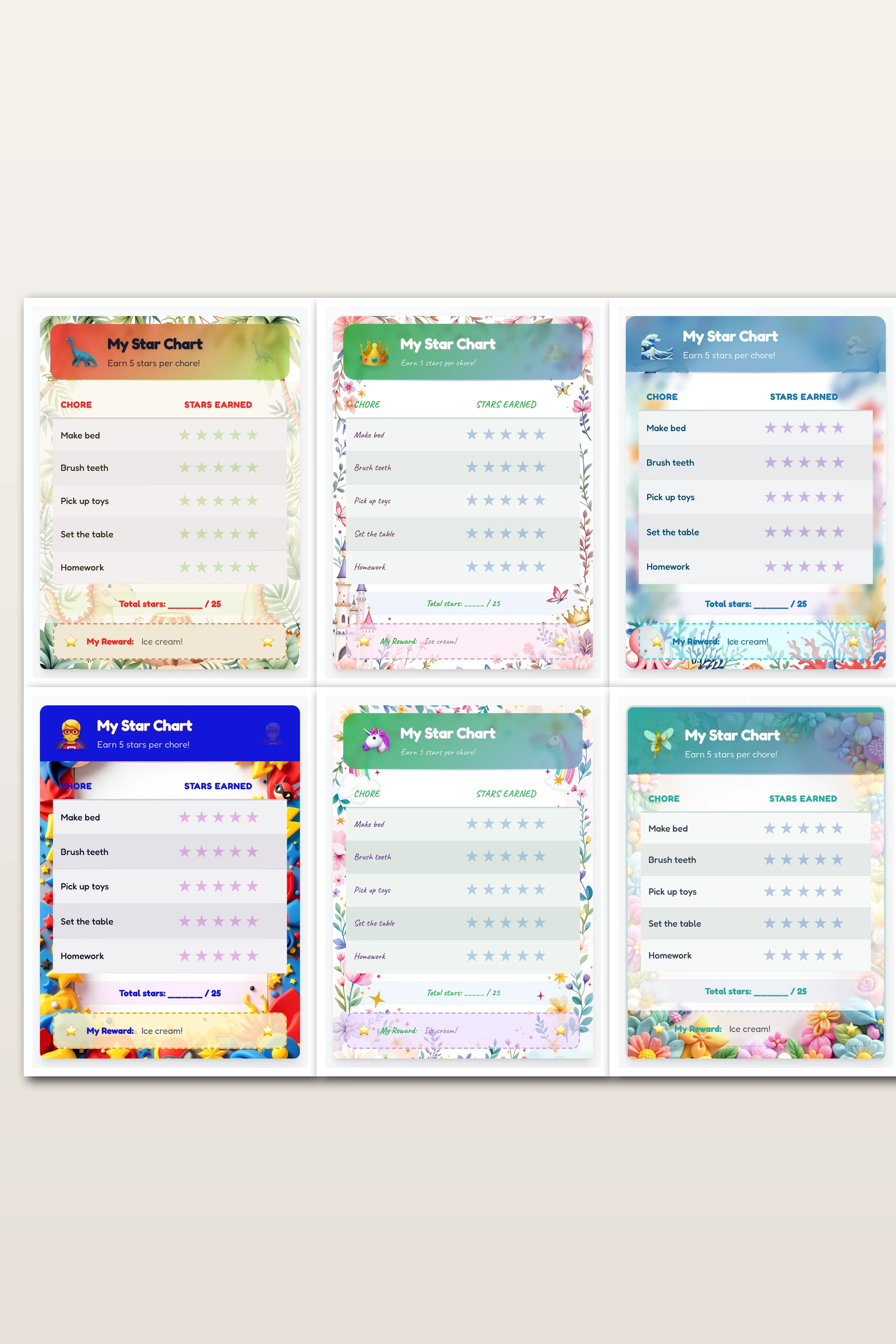
아이를 위한 별 차트: 스티커 보상 시스템 완전 가이드
어린 아이들에게 가장 인기 있는 집안일 차트 형식 — 그리고 올바르게 사용하는 방법
별 차트가 어린 아이들에게 매우 효과적인 이유
Star charts work because they combine three things young children crave: immediate feedback, visual progress, and tangible rewards. When a child places a star sticker on their chart, they experience all three simultaneously — the act of sticking, seeing the chart fill up, and earning toward a goal.
The psychology is straightforward: children aged 2-7 are in the pre-operational stage of development. They think concretely, not abstractly. They cannot understand 'you will feel good about being responsible someday.' But they absolutely understand 'five stars equals choosing dessert tonight.'
Star charts are also brilliantly simple. There is no complex tracking, no weekly summaries, no percentages. Did you do the task? Star. Did you not? Empty space. Even a 2-year-old understands this binary system.
별 차트 vs 다른 형식
| Feature | Star Chart | Weekly Grid | Daily Checklist |
|---|---|---|---|
| Best age | 2-7 | 5-12 | 3-10 |
| Visual appeal | Very high (stickers!) | Medium | Low-medium |
| Tracking type | Per-task stars | Day x task grid | Sequential list |
| Reward system | Built-in (fill the chart) | Separate | Separate |
| Complexity | Very simple | Moderate | Simple |
| Motivation type | Immediate, tangible | Pattern/streak | Completion satisfaction |
효과 있는 별 차트 설정하기
- 1
Choose 3-5 target behaviors
구체적이고 관찰 가능한 과제를 선택하세요: '착하게 행동해'가 아닌 '양치하기.' 각 과제는 5분 이내에 완료되고 매일 예측 가능한 시간에 이루어져야 합니다.
- 2
별 규칙을 명확하게 정의하기
아이는 하루가 끝날 때가 아니라, 과제를 완료하자마자 즉시 별을 받습니다. 지연된 별은 효력을 잃습니다. 아이가 즉시 붙일 수 있도록 스티커를 가까이 두세요.
- 3
Set a reasonable milestone
2~4세: 별 5개 = 소소한 보상. 5~7세: 별 10~15개 = 더 큰 보상. 아이가 초반 성공을 경험할 수 있도록 이정표는 2~3일 안에 달성 가능해야 합니다.
- 4
아이가 별을 붙이게 하기
스티커를 떼고 붙이는 실제 행동이 보상의 절반입니다. 절대 아이를 대신해서 별을 붙이지 마세요. 30초간 더듬거리더라도 그 촉각적 경험이 깊이 만족스럽습니다.
- 5
Celebrate milestone achievements
이정표에 도달했을 때 즉시 축하하세요. 가능하면 보상은 같은 날 이루어져야 합니다. 지연된 보상은 노력과 결과 사이의 연결을 약화시킵니다.
Never Remove Stars
한번 받은 별은 그대로 남습니다. 나쁜 행동에 대한 벌로 별을 빼앗지 마세요. 별은 완료된 일을 나타냅니다 — 빼앗으면 아이들에게 노력이 지워질 수 있다는 것을 가르쳐 동기를 파괴합니다. 별 차트 시스템과 별개로 행동을 훈육하세요.
별 차트를 넘어서야 할 때
Star charts are not forever. Most children naturally outgrow them between ages 7 and 9. Signs it is time to transition: they forget to place stars but still do the tasks, they stop caring about stickers, or they ask for a more grown-up system.
The transition should be gradual. Move from daily stars to a weekly check system. Replace stickers with checkmarks. Shift rewards from tangible prizes to privileges and experiences. The underlying structure stays the same — only the visual wrapper changes.
Some children hold onto 별 차트s longer, especially if the theme is exciting (space stars, princess gems, dinosaur bones). That is perfectly fine. There is no wrong age to use a visual reward system if it still motivates.
최고의 별 차트 템플릿
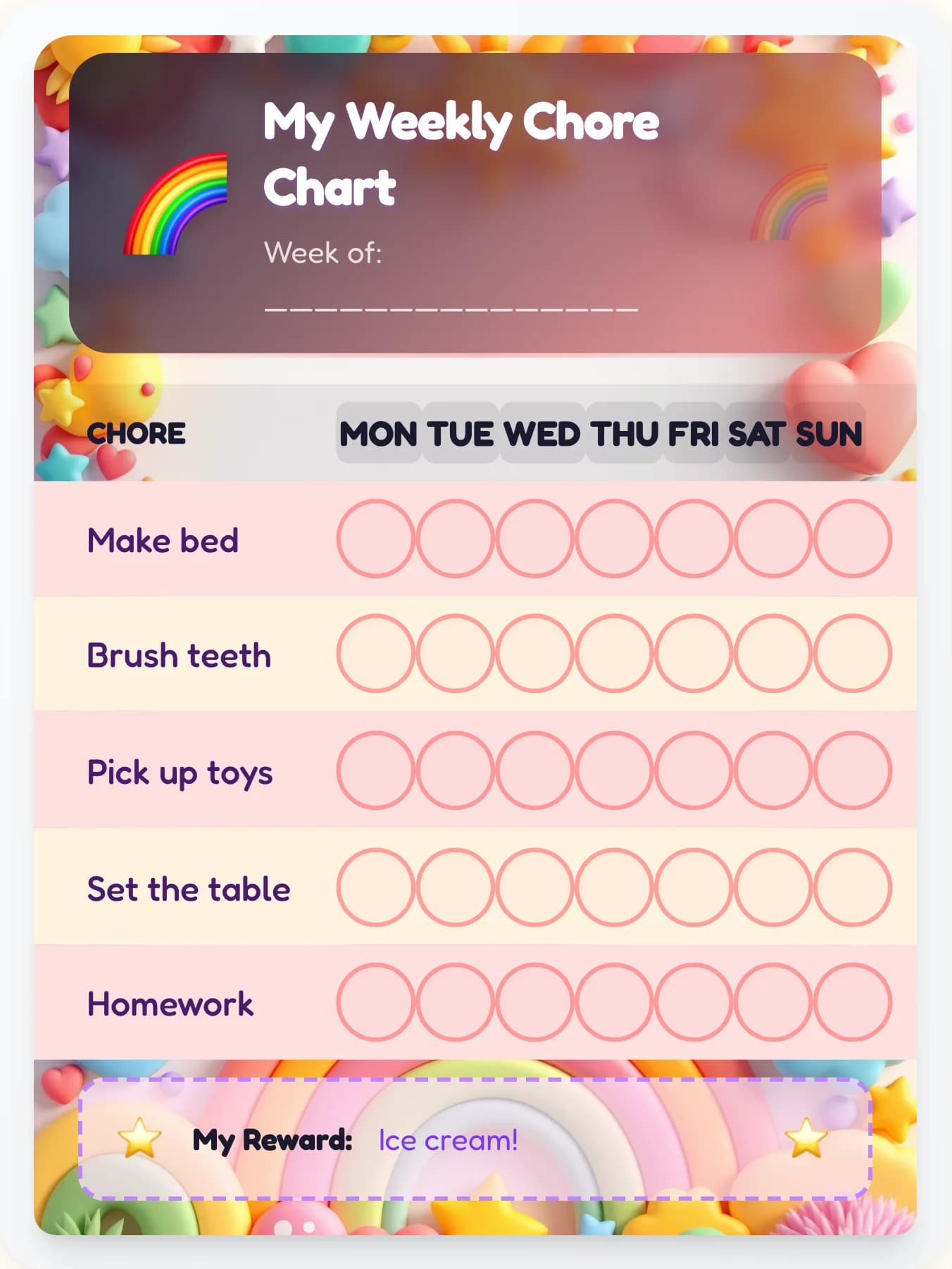
Rainbow Week
Bold rainbow rows where each chore has its own vibrant color
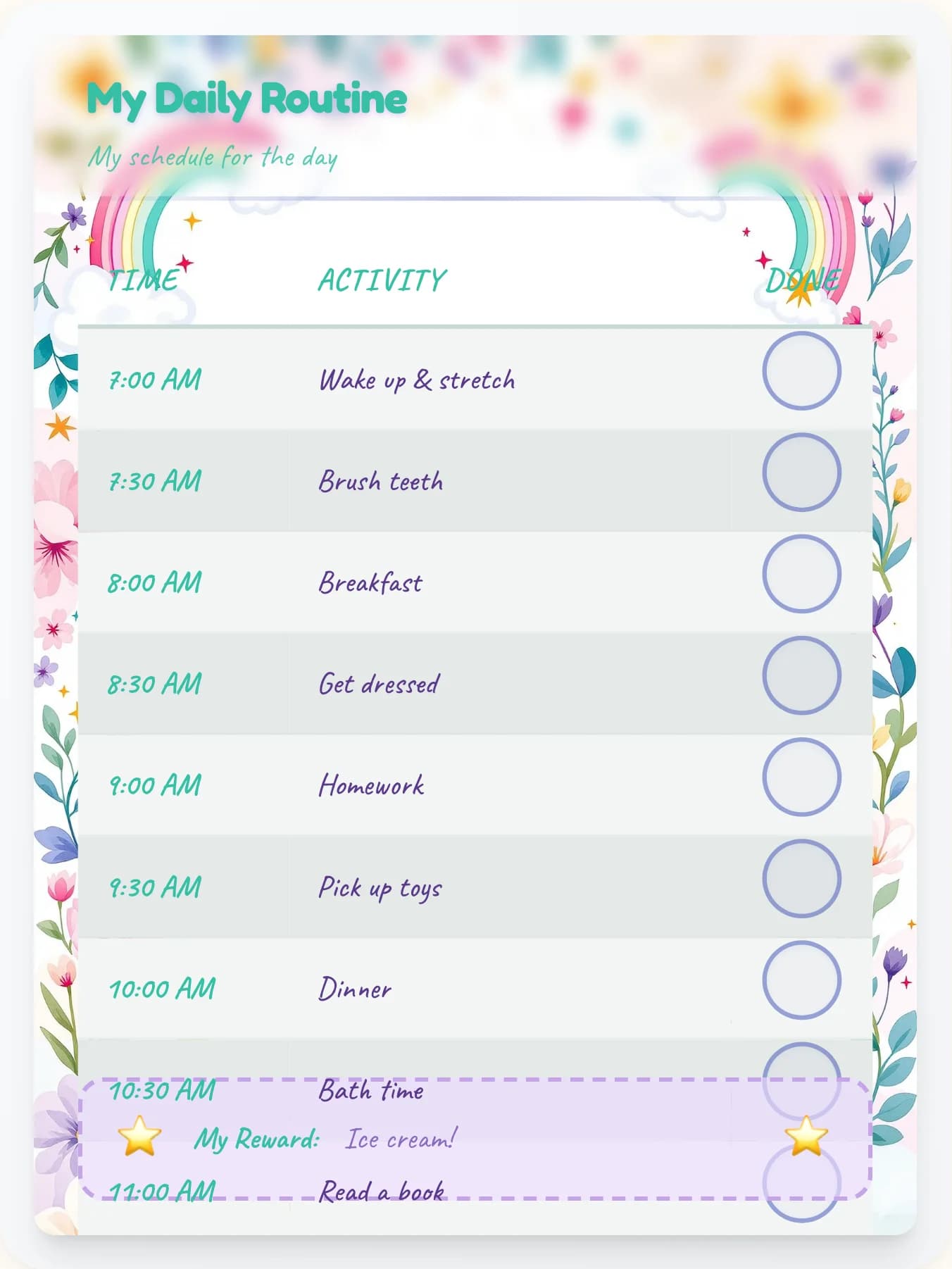
Funky Unicorn Schedule Chart
Funky Unicorn Schedule Chart — a illustrated style routine schedule with unicorn theme. Unique colors and layout for kids.
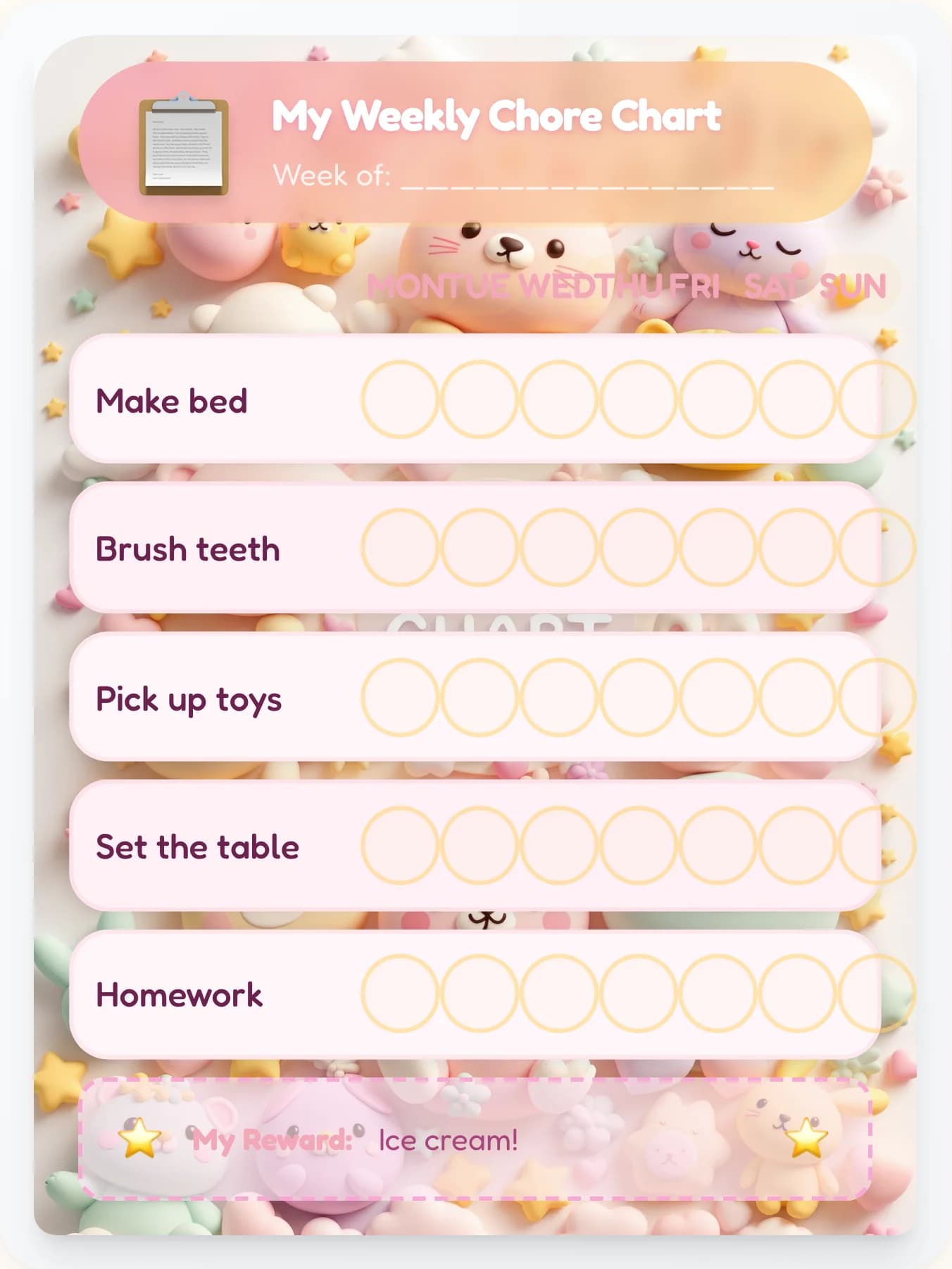
Squishy Puff Pals
Adorable 3D clay-sculpted kawaii animals bounce across a creamy pastel canvas in coral pink and butter yellow. Every row feels like a plush toy shelf with glossy rounded shapes and soft marshmallow glow.
Star Chart Questions
핵심 요점
- 별 차트는 즉각적이고 유형의 피드백 덕분에 2~7세에게 가장 효과적입니다
- 과제 완료 직후 즉시 별 스티커를 주세요 — 절대 미루지 마세요
- 달성 가능한 이정표 설정하기(유아는 별 5개, 학령기는 10~15개)
- 아이가 직접 별을 붙이게 하세요 — 촉각적 경험이 중요합니다
- 벌로 이미 받은 별을 빼앗지 마세요
- 7~9세 즈음에 체크 표시 시스템으로 점차 전환하기