Building Lasting Habits With 집안일 차트s
오래 지속되는 루틴 뒤에 있는 육아 과학 — 그리고 열정보다 일관성이 더 중요한 이유
아이들의 뇌에서 습관이 형성되는 방법
Habits are not built through willpower — they are built through repetition. Every time a child completes a task at the same time, in the same sequence, the neural pathway strengthens. After roughly 30-60 repetitions, the behavior becomes automatic.
This is why 집안일 차트s work: they externalize the sequence. The child does not need to remember what comes next — the chart tells them. Over time, the chart becomes unnecessary because the sequence has been encoded in their brain.
For children, habit formation is faster than for adults because their brains are more plastic. A 5-year-old who makes their bed every morning for 6 weeks will likely continue the habit even without the chart. The chart is scaffolding — it supports the structure until it can stand on its own.
66 days
average time for an adult habit to become automatic
European Journal of Social Psychology
30-40 days
estimated time for children due to brain plasticity
Developmental Psychology Review
90%
of daily actions are habitual, not deliberate
Duke University Study
집안일 습관 형성의 세 단계
Phase 1: The Honeymoon (Days 1-7). Everything is new and exciting. The child loves their chart, eagerly places stickers, and completes tasks enthusiastically. This phase is easy but deceiving — the habit has not formed yet.
Phase 2: The Resistance (Days 8-21). Novelty fades. The child forgets, procrastinates, or outright refuses. This is the critical phase where most 집안일 차트s fail. Parents give up, assuming the chart does not work. But this resistance is normal and necessary — it is the brain's old patterns pushing back against new ones.
Phase 3: The Groove (Days 22-45+). If you push through resistance with calm consistency, something shifts. The child starts doing tasks without prompting. They might even remind you that they need to check their chart. The habit is forming. By day 45-60, the behavior feels natural.
14일차 위험 구간
대부분의 집안일 차트는 10~14일 사이에 포기됩니다. 이것이 바로 저항이 최고조에 달하고 부모들이 '효과가 없어'라고 결론 내리는 시점입니다. 차분한 일관성으로 이 구간을 버텨내세요. 압박을 높이지 말고 — 그냥 루틴을 유지하세요. 돌파구는 보통 3주차에 옵니다.
각 단계별 전략
- 1
허니문 단계: 흥분만이 아닌 기대치 설정하기
아이에게 말하세요: '처음에는 재미있을 거야, 그러다 어떤 날은 지루하게 느껴질 수 있어. 그건 정상이야. 그래도 계속 해나가는 거야.' 이 기대치를 설정하면 2단계의 놀라움을 방지할 수 있습니다.
- 2
저항 단계: 침착하고 일관되게 유지하기
저항을 이기려고 더 많은 보상을 추가하지 마세요. 강의하거나 벌을 주지 마세요. 그냥 루틴을 유지하세요: '집안일 시간이야. 어떤 것부터 시작할래?' 구조 안에서 선택권을 주세요.
- 3
Groove: Celebrate and reduce scaffolding
습관이 자리 잡으면 이름을 붙여주세요: '아무도 시키지 않았는데 침대를 정리했네. 이제 진짜 습관이 됐어.' 독립심에 대한 인정을 높이면서 외적 보상을 줄이기 시작하세요.
Why Consistency Beats Intensity
A child who does 3 chores every single day builds stronger habits than one who does 10 chores three times a week. Consistency — same time, same sequence, same expectations — is the single most important factor in habit formation.
This is why daily 집안일 차트s outperform weekly ones for building habits. The daily repetition creates the neural pathway. Weekly charts are better for accountability, but the daily rhythm is where habits live.
If you can only commit to one thing, commit to this: the same 3 tasks, at the same time, every single day. No days off, no exceptions. After 6 weeks, those tasks will be automatic.
추천 차트 템플릿
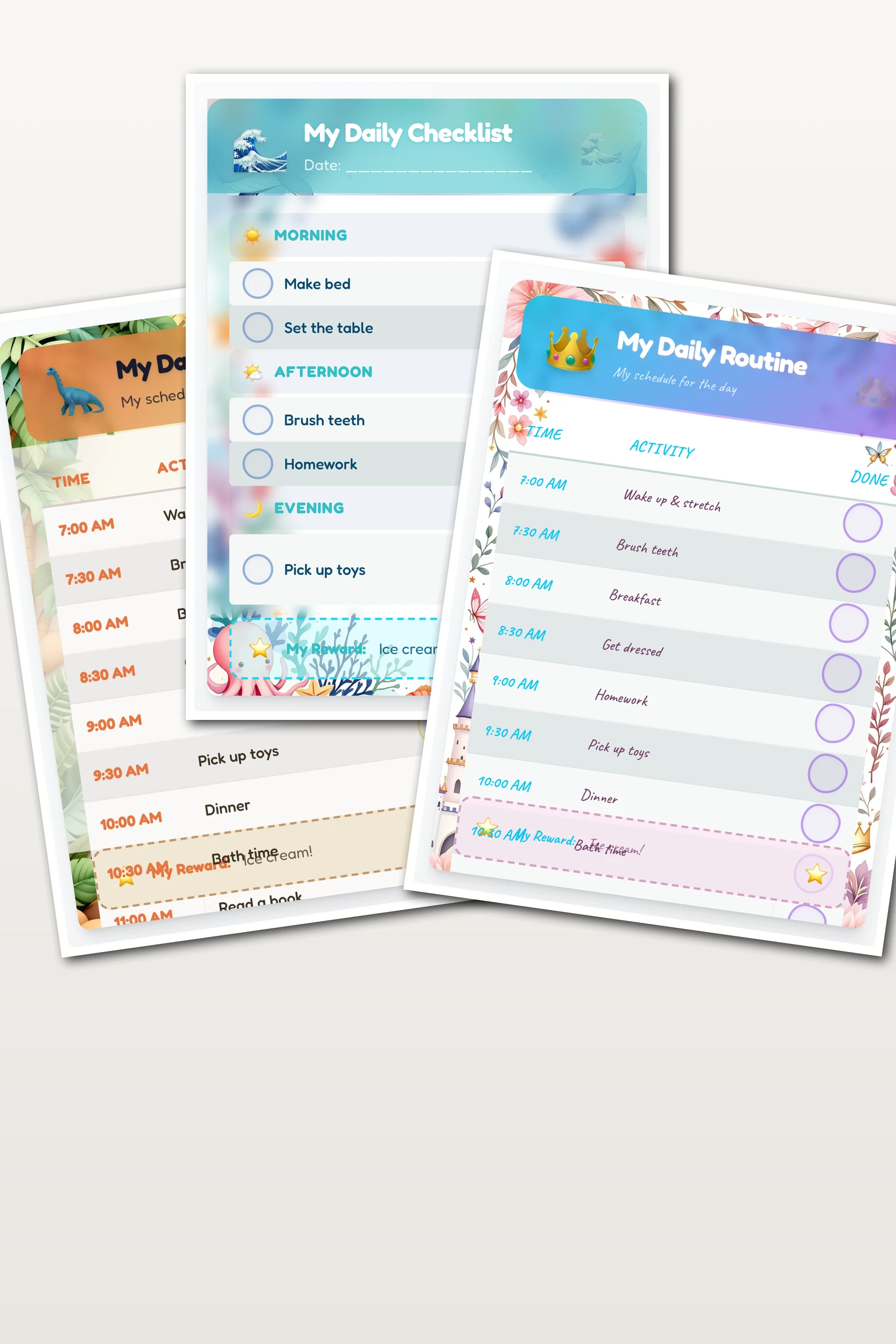
Dinosaur Watercolor
Soft hand-painted dinosaur borders with earthy tones
Aqua Fins & Friends
Cool ocean watercolor border alive with tropical fish, playful turtles, and swirling seahorses in turquoise and seafoam tones. A refreshing underwater world frames this weekly chore chart for water-loving kids.
Tamagotchi Candy Club
A vibrant 90s retro-kawaii chore chart inspired by Tamagotchi-era Japanese stationery, bursting with hot magenta, electric teal, and sunshine yellow candy colors. Bold outlines, pixel-style star bursts, and vintage Sanrio bow motifs give every chore a nostalgic magical-girl sparkle.
핵심 요점
- 1습관은 의지력이 아닌 반복을 통해 형성됩니다 — 30~45일의 일관성을 목표로 하세요
- 2세 단계를 예상하세요: 허니문, 저항, 그리고 궤도
- 314일차 위험 구간이 대부분의 차트가 실패하는 시점입니다 — 차분한 일관성으로 버텨내세요
- 4일일 차트가 주간 차트보다 습관을 더 빠르게 만들어 줍니다
- 5매일 3가지 과제가 주 3회 10가지보다 효과적입니다
- 6차트는 비계입니다 — 습관이 혼자 설 수 있을 때까지 지지해 줍니다