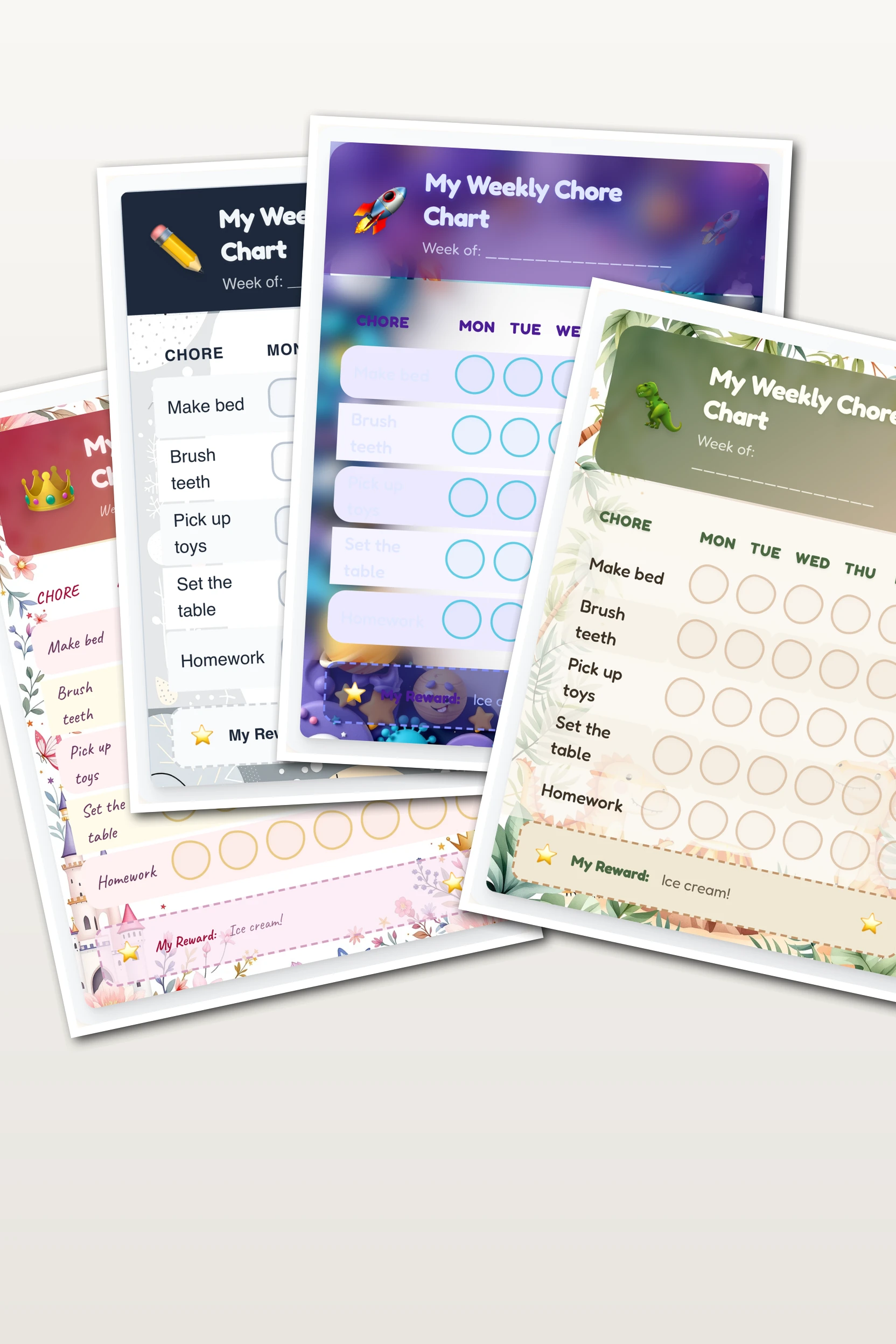
실제로 효과 있는 집안일 차트: 부모를 위한 가이드
몇 달간 지속되는 차트와 2주 만에 포기되는 차트를 구분하는 다섯 가지 규칙 — 아동 발달 연구로 뒷받침되고 실제 가정들이 검증한.
82%
of 집안일 차트s are abandoned within 3 weeks
American Academy of Pediatrics, 2024
3–5
chores is the ideal range for any age group
Journal of Child Development
30 sec
daily review is the #1 predictor of chart success
Family Studies Quarterly
냉장고 위의 집안일 차트 무덤
Somewhere on your refrigerator, under a magnet shaped like a pineapple, there is a 집안일 차트 from three months ago. It has two weeks of stickers on it and then nothing. Below that, partially hidden by a school permission slip, is the 집안일 차트 from last year. Same pattern. Two weeks of enthusiasm followed by slow abandonment.
You are not a bad parent. This is the most common outcome for 집안일 차트s, and the reason is almost never the chart itself. The chart is a piece of paper. It cannot fail. What fails is the system around it: how many chores were listed, where the chart was placed, whether anyone looked at it after the first week, and whether the expectations on it matched what the child could actually do.
The good 집안일 차트s — the ones that last months or years — all share certain traits. They are simple, visible, reviewed daily, and designed for the specific child using them. None of that is complicated. But each piece has to be in place, and most families accidentally skip one or two of them.
차트 접근법: 배정된 집안일 vs 아이가 선택한 집안일
Pros
- 아이가 선택한 집안일은 내재적 동기와 주인의식을 높입니다
- 자신의 과제를 선택한 아이들은 완료율이 40% 더 높습니다
- Builds decision-making skills and autonomy
- 어떤 집안일을 할지에 대한 일일 힘겨루기를 줄입니다
Cons
- 부모가 배정하면 모든 가사 요구가 충족됩니다
- 여러 아이들 사이에서 작업량을 균형 있게 배분하기 쉬움
- 일부 필수 집안일은 자발적으로 선택되지 않을 수 있습니다
- 어린 아이들은 자유로운 선택이 허용하는 것보다 더 많은 구조가 필요할 수 있습니다
최선의 방법: 5~6개 선택지를 제공하고 아이가 3개를 선택하게 하세요. 같은 수의 집안일을 하지만 아이의 참여도가 높아집니다
전문 용어 없이 이해하는 습관 루프
Every lasting habit has three parts: a trigger, an action, and a payoff. Your morning coffee works on this loop. The trigger is waking up. The action is making coffee. The payoff is the warm mug in your hands and the caffeine hitting your brain. You do not need willpower to make coffee. The loop runs automatically.
A 집안일 차트 creates the same loop for kids. The trigger is seeing the chart at a specific time (after breakfast, after school). The action is doing the listed chores. The payoff is checking the box, placing the sticker, or earning a point. When all three parts are clear and consistent, the habit builds itself over two to three weeks.
When a chart fails, one of those three parts is usually missing. No consistent trigger (the chart is in a closet, or there is no set time for chores). No clear action (too many chores, vague instructions). No satisfying payoff (no stickers, no checkmarks, no acknowledgment). Fix the missing piece and the system starts working.
오래 지속되는 집안일 차트 설정하는 방법
- 1
최대 3가지 집안일로 시작하기
세 가지가 어린 아이가 한 번에 작업 기억에 담을 수 있는 최대량입니다. 네 살짜리는 '장난감 치우기, 접시 조리대에 올리기, 신발 선반에 놓기'를 기억할 수 있습니다. 나이 많은 아이에게는 다섯 가지가 합리적입니다 — 하지만 항상 처음 2주는 세 가지로 시작해서 점차 추가하세요.
- 2
아이 눈높이에 차트 배치하기
냉장고는 아이들이 하루에 여러 번 방문하기 때문에 대부분의 가정에서 잘 작동합니다. 다른 좋은 장소: 욕실 거울 옆, 침실 문에, 또는 아침 식사 테이블 옆. 차트를 보는 데 노력이 필요하면 보이지 않을 것입니다.
- 3
매일 30초 점검 습관 만들기
매일 저녁 아이와 함께 30초를 차트 앞에서 보내세요. 완료한 것을 보고 인정해 주세요. 빠진 것을 보고 과장 없이 메모하세요. 이것이 부모가 만들어야 할 가장 중요한 단 하나의 습관입니다.
- 4
지루함을 방지하기 위해 매월 집안일 순환하기
일정하게 유지되는 1~2가지 앵커 집안일을 유지하세요(자동으로 몸에 밴 것들). 나머지는 3~4주마다 교체하세요. 난이도는 비슷하게 유지되지만 다양성이 지루함을 방지합니다.
- 5
아이들이 엄선된 목록에서 선택하게 하기
5~6가지 선택지를 주고 아이가 3가지를 선택하게 하세요. 자율성은 준수를 주인의식으로 바꿉니다. 자녀가 여럿인 가정에서는 같은 주에 두 아이가 같은 집안일을 공유하지 않는다는 규칙 하에 각 아이가 같은 마스터 목록에서 선택하게 하세요.
The 30-Second Rule
이 목록에서 다른 어떤 것도 할 수 없다면, 매일 30초 점검만이라도 하세요. '오늘 세 가지 다 했네, 잘했어' — 그 10초간의 인정이 오래 지속되는 차트와 쓰레기통에 버려지는 차트를 구분 짓습니다. 아무도 보지 않는 차트는 아이들에게 그 일이 중요하지 않다고 가르칩니다.
의존성이 아닌 습관을 만드는 보상 시스템
The difference between a reward and a bribe is timing and structure. A bribe is reactive: 'If you clean your room right now, you can have ice cream.' A reward is proactive and earned: 'When you complete all your chores this week, you choose Saturday's family activity.' Bribes create negotiation. Rewards create anticipation.
Effective rewards for younger kids (ages two to six): stickers on the chart, choosing a bedtime story, picking what is for dinner one night, an extra fifteen minutes before bed, or a special one-on-one activity with a parent. Notice that none of these cost money. The best rewards for young children are time and attention — things they crave more than any toy.
For older kids (ages seven and up), consider a point system. Each completed chore earns a point. Points accumulate toward a larger goal: a new book at twenty points, a friend sleepover at fifty, a family day trip at one hundred. The delayed gratification teaches planning and patience.
One rule to protect: never take away already-earned rewards as punishment. If your child earned fifteen points and then has a bad day, those fifteen points stay. Removing earned progress destroys trust in the system and makes kids feel that effort is pointless.
아이가 성장함에 따라 차트 조정하기
A 집안일 차트 is not a permanent document. It should evolve as your child develops. The toddler 별 차트 with three picture-based tasks becomes a weekly grid with five text-based chores in elementary school, which becomes a monthly responsibility calendar in the tween years.
Retire chores that have become automatic. If your eight-year-old makes their bed every morning without being asked or reminded, take it off the chart. It is no longer a chore — it is a habit. Replace it with something new they are still working on. The chart should always represent current growth areas, not completed ones.
아이가 열 살에 가까워지면 차트 설계에 직접 참여시키세요. 형식을 결정하고 집안일을 선택하도록 하세요
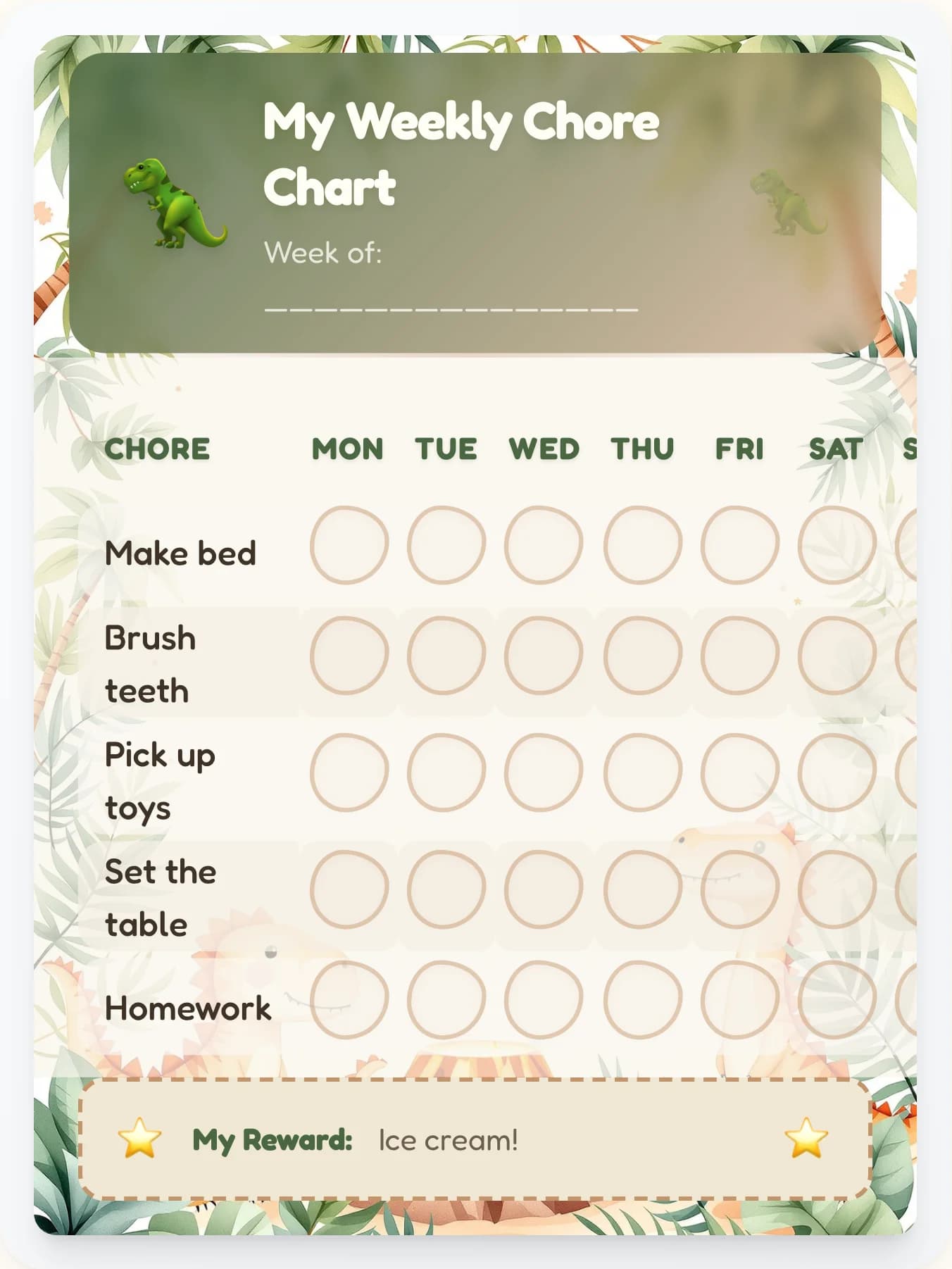
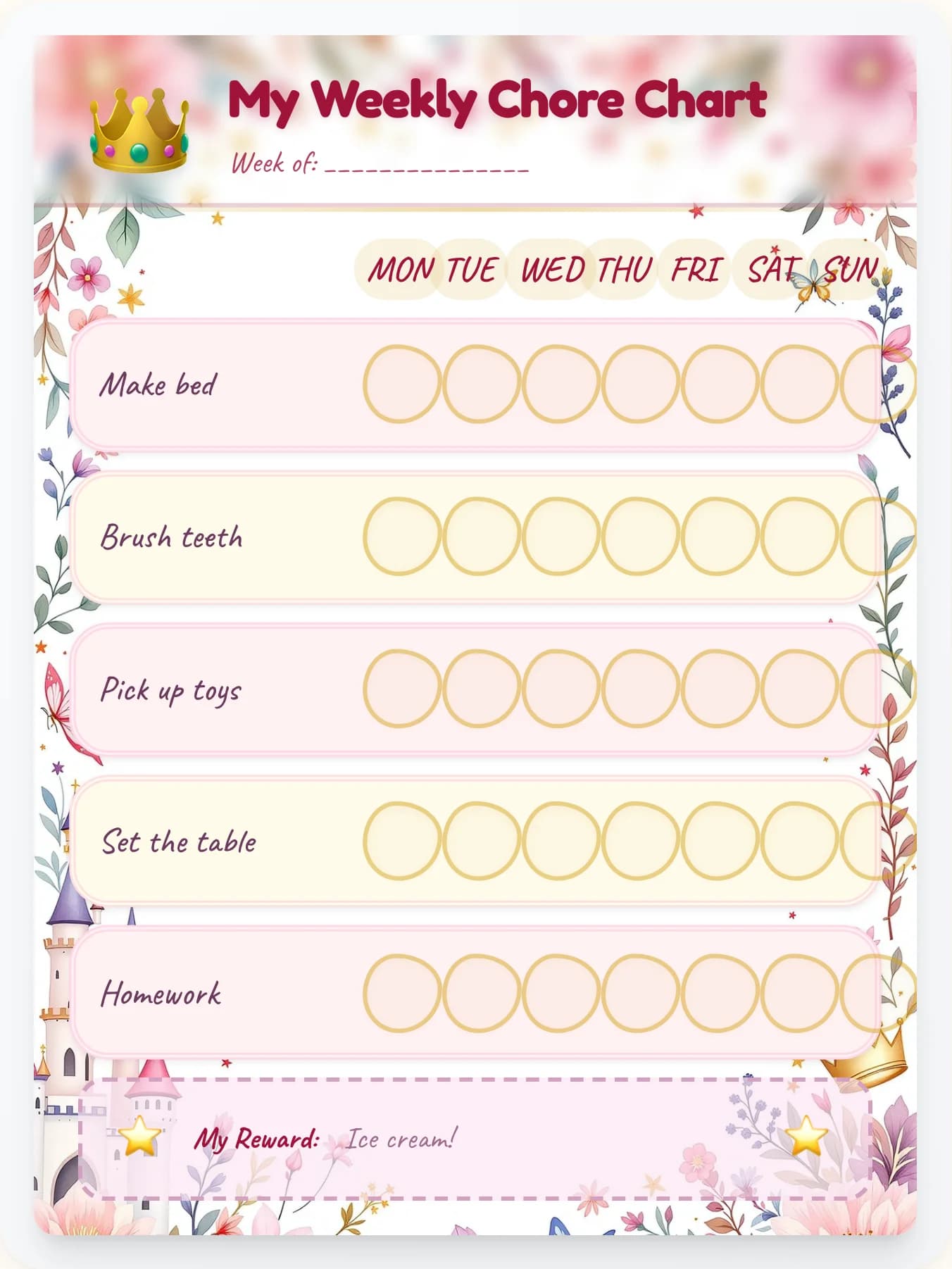
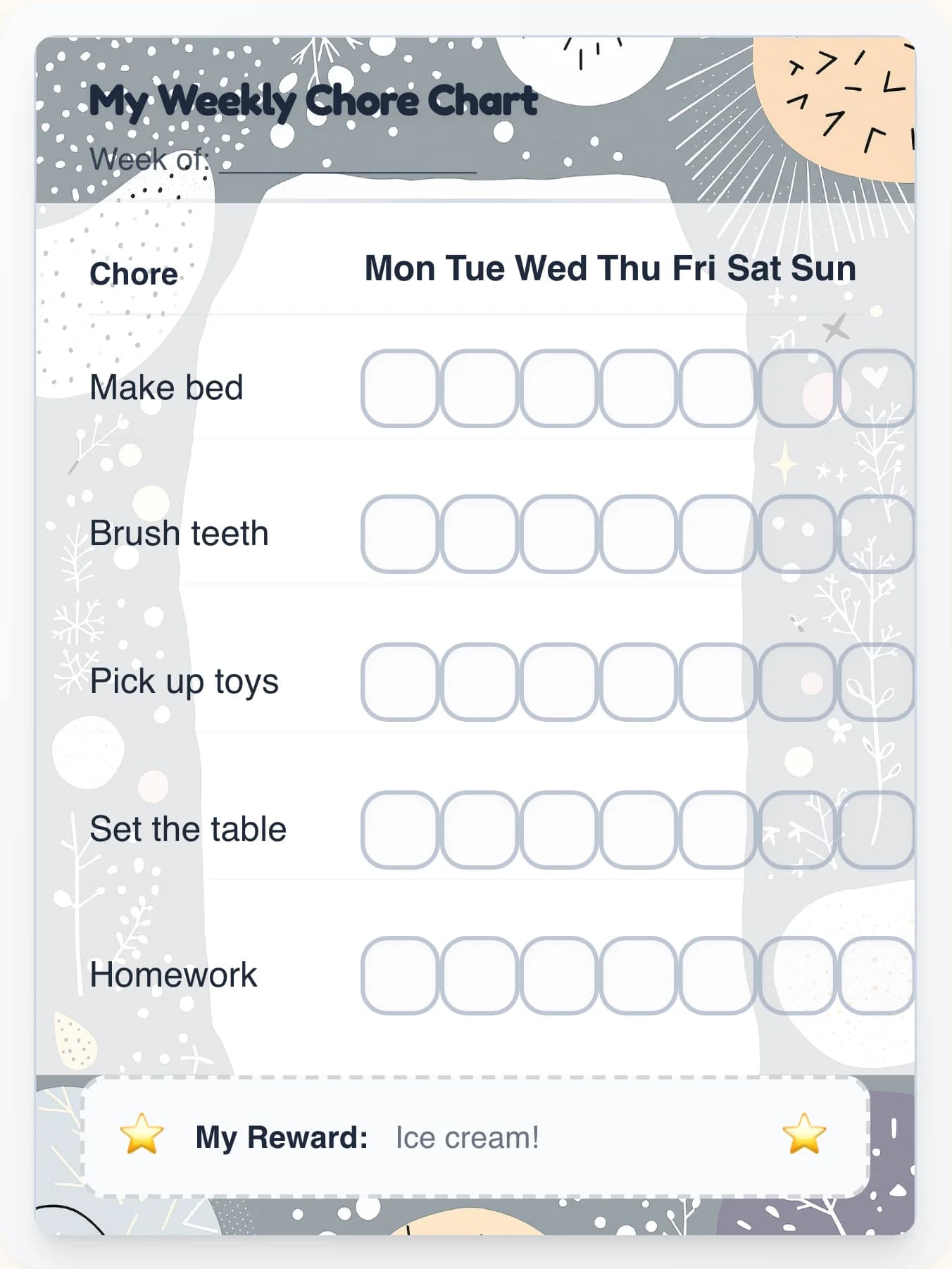
추천 차트 템플릿
자주 묻는 질문
핵심 요점
- 최대 3가지 집안일로 시작하기 — 점진적인 추가가 항상 야심찬 출발보다 효과적입니다
- 아이가 애쓰지 않아도 볼 수 있는 눈높이에 차트 배치하기
- 매일 30초 부모 점검이 가장 중요한 단 하나의 성공 요인입니다
- 1~2가지 앵커 과제를 유지하면서 지루함을 방지하기 위해 매월 집안일 순환하기
- 주인의식을 키우기 위해 아이들이 엄선된 목록에서 집안일을 선택하게 하세요
- 아이의 나이에 맞는 차트 형식 선택하기: 유아에게는 별 차트, 초등학생에게는 주간 그리드, 십대 초반에게는 월간 달력
- 이미 받은 보상은 절대 빼앗지 마세요 — 전체 시스템에 대한 신뢰를 파괴합니다