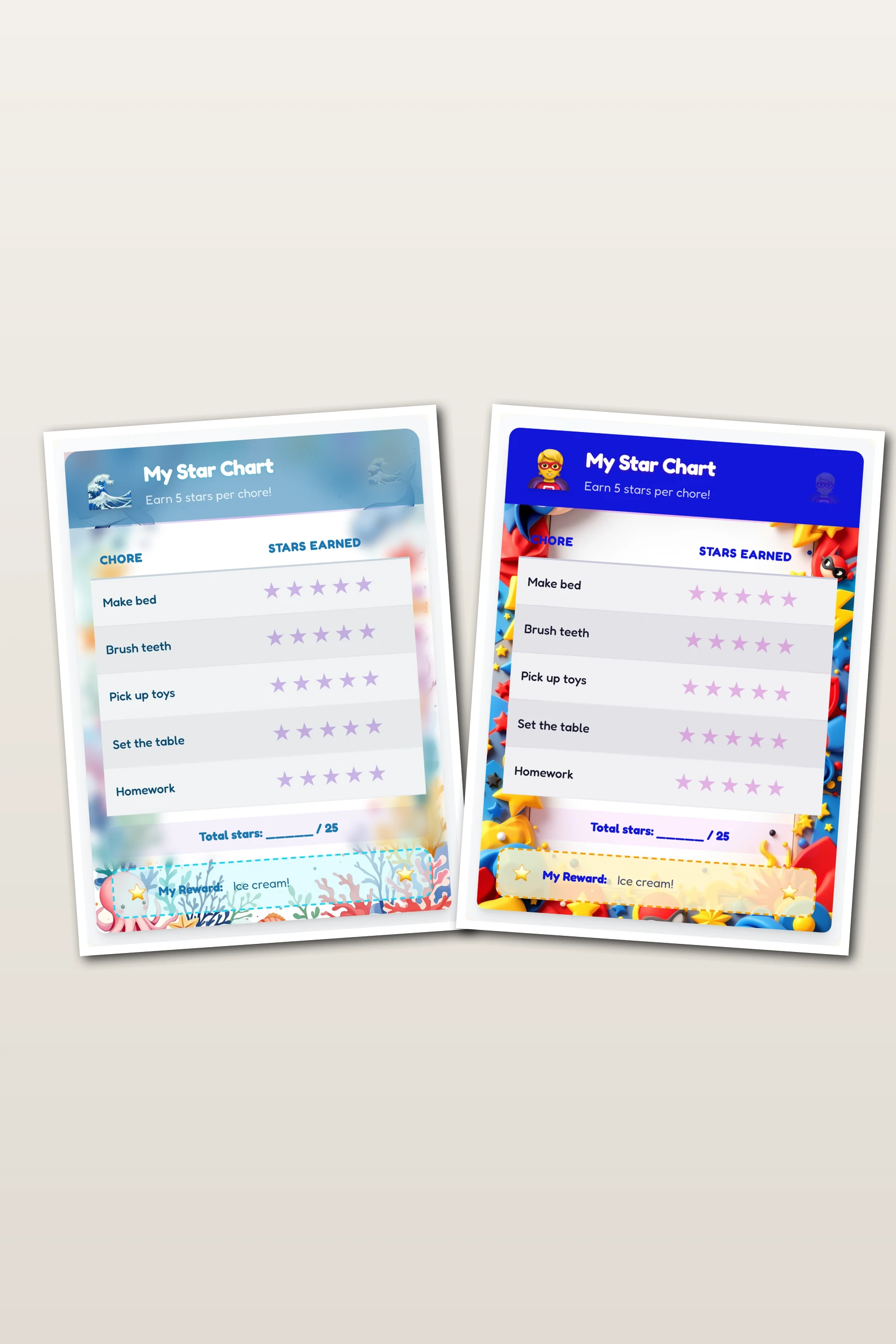
인쇄용 vs 디지털 집안일 차트: 어느 것이 더 나을까요?
앱 50개와 종이 한 장. 여섯 살 아이에게 신발을 치우게 하려 할 때 실제로 중요한 비용, 참여도, 유연성, 그리고 그 밖의 항목들에 대한 솔직한 비교.
앱 50개와 종이 한 장
Search "집안일 차트" in any app store and you will find at least fifty options. Some have gamification with coins and avatars. Some send push notifications to your child's tablet. Some generate weekly reports with pie charts showing chore completion rates. The feature lists are genuinely impressive.
Then there is the printable 집안일 차트. A piece of paper on the fridge with checkboxes. No notifications, no syncing, no monthly subscription. It is a technology that predates electricity, and millions of families still prefer it. That is not nostalgia. That is a piece of paper doing something that fifty apps have failed to replace for a very specific reason.
Both approaches work. But they work for different families, different ages, and different goals. This is an honest comparison across the categories that actually matter.
Printable vs Digital: Feature Comparison
| Feature | Printable Charts | Digital Apps |
|---|---|---|
| Cost | Free to $15 one-time | $3–10/month subscription |
| Setup Time | 30 seconds to print | 10–20 min to configure |
| Customization | Unlimited themes & formats | Limited to app options |
| Tactile Engagement | Stickers, coloring, physical | Tap a checkbox |
| Screen Time | Zero added | Adds another app |
| Automation | Manual resets | Auto-reset, reminders, reports |
| Data Tracking | Visual only (wall of stickers) | Charts, statistics, history |
| Multi-Kid Support | Print separate charts | Usually paid tier |
| Offline Access | Always available | Depends on app/connection |
| Parent-Child Interaction | Built into daily check-in | Requires intentional effort |
2026년 기준 가장 인기 있는 집안일 차트 앱과 인쇄용 차트 메이커를 바탕으로 작성되었습니다.
비용: 마케팅이 아닌 실제 숫자
The popular 집안일 차트 apps charge between three and ten dollars per month for their full-featured plans. Most offer a free tier, but the free version usually limits you to one child, three chores, and no customization. The features that actually make apps useful — multiple kids, custom chores, reward tracking, reminders — are behind the paywall.
At five dollars per month, a 집안일 차트 app costs sixty dollars per year. Over the three to five years a typical family actively uses a 집안일 차트 system, that is one hundred eighty to three hundred dollars. For a checklist.
Premium printable chart packs on Etsy or teacher resource sites run three to fifteen dollars for a bundle of designs. Many sites, including ours, offer fully customizable charts for free. The cost of printing is roughly five cents per sheet if you use a home printer. Even printing a new chart every single week for a year costs about two dollars and sixty cents in paper and ink.
There is no scenario where a digital app is cheaper unless you use only the stripped-down free tier forever. For families watching their budget, printable charts win this category by a wide margin.
스티커 효과는 실재합니다
다섯 살짜리가 차트에 스티커를 붙이는 것을 보세요. 조심스럽게 떼고, 정확하게 위치를 잡고, 손바닥 전체로 누르고, 한 발 물러서서 자신의 작품을 감상합니다. 그 6초간의 의식에는 소근육 운동, 공간 인식, 성취를 나타내는 물체와의 신체적 접촉이 포함됩니다. 화면 탭은 이것을 흉내 낼 수 없습니다. 10세 미만 아이들에게 인쇄용 차트의 촉각적 장점은 추적되는 일에 대해 측정 가능하게 더 강한 감정적 연결을 만들어 줍니다.
10세 미만 아이들을 위한 촉각적 장점
Young children process accomplishment through physical interaction. They need to touch, hold, and see their progress in the real world. A wall of stickers is a trophy case they walk past every time they go to the kitchen. A list of digital checkmarks exists only when the app is open.
This physical engagement advantage fades as children get older. By age ten or eleven, kids are comfortable with digital interfaces and may actually prefer them. But for the core chore-chart years — ages three through nine — the printable format creates a stronger emotional connection to the work being tracked.
인쇄용 차트: 장단점
Pros
- 무료 또는 일회 구매 — 구독 없음
- 스티커/체크 의식이 10세 미만 아이의 참여도를 높임
- 무한한 형식 다양성: 별 차트, 주간 그리드, 일일 체크리스트, 보상 트래커
- 화면 시간 추가 없음 — 기기 사용 줄이기와 일관됨
- 냉장고 앞에서 매일 자연스럽게 부모-자녀 확인이 이루어집니다
- 오프라인에서 작동하고, 항상 보이며, 배터리나 Wi-Fi가 필요 없음
Cons
- 주간 수동 초기화 — 매주 새 차트를 인쇄하거나 그려야 함
- 자동 알림이나 푸시 알림 없음
- 장기 통계나 완료 추적 없음
- 실물 차트는 손상되거나 분실되거나 오래된 스티커로 지저분해질 수 있음
- 프린터가 필요하거나 직접 그릴 의지가 필요함
Printable charts excel at engagement and parent-child connection, especially for children under 10. The main trade-off is the lack of automation and data tracking.
부모 노력의 상충 관계와 화면 시간
Apps automate. Printables connect. That is the trade-off, and it is real.
A 집안일 차트 app can send push notifications when it is chore time, automatically reset the chart each week, track completion statistics over months, and send a parent a daily summary without anyone touching the fridge. If you travel for work or have a chaotic schedule, this automation is genuinely valuable.
프린트 차트는 매일 냉장고 앞에 아이와 함께 서서 차트를 함께 보도록 합니다
Family therapists consistently recommend daily rituals that involve brief, positive, focused interaction between parent and child. The thirty-second 집안일 차트 review is one of the easiest rituals to build. You are already at the fridge making dinner. Your kid is already nearby. 'How did your chores go today?' creates a connection point that an app notification cannot replicate.
Most parents are also actively trying to reduce their children's screen time. Adding a 집안일 차트 app means adding another reason for a child to pick up a device. Printable charts exist entirely outside the digital world — checking the chart, placing stickers, and reviewing progress all happen without touching a screen.
자주 묻는 질문
혼합 접근 방식과 연령별 최종 결론
Some families find the best solution is not either-or but both. A printable chart on the fridge handles daily chores, check-ins, and sticker rewards. A simple app or spreadsheet tracks long-term reward progress, like points earned toward a bigger prize over weeks or months.
Under six years old: printable charts win on every measure. Physical interaction drives engagement. Cost is zero. Screen time is not added. There is no argument for a digital app at this age.
Ages six through ten: printable charts are still preferred for most families. The tactile advantage remains strong, and the daily parent check-in creates valuable interaction. Kids may enjoy the novelty of an app for a few weeks, but engagement tends to drop once the gamification loses its shine.
Ages ten and up: either approach works. Older kids are comfortable with digital tools and may prefer the independence of checking off chores on their phone. If your tween already manages school assignments digitally, adding chores to that workflow makes sense.
이 글을 읽고 계신 분이 10세 미만의 아이가 있다면 프린트 차트로 시작하세요. 비용도 없고 즉시 효과가 있습니다
추천 차트 템플릿
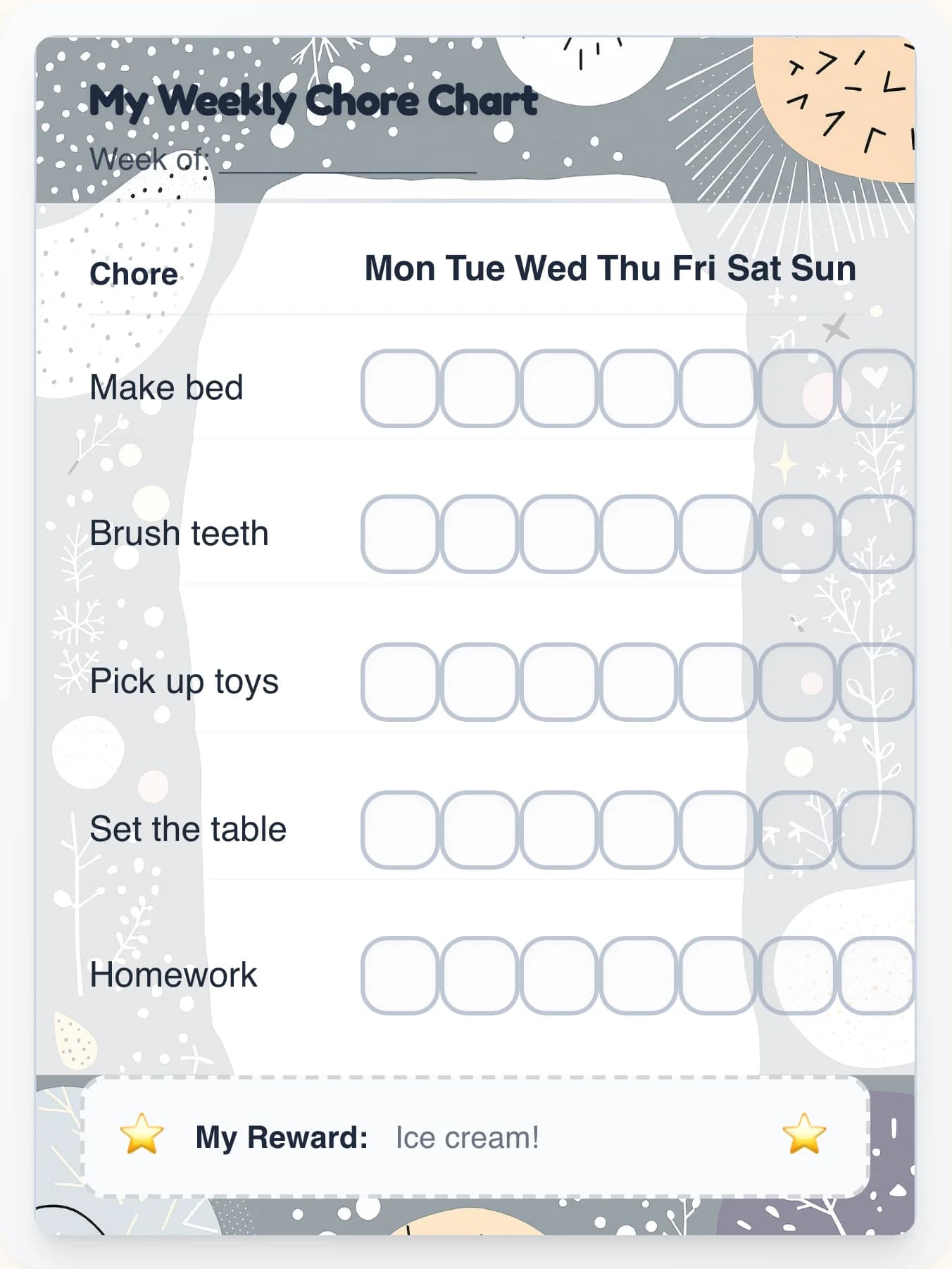
Minimal Flat
Clean geometric borders with muted tones
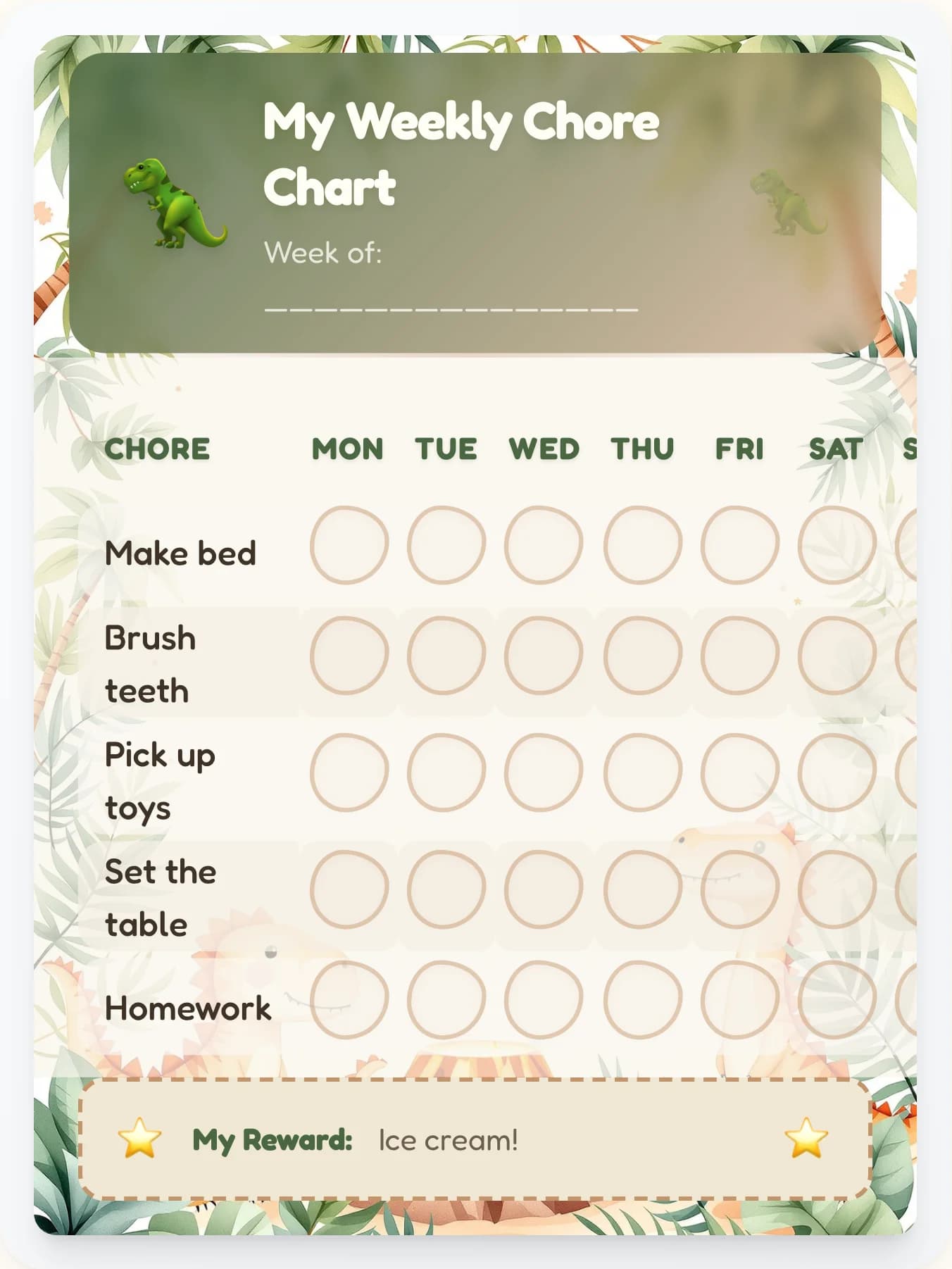
Dinosaur Watercolor
Soft hand-painted dinosaur borders with earthy tones
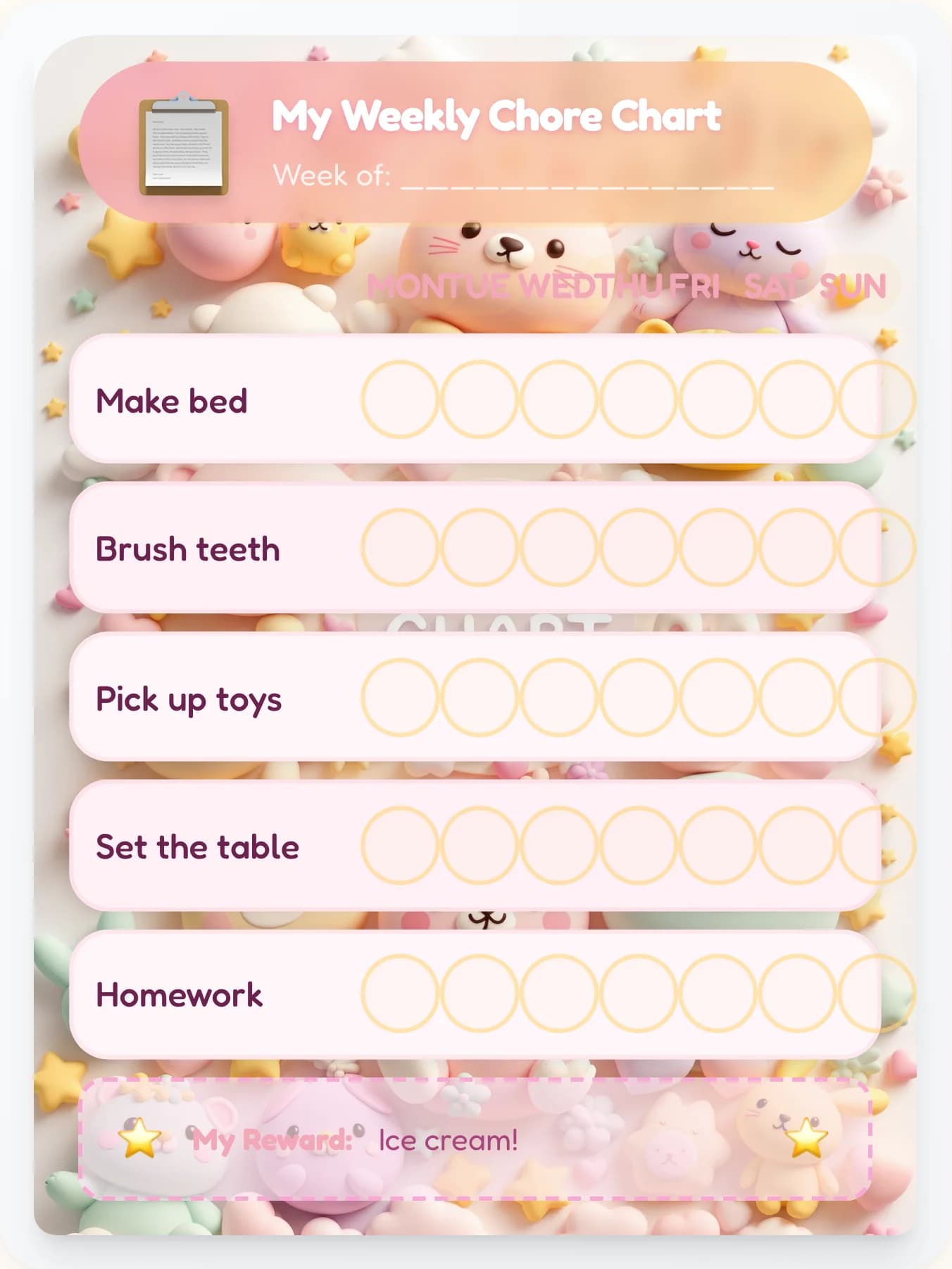
Squishy Puff Pals
Adorable 3D clay-sculpted kawaii animals bounce across a creamy pastel canvas in coral pink and butter yellow. Every row feels like a plush toy shelf with glossy rounded shapes and soft marshmallow glow.
인쇄용 차트를 사용해 보시겠어요?
무료 맞춤형 템플릿을 둘러보세요. 아이가 좋아하는 테마를 선택하고, 집안일을 개인화하여 30초 만에 인쇄하세요. 계정이 필요 없습니다.
무료 템플릿 보기핵심 요점
- 인쇄용 차트는 0~15달러 일회 비용인 반면, 앱은 연간 60~120달러
- 촉각적 스티커 의식이 10세 미만 아이의 참여도를 더 강하게 높입니다
- 앱은 자동화 면에서 유리합니다: 알림, 자동 초기화, 장기 데이터 추적
- 인쇄용 차트는 화면 시간 없이 자연스러운 일일 부모-자녀 확인 시간을 만들어 줍니다
- 혼합 접근 방식(일상용 인쇄본 + 장기 추적용 앱)이 여러 연령대 가정에 가장 효과적입니다
- 10세 미만 아이에게는 인쇄용 차트로 시작하세요 — 나중에 앱을 추가할 수 있습니다