İlkokul Çocukları İçin Yaşa Uygun Görevler (5-8 Yaş)
Gerçek sorumluluk oluşturmanın kapsamlı rehberi — her yaşta hangi görevler işe yarar, direnci nasıl ele alınır ve neden haftalık ızgara bu aşama için mükemmel format.
From Cute Helper to Real Contributor
Something shifts around age five. When a toddler "helps" with laundry, everyone smiles at how adorable it is. When a seven-year-old folds towels, nobody claps. The novelty is gone, and that is actually a good thing. It means chores are becoming normal, expected, unremarkable parts of daily life. Which is the entire point.
The elementary years are when chore habits either solidify or evaporate. Kids this age have the motor skills, the cognitive ability to follow multi-step instructions, and enough independence to complete tasks without someone hovering over them. They also have a rapidly developing sense of fairness, which you can use to your advantage.
But they are also developing the ability to argue, negotiate, and stall. A five-year-old might whine. A seven-year-old will build a case for why their sibling got easier chores. The strategies below are built around that reality.
Kindergarteners
Gerçek sonuçlarla gerçek görevlere hazır. 2-3 adımlı talimatları takip edebilir ve somut yönergelerle basit günlük sorumlulukları üstlenebilir.
Anaokulu Çocukları İçin Görevler: 5-6 Yaş
Five and six-year-olds can handle real tasks with real results. The big skill jump at five is following two and three-step sequences. "After you brush your teeth, put your pajamas in the hamper and come to the kitchen" is a perfectly reasonable instruction for a five-year-old. If they forget the middle step, a gentle reminder is enough. They are practicing sequencing, which is a skill that helps with everything from schoolwork to sports.
That last point matters. "Clean your room" means nothing to a five-year-old. "Put all the Legos in the blue bin, put the books on the shelf, and put the stuffed animals on your bed" is three clear tasks they can actually do. Break abstract instructions into concrete actions.
Chore Checklist by Age Group
Ages 5-6 — Daily Chores
- Make their bed (lumpy is fine)
- Yemekler için masayı hazırlayın
- Clear their own dishes after eating
- Put dirty clothes in the hamper
- Feed a pet on a schedule
- Tidy their room with specific instructions
Ages 5-6 — Weekly Chores
- Sort laundry by color (darks and lights)
- Help unload groceries onto low shelves
- Empty small bathroom trash cans
- Wipe down the table after dinner
- Help water outdoor plants
Ages 7-8 — Daily Chores
- Load and unload the dishwasher
- Fold simple laundry (towels, t-shirts)
- Sweep the kitchen floor
- Organize backpack and school supplies
- Routine pet care (water dish, brushing)
Ages 7-8 — Weekly Chores
- Take trash bags to the outside bin
- Help make simple meals (sandwiches, salads)
- Rake leaves or pull weeds in the yard
- Clean pet area and litter box (supervised)
- Crack eggs, measure ingredients, rinse vegetables
Chores by Age: 5-6 vs 7-8
| Category | Ages 5-6 | Ages 7-8 |
|---|---|---|
| Bedroom | Make bed, tidy room with instructions | Make bed, organize closet, change pillowcase |
| Kitchen | Set table, clear own dishes | Load dishwasher, help cook, sweep floor |
| Laundry | Sort by color, put clothes in hamper | Fold towels and t-shirts, put away own clothes |
| Pets | Fill food bowl on schedule | Full routine care: food, water, brushing, clean area |
| Outdoor | Water plants with small can | Rake leaves, pull weeds, take out trash |
| Life Skills | Follow 2-3 step sequences | Do chores without being asked, basic cooking |
Her çocuk farklı gelişir — bunları katı kurallar olarak değil, kılavuz niteliğinde kullanın.
Stepping Up: Ages 7 and 8
Seven and eight-year-olds are ready for tasks that would have been unthinkable two years earlier. This is also the age where kids can take over routine pet care beyond just filling a food bowl. They can clean water dishes, brush a dog, help scoop a litter box (with supervision), and keep a pet area tidy. Giving them ownership of a living creature's daily care builds a different kind of responsibility than cleaning tasks.
At seven and eight, you can also introduce the concept of doing a chore without being asked. "If you notice the dog's water bowl is empty, fill it" is a reasonable expectation. This transition from checklist-following to situational awareness is a significant developmental step.
The Allowance Sweet Spot
Görevlere BAĞLI OLMAYAN küçük bir haftalık harçlık verin. Görevler, aile üyelerinin evde yaşadıkları için yaptıklarıdır. Harçlık, para yönetmeyi öğrenmek içindir. Bir çocuk görevleri reddederse, sonuç harçlığı kaybetmek değil — bir ayrıcalığı kaybetmektir (ekran süresi, oyun tarihi). Çocukların ekstra para için yapabileceği isteğe bağlı "bonus görevler" (araç yıkama, garajı düzenleme) ekleyin.
Direndiklerinde (Ve Direnecekler)
A six-year-old will tell you the chore is boring. A seven-year-old will tell you it is unfair. An eight-year-old will tell you they already did it (they did not). Each type of pushback has a different solution.
"It's boring" usually means the chore has been the same for too long. Rotate to something new. Or add a small twist: set a timer and challenge them to beat their record. Turning it into a race against the clock works shockingly well for this age group.
"It's not fair" usually means they are comparing their chores to a sibling's. The fix is a chore chart that shows everyone's responsibilities side by side. When a child can see that their brother also has three chores, and that the chores rotate, the fairness argument loses its power.
"I already did it" is the most frustrating because it requires you to verify. The chore chart becomes your best tool here. If the box is not checked, the chore is not done. No debate, no he-said-she-said. The chart is the record.
Frequently Asked Questions
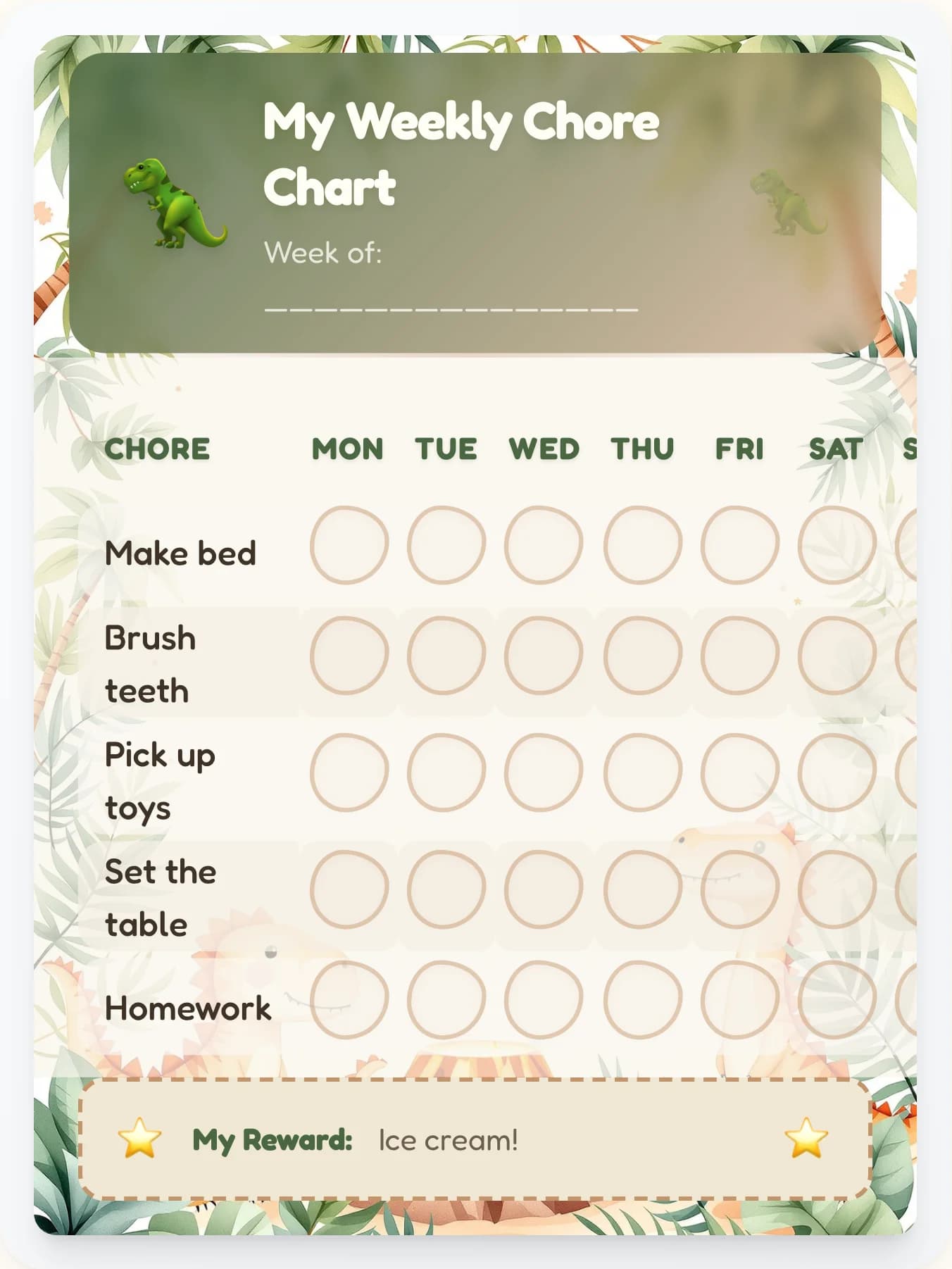
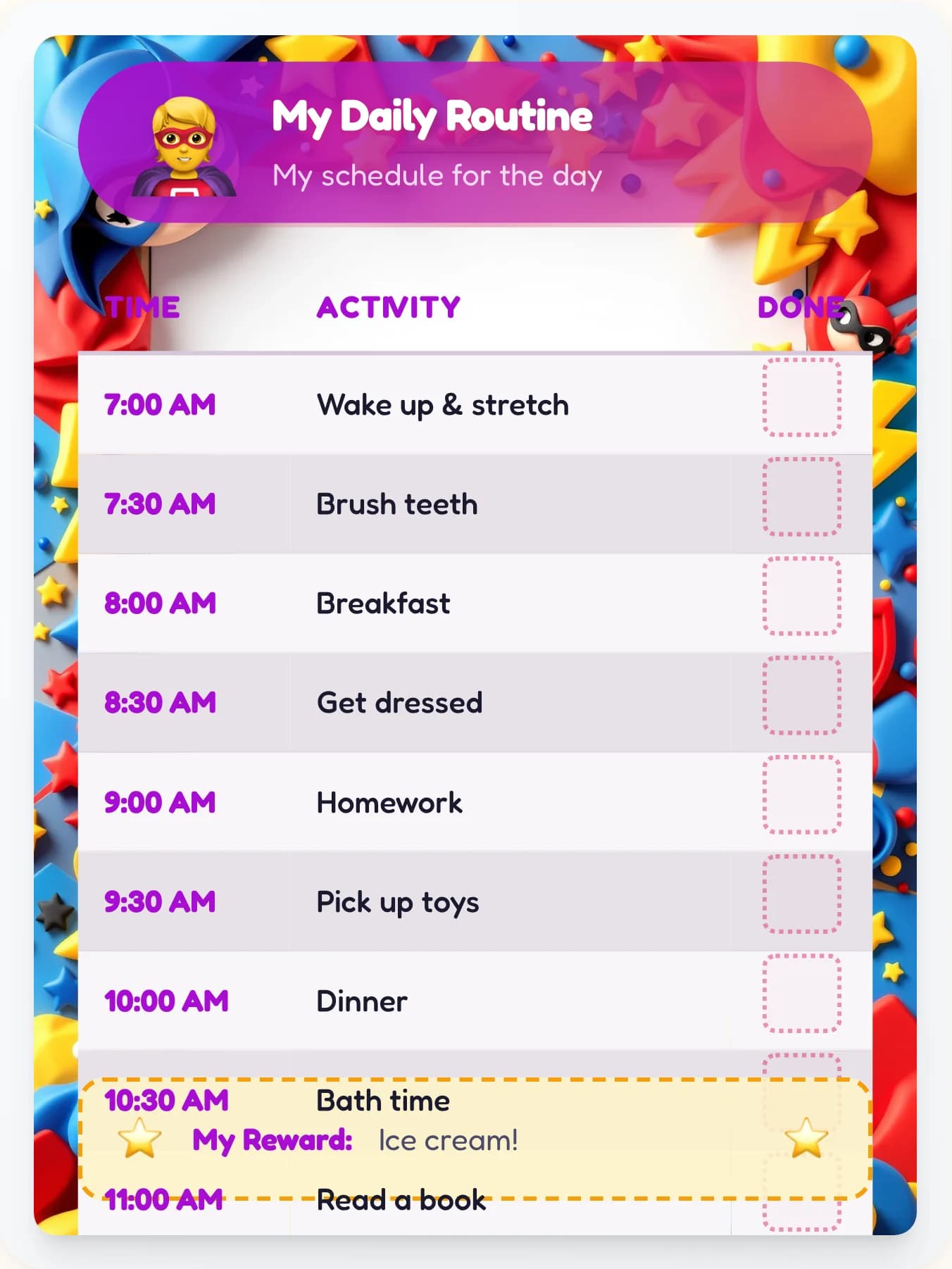
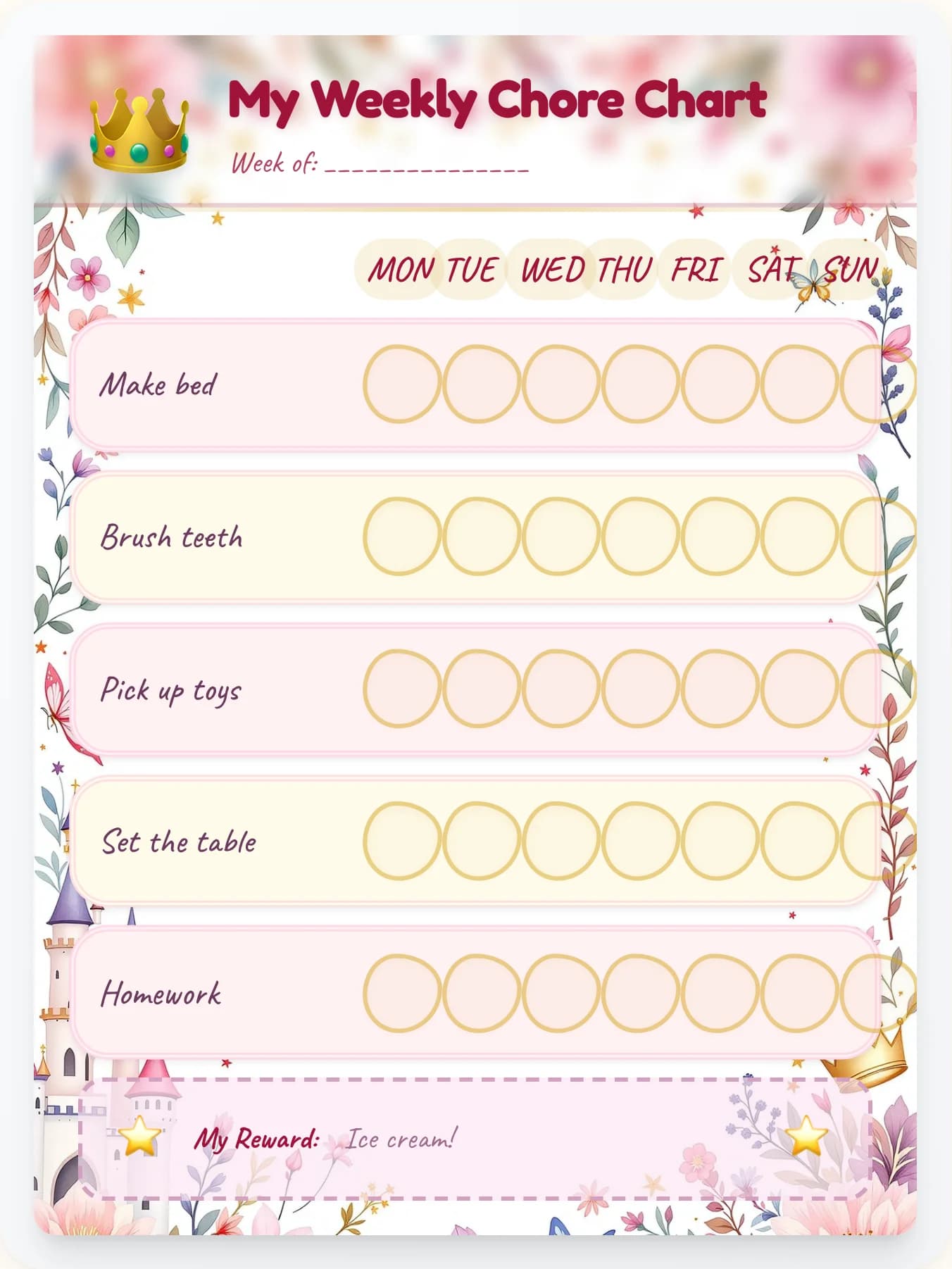
Önerilen Görev Tablosu Şablonları
Haftalık Izgara: Bu Yaş İçin Neden İşe Yarar
Elementary kids are learning days of the week at school and developing a sense of time that stretches beyond "today." A weekly grid chore chart matches this cognitive development perfectly. Chores listed down the left side, days of the week across the top, checkboxes in each cell.
The weekly grid lets kids see the full scope of their week at a glance. They can tell which days are lighter and which are heavier. They can anticipate what is coming tomorrow. They develop the ability to plan, even in a basic way, which is a skill that will serve them through school and beyond.
Print a new grid each Monday. The fresh sheet signals a fresh start, which is psychologically powerful for kids who had a rough previous week. Last week's missed chores stay in the past. This week is a clean slate.
Assign a core set of four to six chores and rotate which ones are active each week or each month. Create two lists: List A is "always" chores (make bed, clear dishes, put away backpack). List B is "rotating" chores that change weekly. The child always has their A-list plus one or two items from the B-list.
Key Takeaways
- 15-6 yaş, somut ve spesifik talimatlarla 3-4 günlük görevi üstlenebilir — "odanı temizle" gibi belirsiz komutlar vermekten kaçının.
- 27-8 yaş, çok adımlı görevler, temel pişirme, tam evcil hayvan bakımı ve sorulmadan görevleri yapmaya hazırdır.
- 3Harçlığı ve görevleri ayrı tutun — görevler aile sorumluluğudur, harçlık para becerilerini öğretir.
- 4Haftalık ızgara tablosu kullanın: gelişen zaman algılarıyla örtüşür ve hafta için görsel bir plan sunar.
- 5Sıkılmayı önlemek ve çocukları daha geniş bir ev becerisi yelpazesine maruz bırakmak için görevleri her 2-4 haftada bir döndürün.
- 6"Yeterince iyi yapılmış" standardı, mükemmeliyetçiliğin motivasyonu öldürmesini önler — seferinde bir iyileştirme üzerine koçluk yapın.
- 7Kardeşler için tabloları yan yana görüntüleyin, yaşa göre ayarlanmış eşit görev sayısıyla. Her iki haftada bir çocuklar arasında döndürün.
- 8Sistemi güncel ve aktif hissettiren temiz bir başlangıç için her Pazartesi taze bir tablo yazdırın.