Küçük Çocuklar İçin En İyi Görev Tabloları (2-4 Yaş)
Küçük çocukları gerçekten motive eden basit görevler, görsel ipuçları ve yıldız ödülleri — çocuk gelişimi araştırmasıyla desteklenmekte ve gerçek ebeveynler tarafından test edilmektedir.
The Mess Is the Point
Your two-year-old wants to help unload the dishwasher. She grabs a plastic cup with both hands, carries it three steps, drops it, picks it up again, and deposits it on the counter with the concentration of a neurosurgeon. The whole operation takes forty-five seconds per cup. You could have emptied the entire dishwasher in the time she handles four items.
Let her. That clumsy, inefficient, maddening process is the entire point. At two, three, and four years old, chores are not about getting the house clean. They never were. They are about building the neural pathways that connect effort to outcome, action to completion, work to satisfaction. Every time a toddler finishes a task and sees a sticker go on a chart, a tiny loop closes in their brain: I did something, and it counted.
Child development experts broadly agree: kids who start helping around the house early tend to develop stronger self-discipline and a better work ethic as they grow up. The specifics matter less than the pattern. Not complex chores. Not many chores. Just some participation in household work, early and consistently.
What Toddlers Can Actually Do: A Realistic List
Age 2 — First Steps
- Oyuncakları bir kutuya koyun (düzenlemeye gerek yok, sadece içine koyun)
- Throw a diaper into the trash can
- Place dirty clothes into the hamper (if the hamper is on the floor)
- Carry unbreakable dishes from the table to the counter (one at a time)
- Help wipe a table with a damp cloth (pushing the cloth around counts)
Age 3 — Growing Independence
- Pick up books and put them on a low shelf
- Help sort silverware from the dishwasher (forks with forks, spoons with spoons)
- Feed a pet by scooping food into a bowl
- Put shoes in a designated spot by the door
- Water a plant with a small watering can
Age 4 — Multi-Step Tasks
- Make their bed (pulling up the comforter counts)
- Set the table with plates and napkins (not glasses or breakable items)
- Clear their own plate after meals
- Match clean socks into pairs
- Put groceries onto low shelves or in a drawer
Yıldız Tabloları Bu Yaş İçin Neden İşe Yarar
Toddlers cannot read a weekly grid. They cannot process a point system or delayed rewards. But they absolutely understand the immediate satisfaction of peeling a sticker and placing it on a chart. That sensory, tactile moment — the peel, the press, the visual result — is perfectly matched to how two-to-four-year-olds process achievement.
A star chart for toddlers should have three elements: a picture of the chore (so they can identify it without reading), a space for the sticker (large enough for their motor skills), and no more than two or three rows. Every additional row adds complexity a toddler does not need. Two chores per day, every day, for a month, is sixty completed tasks. That is plenty.
The sticker itself matters. Use large, easily peelable stickers. Dollar store sticker sheets work perfectly. Let the child pick which sticker goes on, even if they choose the "wrong" one. The point is not accuracy. The point is the ritual of completing a task and marking it done.
Ebeveynlerin Küçük Çocuk Görevlerinde Yaptığı Üç Hata
1) Aynı anda çok fazla görev vermek — BİR görevle başlayın, beşle değil. İkinci görevi ancak birincisi alışkanlık haline geldikten sonra (1-2 hafta) ekleyin. Beş yaşından küçük çocuklar için günlük maksimum üç görevdir. 2) Yetişkin kalitesinde sonuçlar beklemek — küçük bir çocuğun "yaptığı yatak" engebeli ve eğri olacaktır. Ama bu yine de yapılmış bir yataktır. Siz düzelttikten sonra çocuk çabasının yeterli olmadığını öğrenir. 3) Rutinde tutarsızlık — görev saati her gün aynı noktada olmalıdır: kahvaltıdan sonra, ekran süresinden önce veya banyodan hemen sonra. Art arda üç gün kaçırırsanız neredeyse baştan başlamak zorunda kalırsınız.
Tabloyu Oluşturma: Format ve Tasarım İpuçları
Keep the chart at the child's eye level. This seems obvious but most charts end up at adult eye level on the fridge. A toddler should be able to walk up to their chart, see it clearly, point to the chores, and place their stickers without needing to be lifted up. Use a low section of the wall, the bottom of a cabinet door, or a small easel at their height.
Use pictures instead of words. A simple icon of a bed means "make your bed." A drawing of a hamper means "put clothes in the hamper." Text is meaningless to a pre-reader, and even early readers process images faster. Our toddler templates use large, clear icons for exactly this reason.
Print a fresh chart every week. A chart with three weeks of stickers on it loses its visual impact. A crisp, new chart with empty sticker spots is an invitation. The fresh start effect is real and it works especially well on young children. Sunday evening, print the new chart. Monday morning, start fresh.
Rewards Without Bribery: A Better System
- 1
Understand the Difference
Rüşvet tepkiseldir ("Oyuncakları ŞİMDİ topla ve bir kurabiye alırsın"). Ödül sistemi ise proaktif ve yapılandırılmıştır ("Günün tüm çıkartmaları doldurulduğunda yatma saatindeki hikayeyi sen seçersin").
- 2
Choose Time-Based Rewards
Yatma vaktinde ekstra hikaye, hangi parka gidileceğini seçme, arabada müzik seçimi, akşam yemeği pişirmeye yardım (bunu bir ayrıcalık olarak görürler) veya banyoda ekstra beş dakika su oyunu. Bunlar hiçbir şeye mal olmaz ve bağlantınızı güçlendirir.
- 3
Avoid Food and Screen Rewards
Görev tamamlamayı şekerle ilişkilendirmek sağlıksız kalıplar oluşturur. "Görevlerini bitir ve iPad'i alırsın" ifadesi iPad'i yıldız yapar, görevleri ise sinir bozucu engele dönüştürür. Tamamlamanın kendisinin ödüllendirici hissettirmesini istiyorsunuz.
Common Questions About Toddler Chores
Küçük Çocuklar İçin En İyi Şablonlar
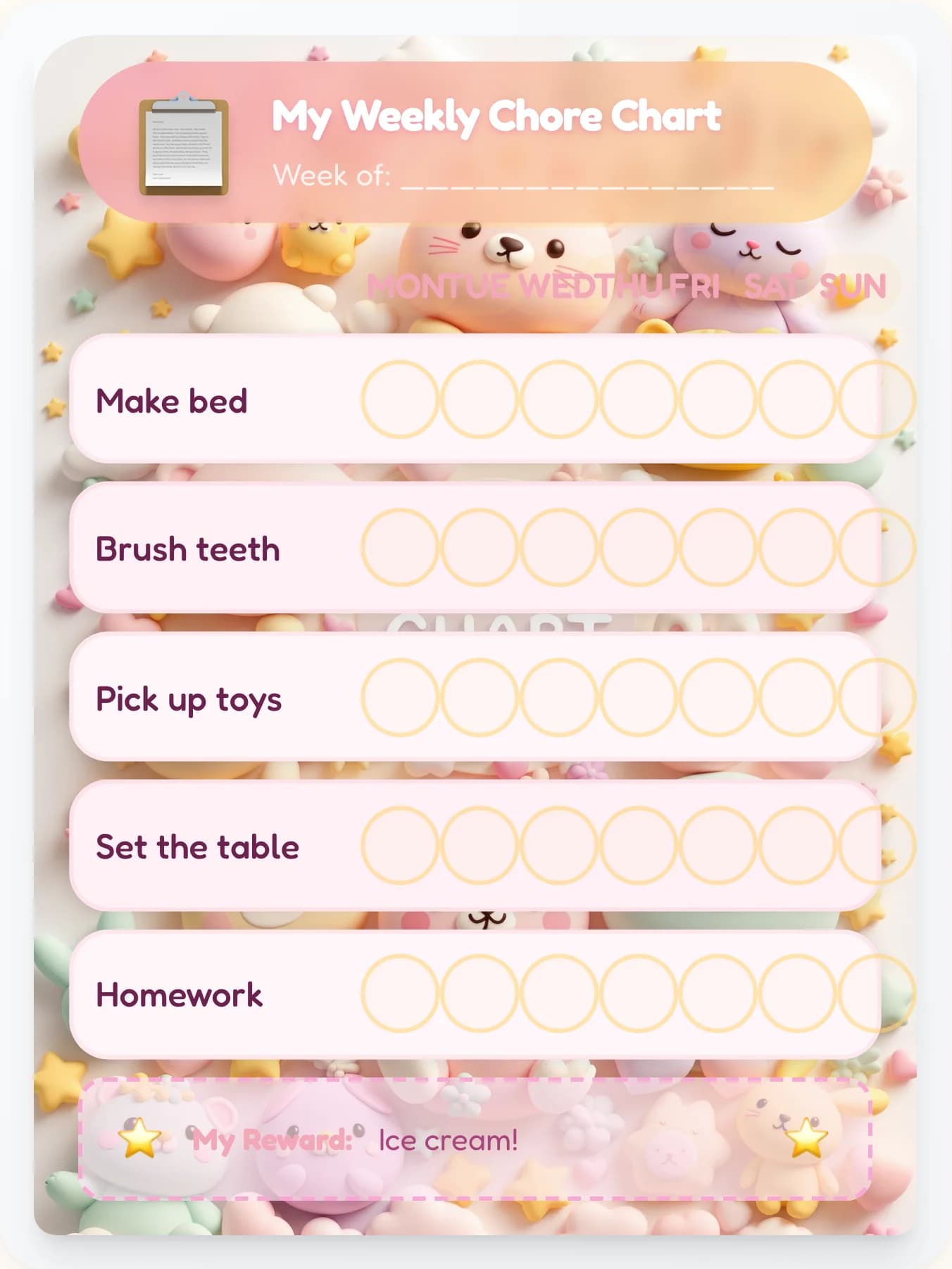
Squishy Puff Pals
Adorable 3D clay-sculpted kawaii animals bounce across a creamy pastel canvas in coral pink and butter yellow. Every row feels like a plush toy shelf with glossy rounded shapes and soft marshmallow glow.
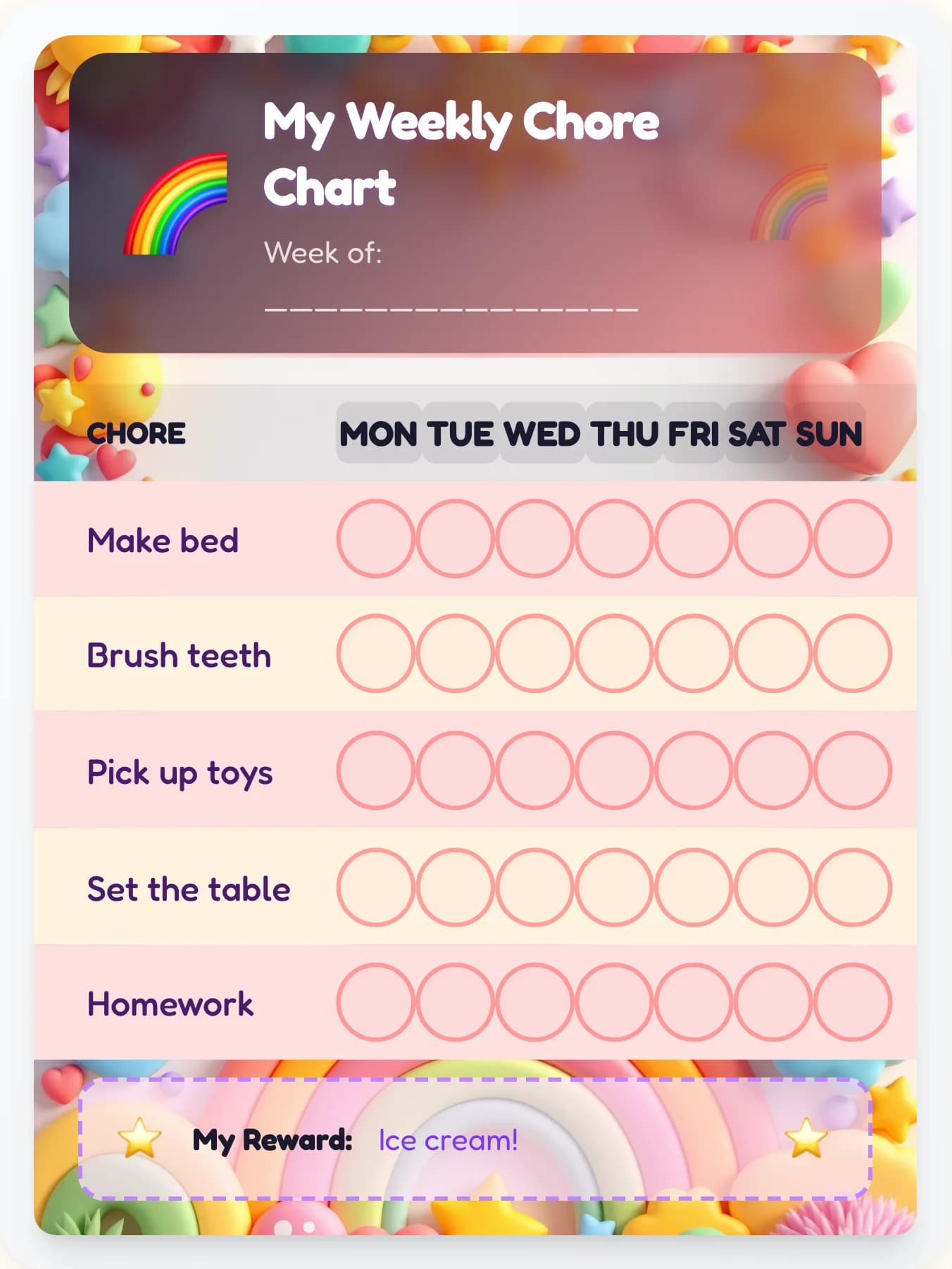
Rainbow Week
Bold rainbow rows where each chore has its own vibrant color
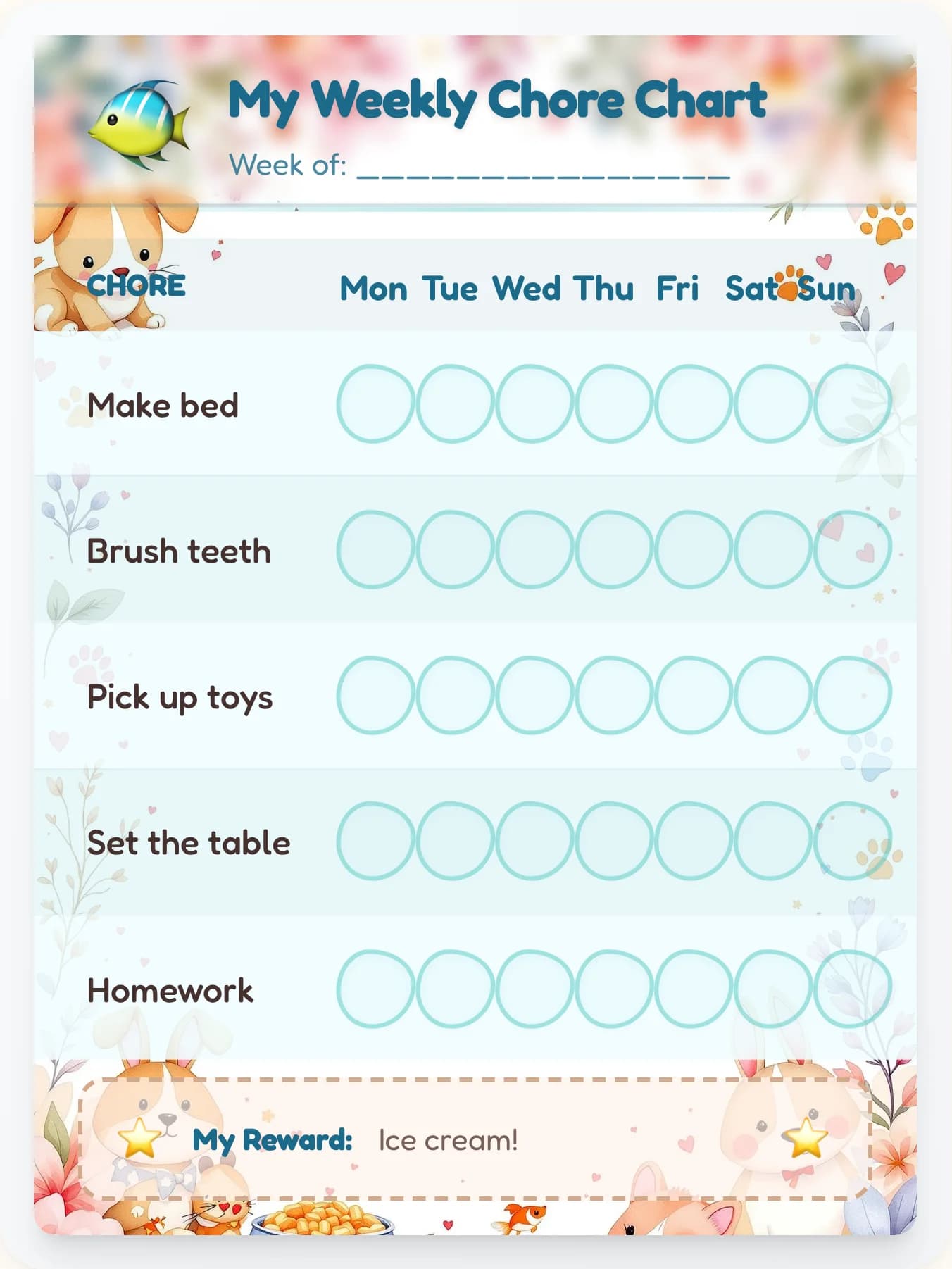
Aqua Fins & Friends
Cool ocean watercolor border alive with tropical fish, playful turtles, and swirling seahorses in turquoise and seafoam tones. A refreshing underwater world frames this weekly chore chart for water-loving kids.
Getting Started Today
Open the chart editor on our site and select a toddler preset. Pick a dinosaur, rainbow, or animal theme. Add your child's name and choose two simple chores from the preset list. Print it, hang it at your child's eye level, and buy a sheet of star stickers.
Tomorrow morning after breakfast, walk your toddler to the chart and do the first chore together. Place the sticker together. That is it. That is the entire system on day one. Everything else builds from that single moment of "I did it, and here is my star to prove it."
Key Takeaways
- Beş değil, BİR görevle başlayın — birincisi otomatik hale geldikten sonra daha fazlasını ekleyin
- Küçük çocuğunuzun göz hizasına asılmış, büyük çıkartma noktalı resim tabanlı tablolar kullanın
- 2 yaşındakiler oyuncakları kutulara koyabilir ve kırılmaz bulaşık taşıyabilir; 4 yaşındakiler yatak yapabilir ve masa kurabilir
- Yıldız çıkartmaları, küçük çocuk beyin gelişimiyle örtüşen anlık, dokunsal ödülü sağlar
- Yiyecek veya ekran süresi yerine zaman tabanlı ödüller seçin (ekstra hikaye, park seçimi)
- "Temiz sayfa" etkisi için her hafta taze bir tablo yazdırın
- Reddettiklerinde sakin kalın — bir sonraki aktivite sadece görev bitene kadar bekler
- Consistency of timing matters more than perfection of results