Çocukların Görev Tabloları İçin En İyi Ödül Sistemleri
Her yaşta çocukları gerçekte ne motive eder — çocuk gelişimi araştırmasıyla desteklenmektedir
The Science of Rewarding Chores
Rewards work — but only when matched to the child's developmental stage. A sticker chart motivates a 4-year-old because they crave immediate, tangible feedback. The same stickers bore a 9-year-old who needs something more meaningful.
The goal of any reward system is to bridge the gap between effort and satisfaction until intrinsic motivation develops. Young children need external rewards because they cannot yet feel the internal satisfaction of a job well done. By age 10-12, many children have internalized the habit and need fewer external incentives.
The key principle: rewards should decrease in frequency as the habit strengthens. Start with daily rewards, shift to weekly, then to occasional recognition. The chore chart itself becomes the reward — the satisfaction of a fully checked week.
Best Rewards by Age Group
2-4
Stickers, stamps, high-fives, dance parties, verbal praise
Money (they don't understand it), delayed rewards
5-7
Chart completion prizes, choosing dinner, extra story, screen time bonus
Large toys (sets expectations too high), food as reward
8-10
Privileges (later bedtime, friend sleepover, pick family movie), small allowance for extras
Paying for basic chores (creates entitlement)
11-13
Earned allowance for extras, device time, independence (walk to friend's house)
Excessive screen time rewards (creates dependency)
14-17
Money for above-and-beyond tasks, car privileges, social freedom
Tying all money to chores (basic contributions should be expected)
Harçlık Tartışması: Görevler İçin Ödeme Yapmalı mısınız?
This is the most debated topic in parenting circles. Research supports a middle ground: basic chores are unpaid family contributions, extra tasks can earn money.
Basic chores — making their bed, clearing their plate, tidying their room — are what every family member does. Paying for these teaches children that helping the family is transactional, not communal.
Extra chores — washing the car, organizing the garage, deep cleaning the bathroom — can be paid tasks. This teaches the work-for-pay concept without undermining the 'we all contribute' foundation. Think of it as the difference between doing your own laundry (expected) and doing the neighbor's yard work (a job).
The 80% Rule
Haftalık ödül eşiğini %100 değil, %80 olarak belirleyin. Bir çocuğun ödülünü kazanmak için mükemmel bir haftaya ihtiyacı varsa, kötü bir Pazartesi tüm haftayı mahveder ve motivasyon çöker. %80 eşiği, birkaç görevi kaçırıp yine de başarılı olabilecekleri anlamına gelir. Bu, bir kaymanın ardından bile denemeye devam etmelerini sağlar.
Kalıcı Bir Ödül Sistemi Kurma
- 1
Günlük ve haftalık ödülleri belirleyin
Günlük: sözlü övgü ve onay işareti/çıkartma. Haftalık: %80 eşiğine ulaşarak kazanılan bir ayrıcalık. Aylık: tutarlı tamamlama için özel bir aktivite.
- 2
Ödülleri tabloda görünür kılın
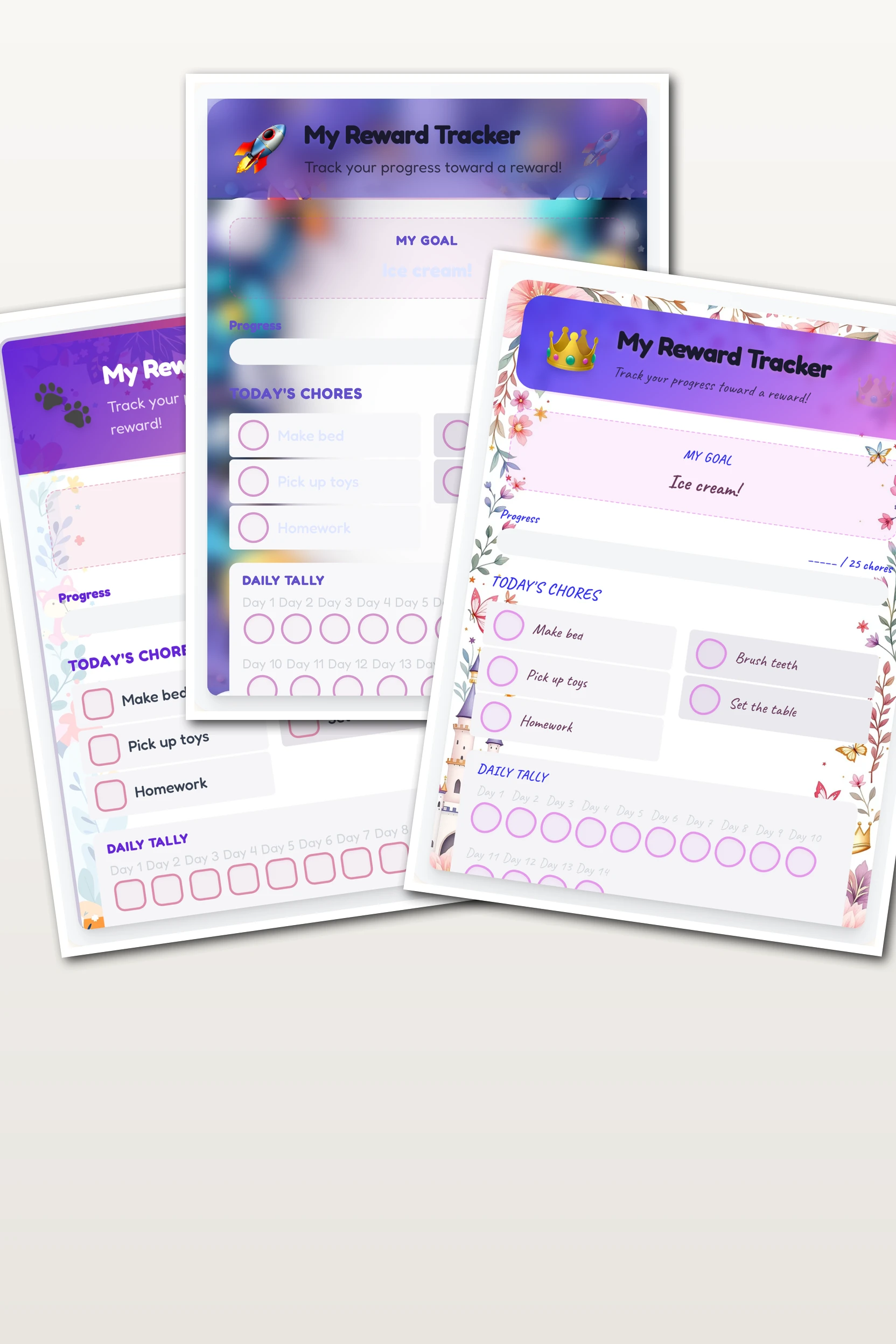
Alta bir ödül takip aracı ekleyin — ilerleme çubuğu, adım taşları veya mücevher koleksiyonu. Çocukların hedefe ne kadar yakın olduklarını görmesi gerekir.
- 3
Celebrate weekly wins together
Pazar akşamı incelemesi: işaretleri sayın, başarıları kutlayın, ayrıcalığı verin. Muhasebe egzersizi değil, aile ritüeli haline getirin.
- 4
Fade external rewards over time
2-3 ay tutarlılıktan sonra haftalık ödüllerden iki haftada bire, ardından aylığa geçin. Alışkanlık zamanla kendi kendine ödül olmalıdır. Motivasyon düşerse geçici olarak ödülleri yeniden artırın.
“The best reward for doing chores is not a toy or a treat — it is the child's growing belief that they are capable and their contributions matter.”
Dahili Ödül Takipçili Tablolar
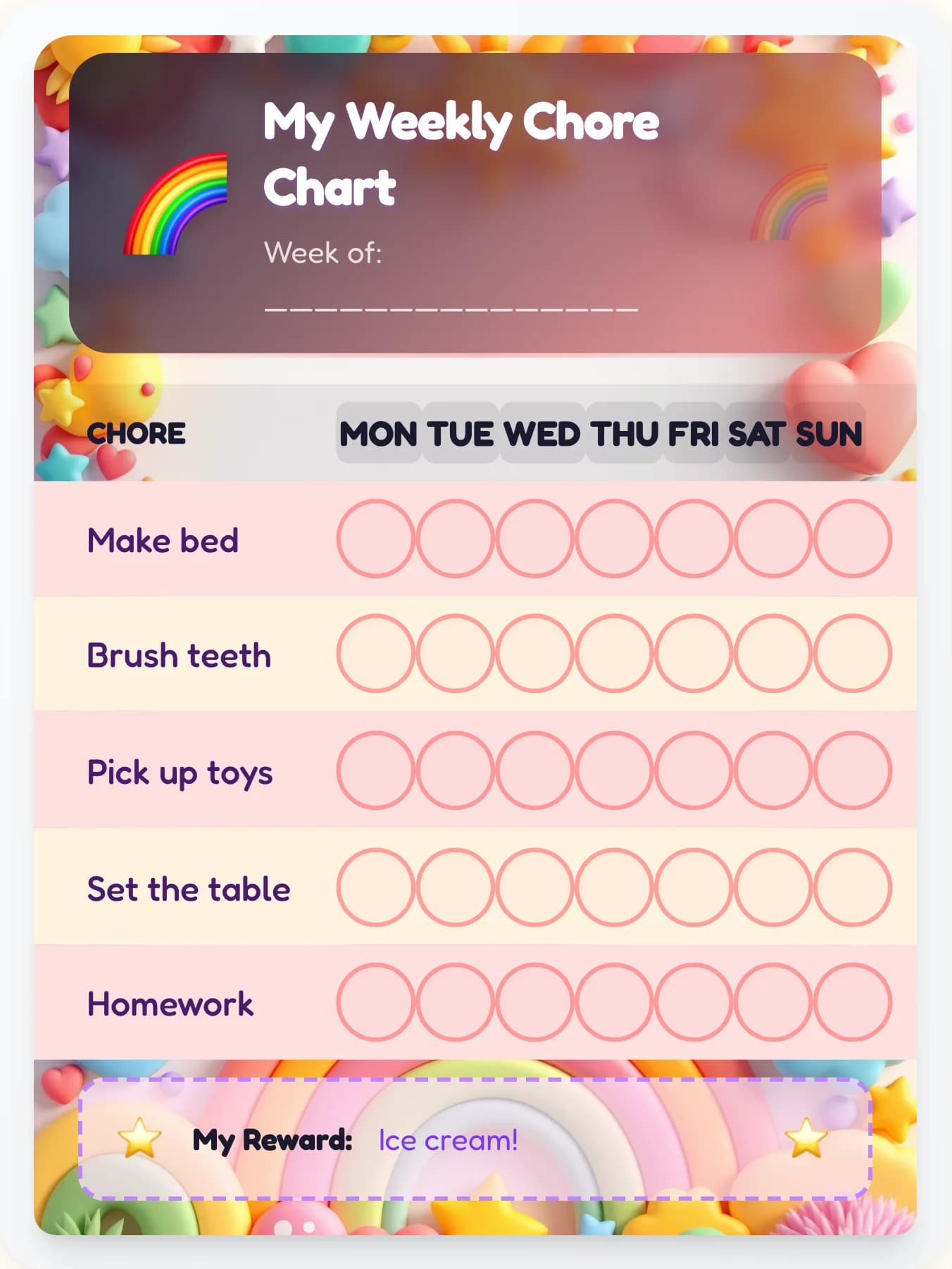
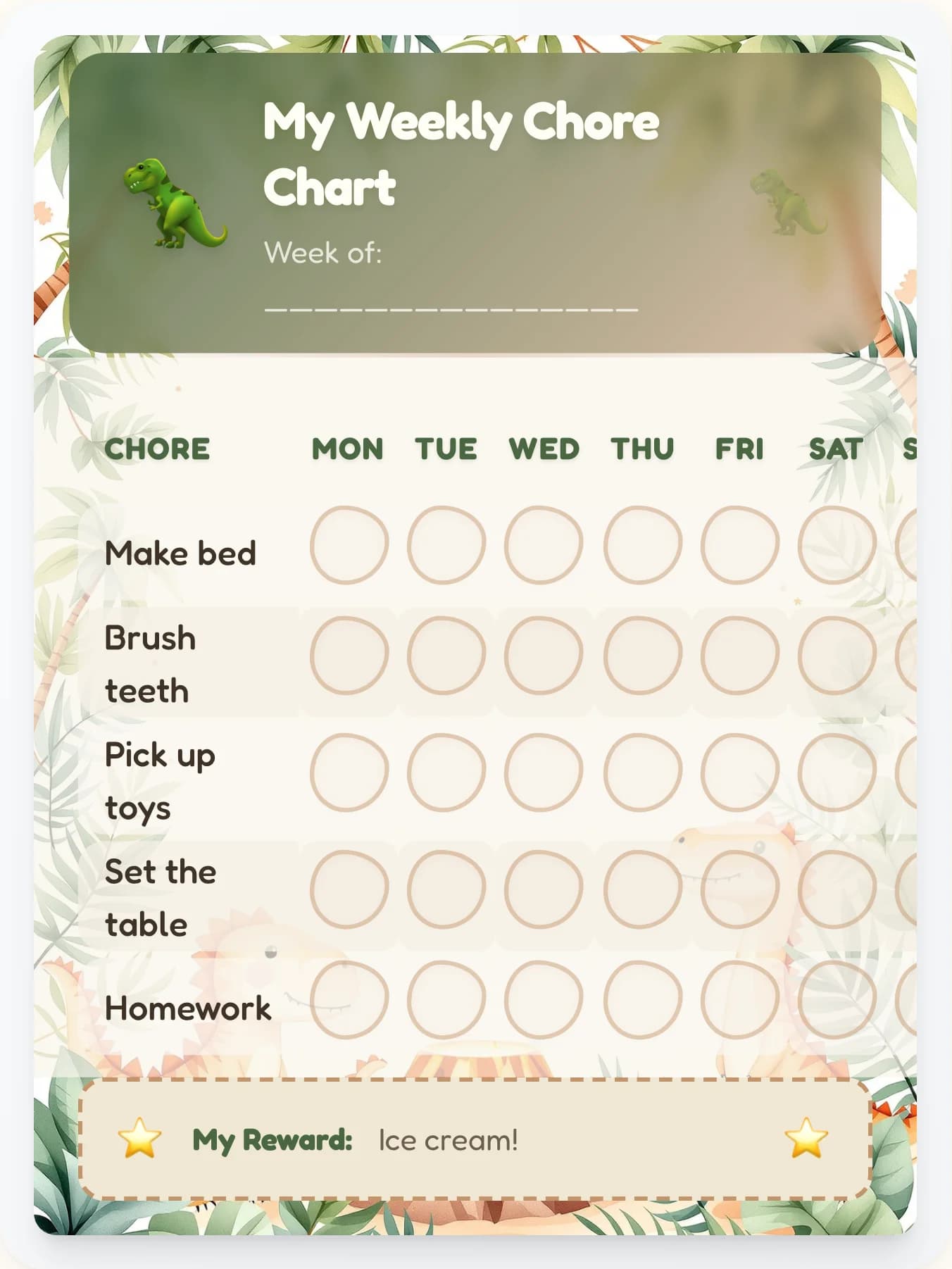
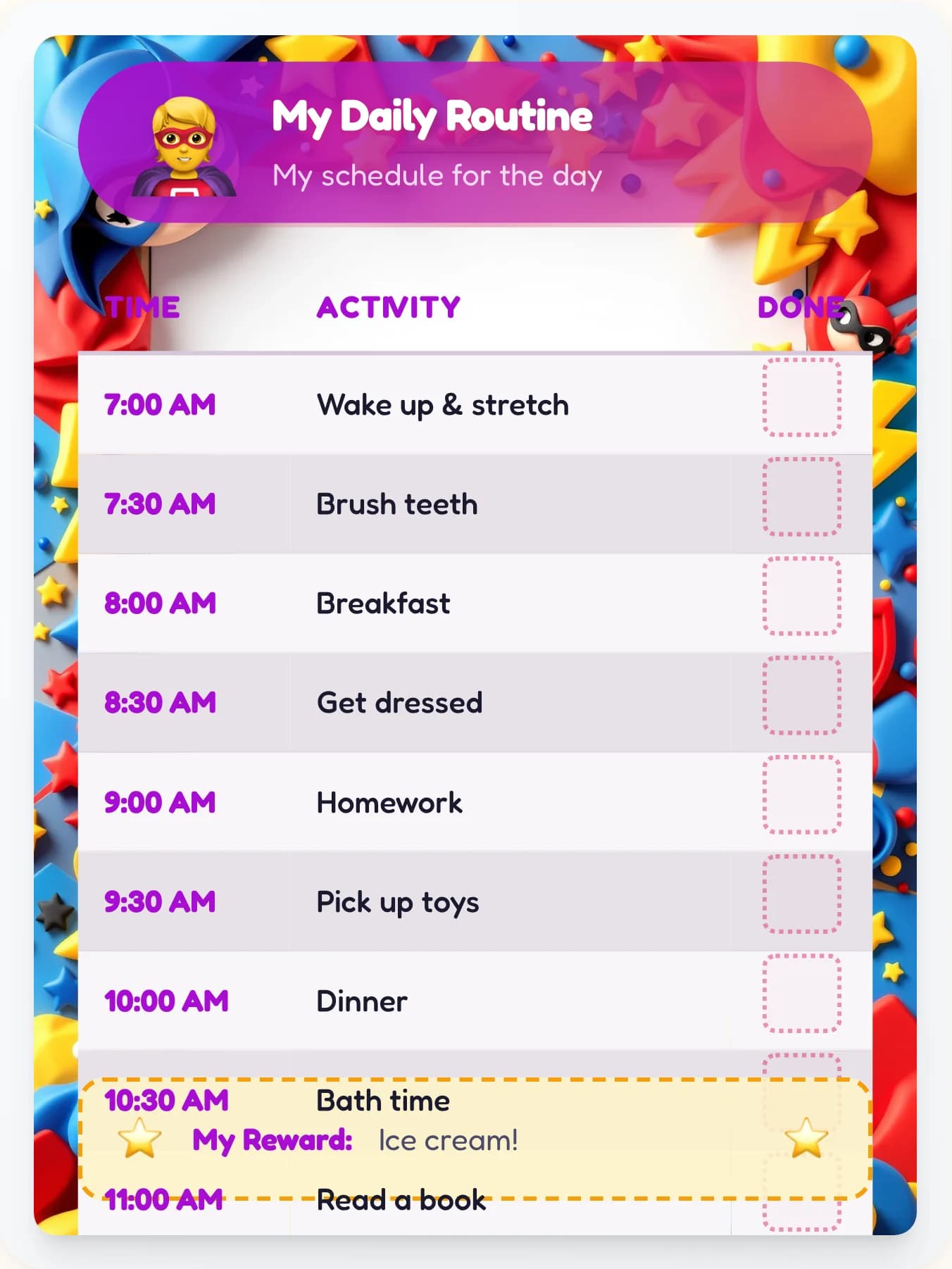
Ödül takipçimiz ve yıldız tablosu formatlarımızda görsel ilerleme takibi yerleşiktir
See Reward ChartsEn İyi Ödül Tablosu Şablonları
Common Questions
Key Takeaways
- Match rewards to your child's developmental stage
- Separate basic chores (unpaid) from extra tasks (can be paid)
- Haftalık ödüller için %100 değil, %80 eşiğini kullanın
- Ödül ilerlemesini tablonun kendisinde görünür kılın
- Alışkanlık güçlendikçe dış ödülleri zamanla azaltın
- The ultimate goal is intrinsic motivation: pride in contributing