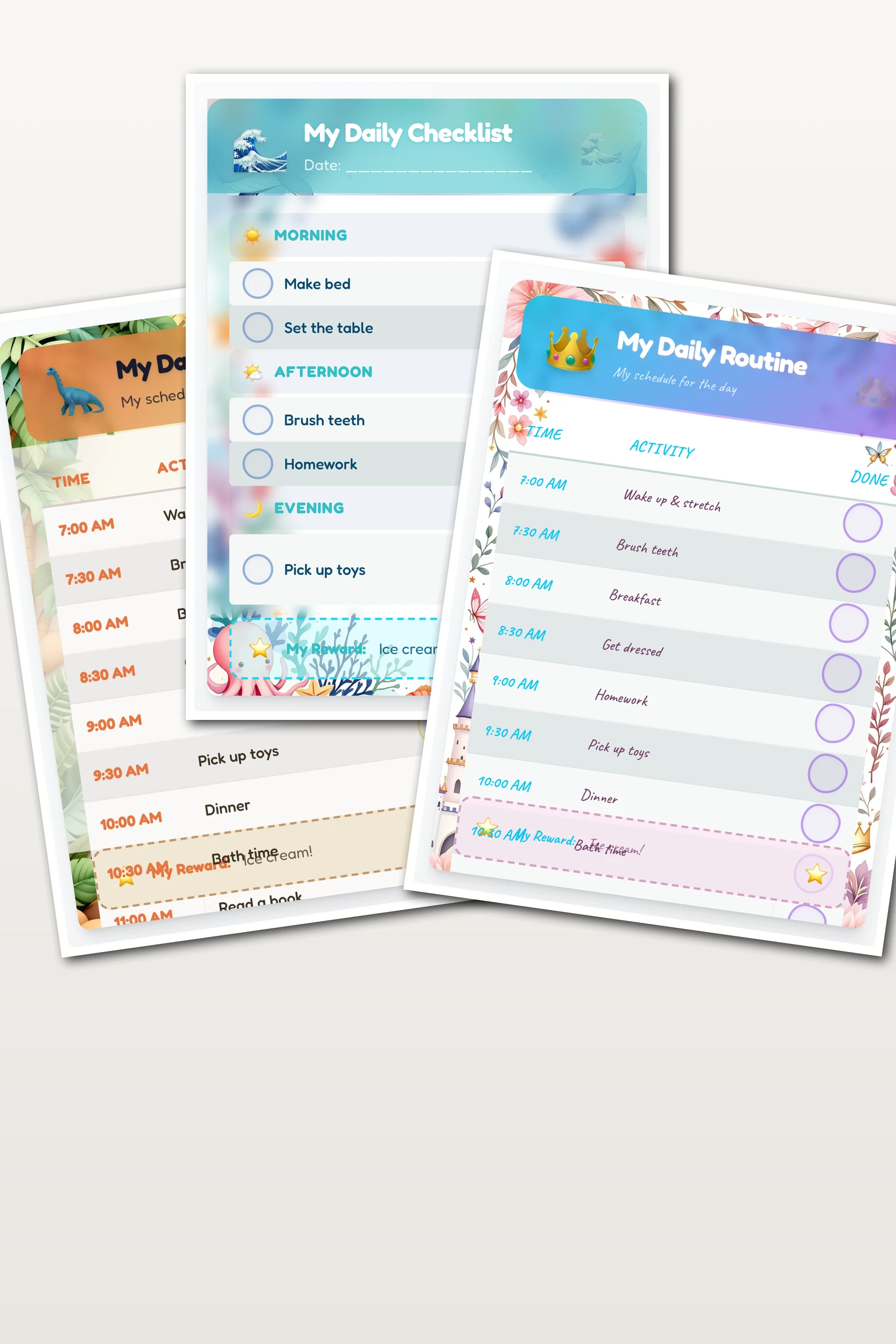
Building Lasting Habits With Chore Charts
Kalıcı rutinlerin arkasındaki ebeveynlik bilimi — ve neden tutarlılık coşkudan daha önemlidir
How Habits Form in Children's Brains
Habits are not built through willpower — they are built through repetition. Every time a child completes a task at the same time, in the same sequence, the neural pathway strengthens. After roughly 30-60 repetitions, the behavior becomes automatic.
This is why chore charts work: they externalize the sequence. The child does not need to remember what comes next — the chart tells them. Over time, the chart becomes unnecessary because the sequence has been encoded in their brain.
For children, habit formation is faster than for adults because their brains are more plastic. A 5-year-old who makes their bed every morning for 6 weeks will likely continue the habit even without the chart. The chart is scaffolding — it supports the structure until it can stand on its own.
66 days
average time for an adult habit to become automatic
European Journal of Social Psychology
30-40 days
estimated time for children due to brain plasticity
Developmental Psychology Review
90%
of daily actions are habitual, not deliberate
Duke University Study
The Three Phases of Chore Habit Formation
Phase 1: The Honeymoon (Days 1-7). Everything is new and exciting. The child loves their chart, eagerly places stickers, and completes tasks enthusiastically. This phase is easy but deceiving — the habit has not formed yet.
Phase 2: The Resistance (Days 8-21). Novelty fades. The child forgets, procrastinates, or outright refuses. This is the critical phase where most chore charts fail. Parents give up, assuming the chart does not work. But this resistance is normal and necessary — it is the brain's old patterns pushing back against new ones.
Phase 3: The Groove (Days 22-45+). If you push through resistance with calm consistency, something shifts. The child starts doing tasks without prompting. They might even remind you that they need to check their chart. The habit is forming. By day 45-60, the behavior feels natural.
The Day 14 Danger Zone
Çoğu görev tablosu 10-14. günler arasında terk edilir. Direncin zirveye ulaştığı ve ebeveynlerin 'işe yaramıyor' sonucuna vardığı tam da bu dönemdir. Bu pencereyi sakin tutarlılıkla geçin. Baskıyı artırmayın — sadece rutini sürdürün. Kırılma noktası genellikle 3. haftada gelir.
Strategies for Each Phase
- 1
Balayı: Sadece heyecan değil, beklentiler belirleyin
Çocuğunuza söyleyin: 'Bu başta eğlenceli olacak, sonra bazı günler sıkıcı hissedecek. Bu normaldir. Yine de devam ediyoruz.' Bu beklentiyi önceden belirlemek, 2. Aşamanın sürprizini önler.
- 2
Resistance: Stay calm and consistent
Direnci aşmak için daha fazla ödül eklemeyin. Ders vermeyin veya cezalandırmayın. Sadece rutini sürdürün: 'Görev zamanı. Hangisiyle başlamak istersin?' Yapı içinde seçenekler sunun.
- 3
Groove: Celebrate and reduce scaffolding
Alışkanlık yerleştiğinde onu adlandırın: 'Kimse sormadan yatağını yaptın. Bu artık gerçek bir alışkanlık.' Bağımsızlıklarının tanınmasını artırırken dış ödülleri azaltmaya başlayın.
Why Consistency Beats Intensity
A child who does 3 chores every single day builds stronger habits than one who does 10 chores three times a week. Consistency — same time, same sequence, same expectations — is the single most important factor in habit formation.
This is why daily chore charts outperform weekly ones for building habits. The daily repetition creates the neural pathway. Weekly charts are better for accountability, but the daily rhythm is where habits live.
If you can only commit to one thing, commit to this: the same 3 tasks, at the same time, every single day. No days off, no exceptions. After 6 weeks, those tasks will be automatic.
Önerilen Görev Tablosu Şablonları
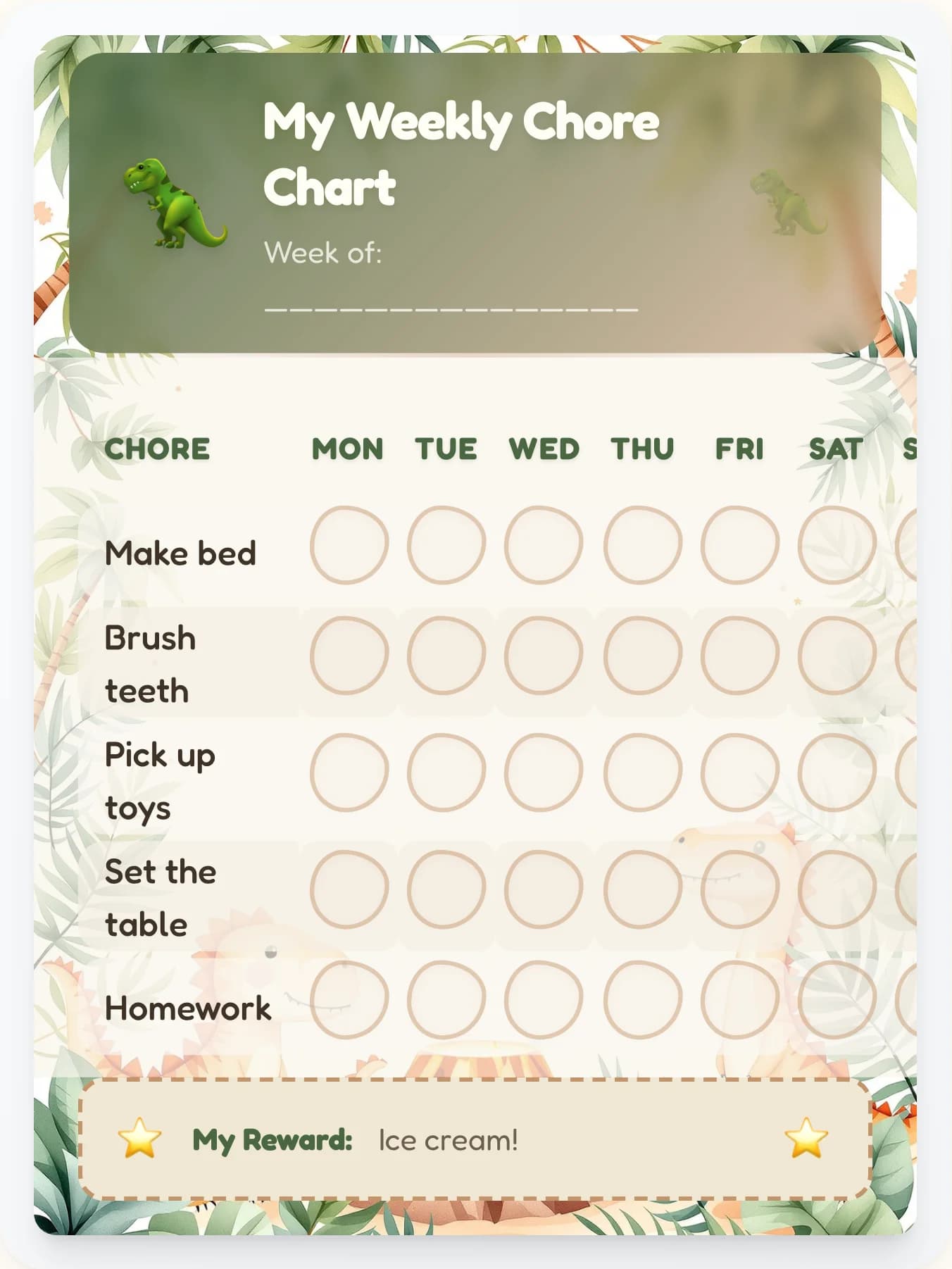
Dinosaur Watercolor
Soft hand-painted dinosaur borders with earthy tones
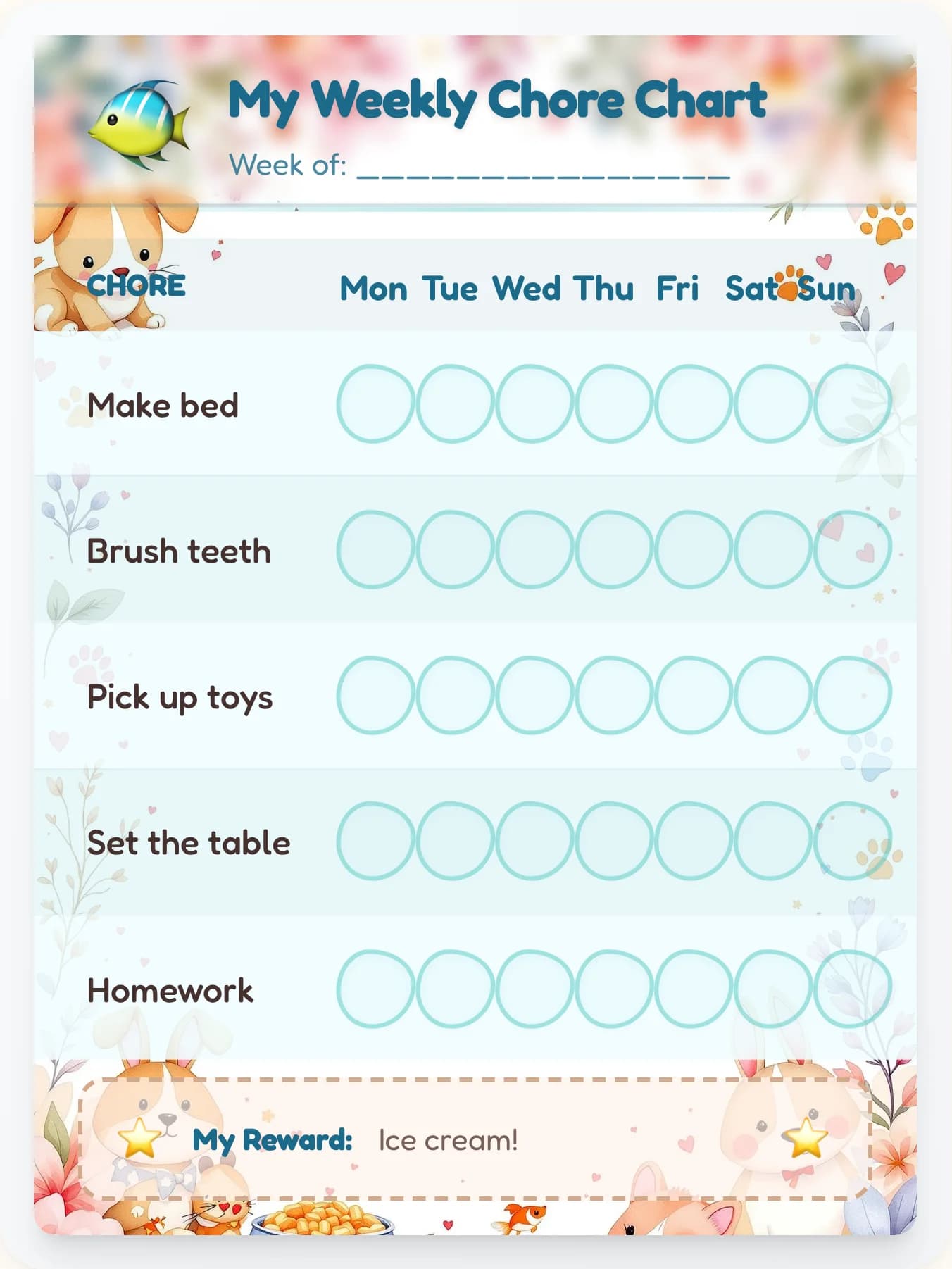
Aqua Fins & Friends
Cool ocean watercolor border alive with tropical fish, playful turtles, and swirling seahorses in turquoise and seafoam tones. A refreshing underwater world frames this weekly chore chart for water-loving kids.
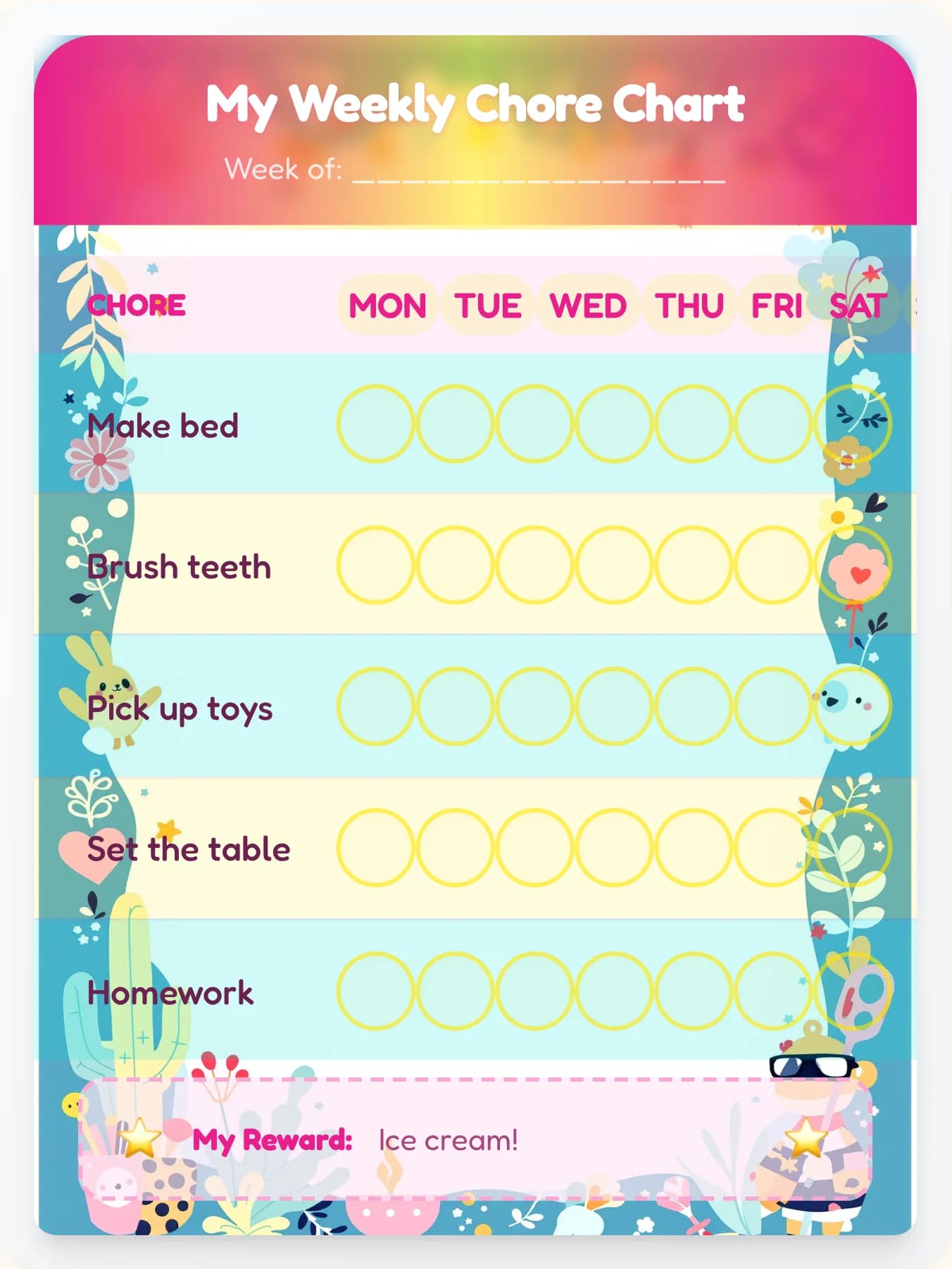
Tamagotchi Candy Club
A vibrant 90s retro-kawaii chore chart inspired by Tamagotchi-era Japanese stationery, bursting with hot magenta, electric teal, and sunshine yellow candy colors. Bold outlines, pixel-style star bursts, and vintage Sanrio bow motifs give every chore a nostalgic magical-girl sparkle.
Bugün Alışkanlığa Başlayın
Günlük kontrol listesi veya haftalık ızgara yazdırın — tutarlı günlük kullanım için tasarlanmış ücretsiz şablonlar
Browse TemplatesKey Takeaways
- 1Habits form through repetition, not willpower — aim for 30-45 days of consistency
- 2Expect three phases: Honeymoon, Resistance, and Groove
- 314. gün tehlike bölgesi, çoğu tablonun başarısız olduğu andır — sakin tutarlılıkla ilerleyin
- 4Günlük tablolar, haftalık olanlara göre daha hızlı alışkanlık oluşturur
- 53 tasks every day beats 10 tasks three times a week
- 6Tablo bir iskele gibidir — alışkanlık kendi kendine ayağa kalkana kadar onu destekler