Gerçekten İşe Yarayan Görev Tabloları: Ebeveyn Rehberi
Aylarca süren tablolar ile iki haftada terk edilenleri birbirinden ayıran beş kural — çocuk gelişimi araştırmasıyla desteklenmekte ve gerçek aileler tarafından test edilmektedir.
82%
of chore charts are abandoned within 3 weeks
American Academy of Pediatrics, 2024
3–5
chores is the ideal range for any age group
Journal of Child Development
30 sec
daily review is the #1 predictor of chart success
Family Studies Quarterly
Buzdolabınızdaki Görev Tablosu Mezarlığı
Somewhere on your refrigerator, under a magnet shaped like a pineapple, there is a chore chart from three months ago. It has two weeks of stickers on it and then nothing. Below that, partially hidden by a school permission slip, is the chore chart from last year. Same pattern. Two weeks of enthusiasm followed by slow abandonment.
You are not a bad parent. This is the most common outcome for chore charts, and the reason is almost never the chart itself. The chart is a piece of paper. It cannot fail. What fails is the system around it: how many chores were listed, where the chart was placed, whether anyone looked at it after the first week, and whether the expectations on it matched what the child could actually do.
The good chore charts — the ones that last months or years — all share certain traits. They are simple, visible, reviewed daily, and designed for the specific child using them. None of that is complicated. But each piece has to be in place, and most families accidentally skip one or two of them.
Chart Approaches: Assigned vs. Child-Chosen Chores
Pros
- Child-chosen chores boost intrinsic motivation and ownership
- Görevlerini seçen çocuklar %40 daha yüksek tamamlama oranı gösteriyor
- Builds decision-making skills and autonomy
- Hangi görevlerin yapılacağı konusundaki günlük güç mücadelelerini azaltır
Cons
- Ebeveyn ataması tüm ev ihtiyaçlarının karşılanmasını sağlar
- Easier to balance workload across multiple children
- Some essential chores may never get chosen voluntarily
- Küçük çocuklar, serbest seçimin izin verdiğinden daha fazla yapıya ihtiyaç duyabilir
Best approach: offer 5–6 options and let the child pick 3. They still do the same number of chores, but their investment in completing them goes up significantly.
Alışkanlık Döngüsü, Jargon Olmadan
Every lasting habit has three parts: a trigger, an action, and a payoff. Your morning coffee works on this loop. The trigger is waking up. The action is making coffee. The payoff is the warm mug in your hands and the caffeine hitting your brain. You do not need willpower to make coffee. The loop runs automatically.
A chore chart creates the same loop for kids. The trigger is seeing the chart at a specific time (after breakfast, after school). The action is doing the listed chores. The payoff is checking the box, placing the sticker, or earning a point. When all three parts are clear and consistent, the habit builds itself over two to three weeks.
When a chart fails, one of those three parts is usually missing. No consistent trigger (the chart is in a closet, or there is no set time for chores). No clear action (too many chores, vague instructions). No satisfying payoff (no stickers, no checkmarks, no acknowledgment). Fix the missing piece and the system starts working.
Kalıcı Bir Görev Tablosu Nasıl Kurulur
- 1
En fazla 3 görevle başlayın
Üç, küçük bir çocuğun aynı anda çalışma belleğinde tutabileceği en fazla sayıdır. Dört yaşında bir çocuk 'oyuncakları kaldır, tabağı tezgaha koy, ayakkabıları rafa koy'u hatırlayabilir. Büyük çocuklar için beş makuldür — ama her zaman ilk iki hafta için üçle başlayın ve kademeli olarak ekleyin.
- 2
Tabloyu çocuğunuzun göz hizasına yerleştirin
Buzdolabı çoğu aile için işe yarar çünkü çocuklar günde birkaç kez ziyaret eder. Diğer iyi yerler: banyo aynasının yanı, yatak odası kapıları veya kahvaltı masasının yanı. Tablonun görülmesi çaba gerektiriyorsa, görülmeyecektir.
- 3
Build the daily 30-second review
Her akşam çocuğunuzla tabloyu incelemeye otuz saniye ayırın. Tamamlananları görün ve kabul edin. Atlanmışları görün, drama yapmadan not edin. Bu, ebeveynin oluşturması gereken en önemli tek alışkanlıktır.
- 4
Rotate chores monthly to prevent boredom
Sabit kalan 1-2 çapa görevi tutun (otomatik hale gelenler). Gerisini her 3-4 haftada bir değiştirin. Zorluk benzer kalır, ancak çeşitlilik işlerin sıkıntılı hissetmesini önler.
- 5
Let kids choose from a curated list
5-6 seçenek sunun ve çocuğun 3 tanesini seçmesine izin verin. Özerklik uyumu sahipliğe dönüştürür. Birden fazla çocuklu aileler için, iki çocuğun aynı haftada aynı görevi paylaşmaması kuralıyla her çocuğun aynı ana listeden seçmesine izin verin.
The 30-Second Rule
Bu listeden başka hiçbir şey yapamıyorsanız, günlük 30 saniyelik incelemeyi yapın. "Bugün üçünü de tamamladın, aferin" — on saniyelik bu kabul, süren tablolar ile geri dönüşüm kutusuna giden tabloları birbirinden ayıran şeydir. Kimsenin bakmadığı bir tablo, çocuklara çalışmanın önemli olmadığını öğretir.
Bağımlılık Değil Alışkanlık Oluşturan Ödül Sistemleri
The difference between a reward and a bribe is timing and structure. A bribe is reactive: 'If you clean your room right now, you can have ice cream.' A reward is proactive and earned: 'When you complete all your chores this week, you choose Saturday's family activity.' Bribes create negotiation. Rewards create anticipation.
Effective rewards for younger kids (ages two to six): stickers on the chart, choosing a bedtime story, picking what is for dinner one night, an extra fifteen minutes before bed, or a special one-on-one activity with a parent. Notice that none of these cost money. The best rewards for young children are time and attention — things they crave more than any toy.
For older kids (ages seven and up), consider a point system. Each completed chore earns a point. Points accumulate toward a larger goal: a new book at twenty points, a friend sleepover at fifty, a family day trip at one hundred. The delayed gratification teaches planning and patience.
One rule to protect: never take away already-earned rewards as punishment. If your child earned fifteen points and then has a bad day, those fifteen points stay. Removing earned progress destroys trust in the system and makes kids feel that effort is pointless.
Çocuklar Büyüdükçe Tabloyu Güncelleme
A chore chart is not a permanent document. It should evolve as your child develops. The toddler star chart with three picture-based tasks becomes a weekly grid with five text-based chores in elementary school, which becomes a monthly responsibility calendar in the tween years.
Retire chores that have become automatic. If your eight-year-old makes their bed every morning without being asked or reminded, take it off the chart. It is no longer a chore — it is a habit. Replace it with something new they are still working on. The chart should always represent current growth areas, not completed ones.
As kids approach ten and older, involve them in designing the chart itself. Let them decide the format, pick the chores, set the rewards, and even create the chart layout. The shift from 'parent assigns chores' to 'child manages their own responsibilities' is the ultimate goal of the entire system. The chart is training wheels. Eventually, they come off.
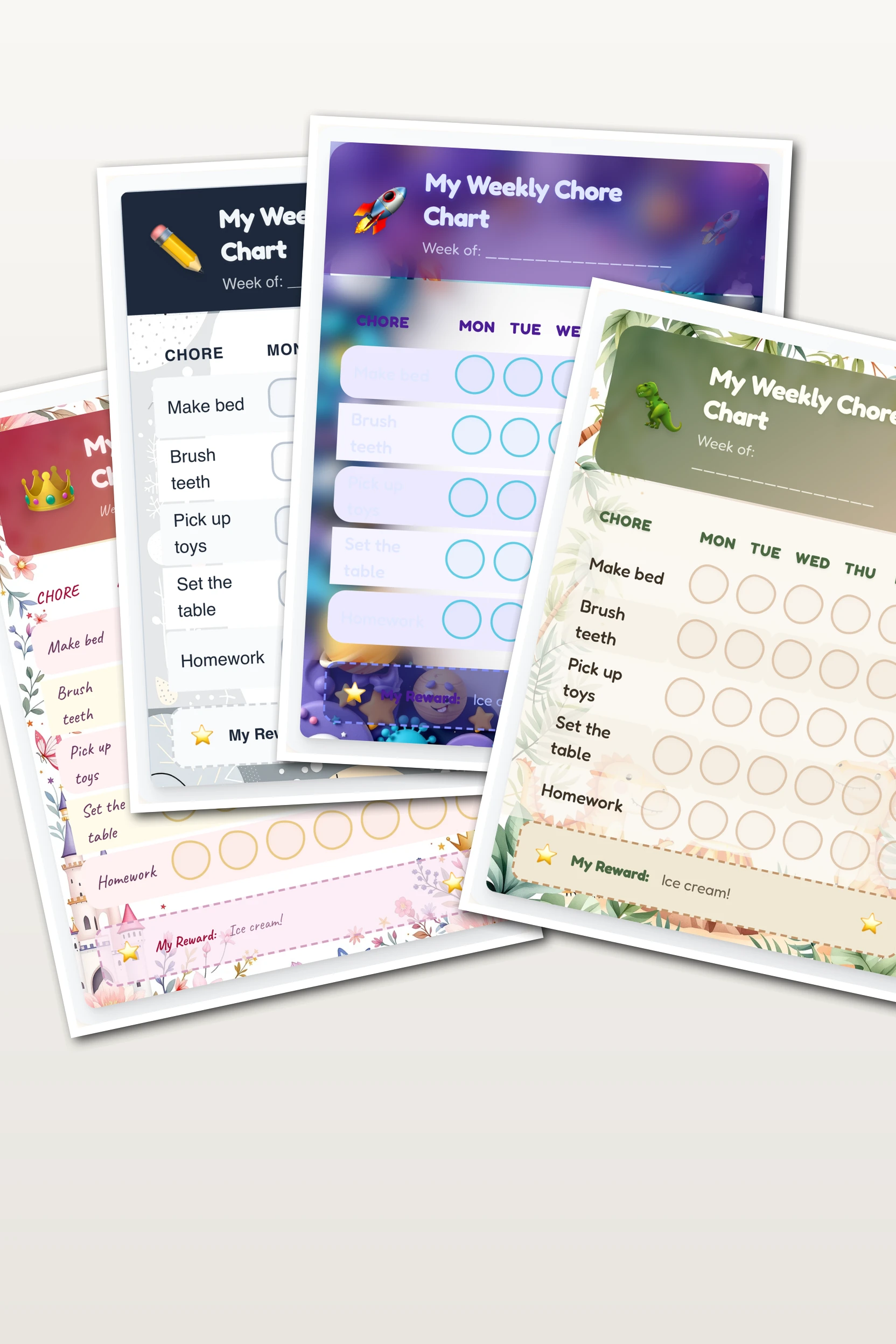
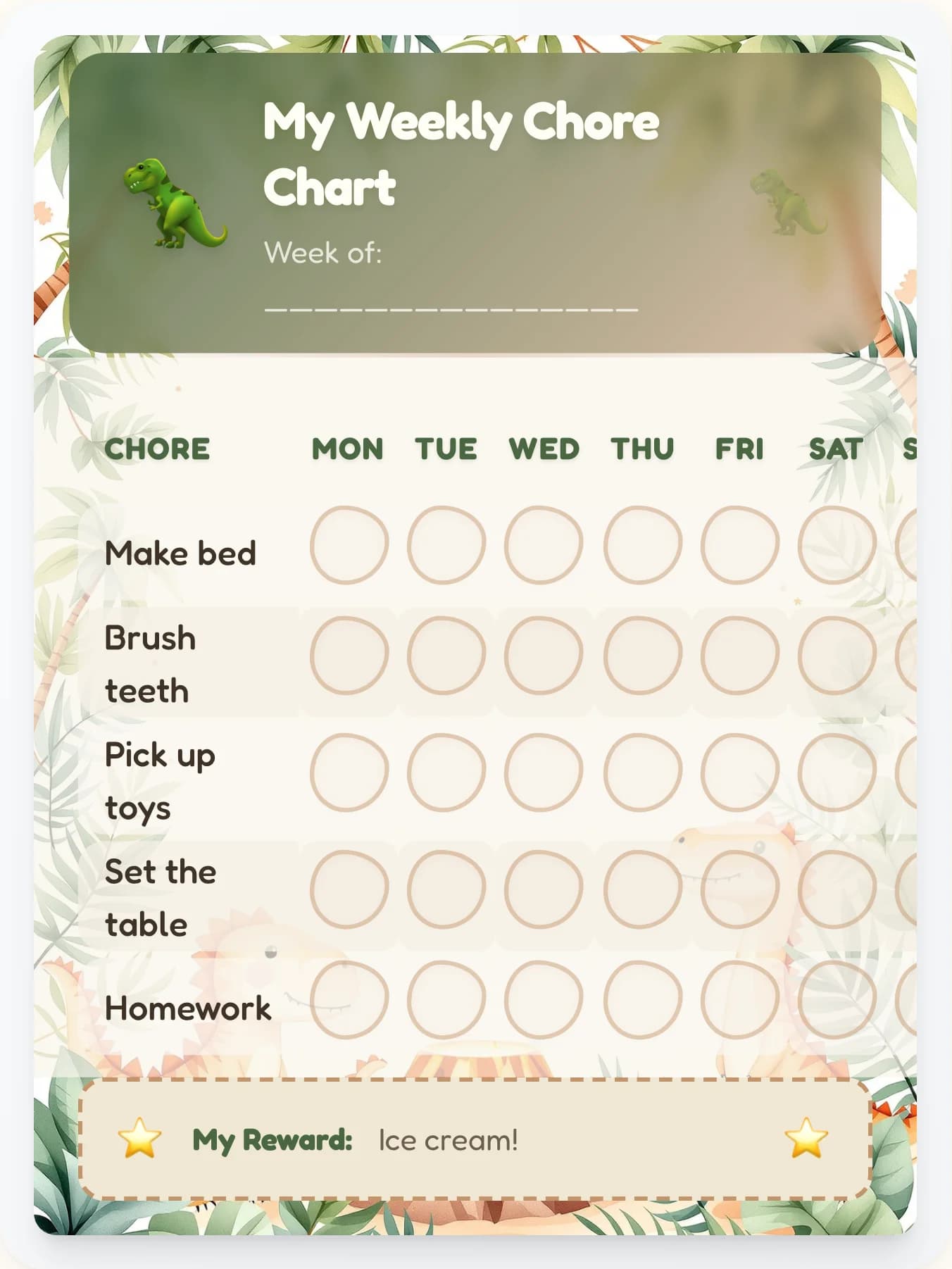
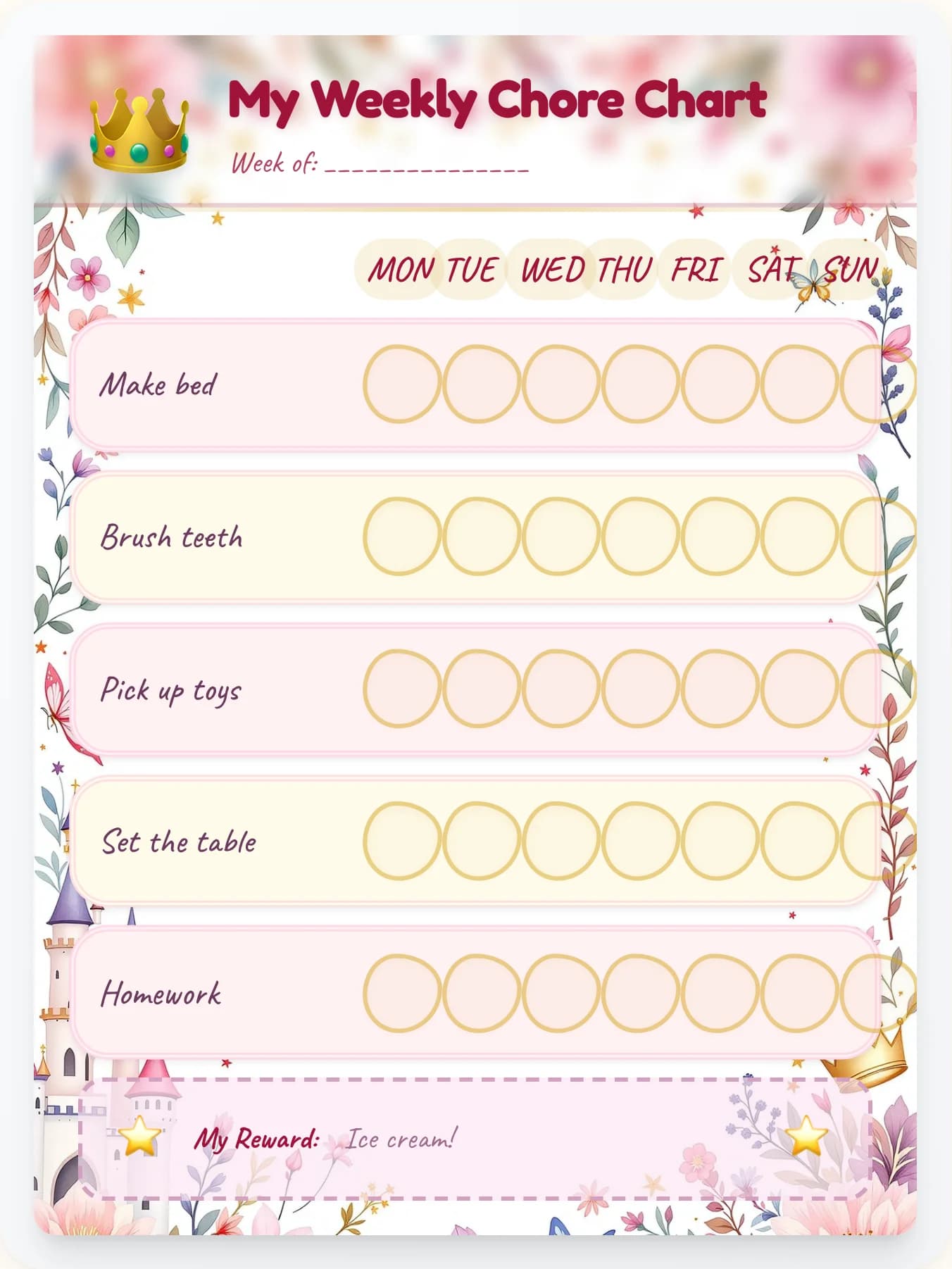
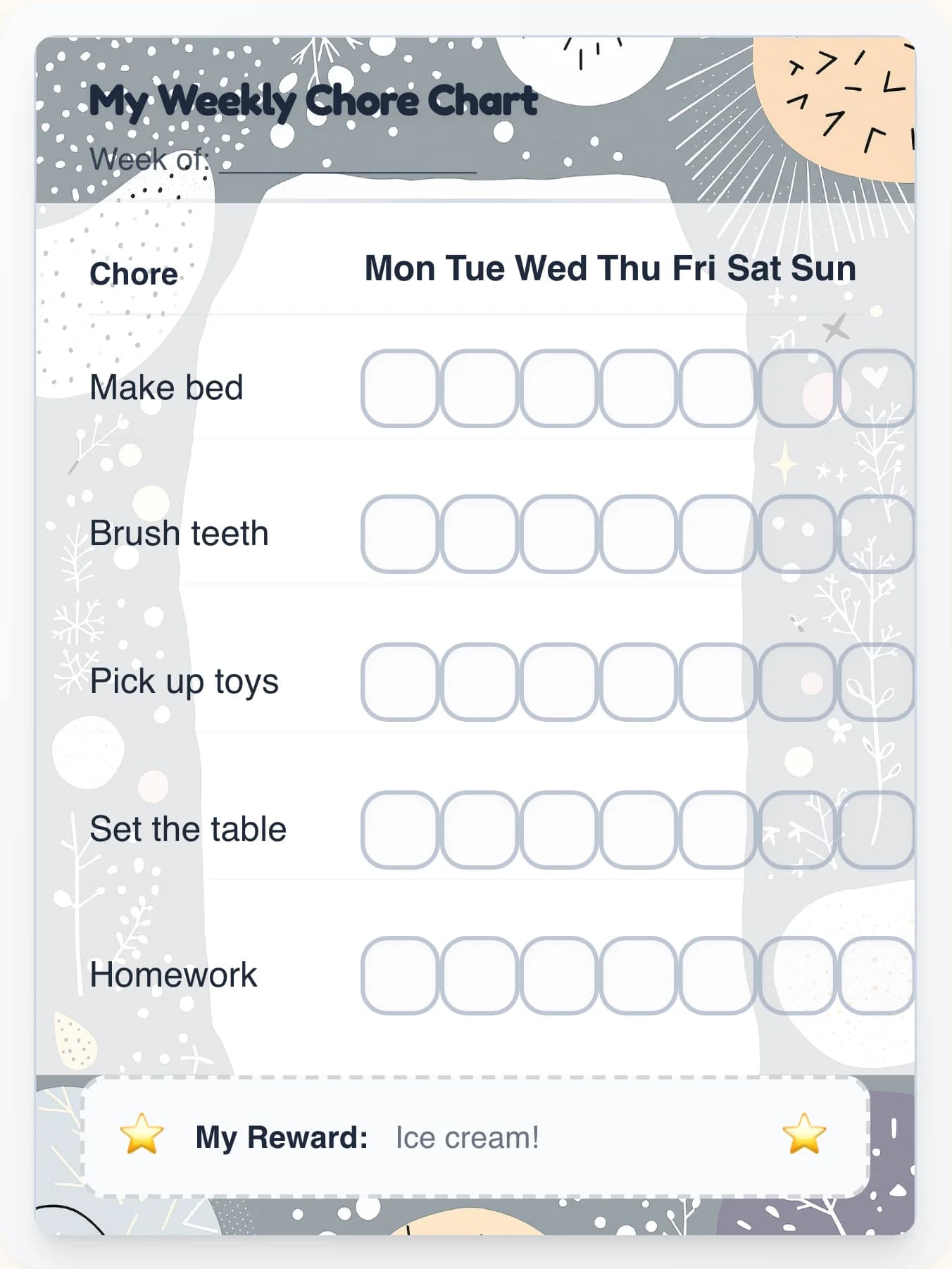
Önerilen Görev Tablosu Şablonları
Frequently Asked Questions
Key Takeaways
- Start with 3 chores maximum — gradual loading always outperforms ambitious launches
- Tabloyu çocuğunuzun çaba harcamadan görebileceği göz hizasına yerleştirin
- Günlük 30 saniyelik ebeveyn incelemesi en önemli tek başarı faktörüdür
- Rotate chores monthly to prevent boredom while keeping 1–2 anchor tasks
- Sahiplik duygusu oluşturmak için çocukların görevlerini seçilmiş bir listeden seçmelerine izin verin
- Tablo formatını çocuğunuzun yaşına göre eşleştirin: küçük çocuklar için yıldız tabloları, ilkokul için haftalık ızgaralar, gençler için aylık takvimler
- Zaten kazanılmış ödülleri asla almayın — bu tüm sisteme duyulan güveni yok eder