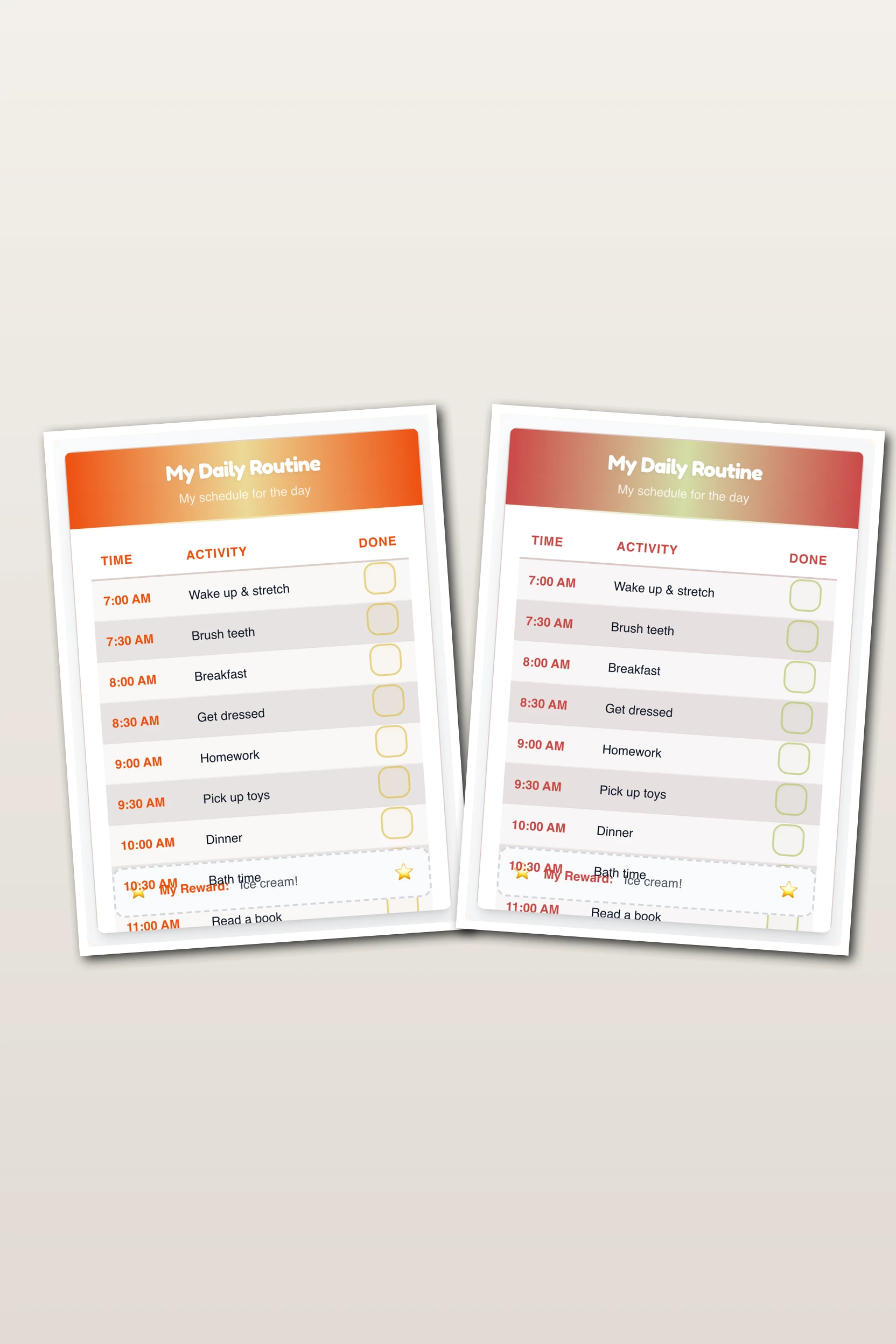
Why 'Responsibility Chart' Beats 'Chore Chart'
The word 'chore' carries baggage — it sounds like drudgery. 'Responsibility' reframes the entire concept. Instead of tasks imposed by parents, responsibilities become things kids OWN. It's a subtle but powerful shift in how children think about their contributions to family life.
A responsibility chart also covers more ground than a traditional chore chart. Beyond 'clean your room' and 'take out trash,' it can track homework completion, personal hygiene, acts of kindness, and even emotional self-regulation. This broader scope teaches children that being responsible means taking care of themselves, their space, AND their relationships.
The most effective responsibility charts divide tasks into three categories: self-care (hygiene, homework, sleep), household (chores, pet care, tidying), and community (kindness, helping others, being a good sibling). This triad builds a complete picture of what it means to be a responsible person — not just a task-doer.
Download Free Responsibility Charts
Sample Responsibilities by Category
Self-Care Responsibilities
- Brush teeth morning and night
- Shower or bath without being asked
- Complete homework before screen time
- Pack own school bag
- Lay out tomorrow's clothes
Household Responsibilities
- Make bed every morning
- Put dishes in dishwasher after meals
- Keep bedroom floor clear
- Feed and water pets
- Help with one meal prep task
Community Responsibilities
- Say please, thank you, and excuse me
- Help a sibling or family member without being asked
- Write in gratitude journal (1 thing)
- Share something with someone
- Use kind words even when frustrated
Setting Up a Responsibility Chart That Builds Character
Start with a family meeting. Let everyone — parents and kids — suggest responsibilities for the chart. When children help define expectations, buy-in skyrockets. Write down every suggestion, then vote on which ones make the final chart.
Use a point or level system instead of simple checkboxes. Each responsibility earns points based on difficulty: brushing teeth might be 1 point, while completing homework independently earns 3. This teaches prioritization and effort-based reward.
Create milestones that celebrate character, not just compliance. Instead of 'Earn 50 points for a toy,' try 'Earn 50 points and choose a family volunteer activity' or 'Pick a new skill to learn together.' This reinforces that responsibility leads to growth, not just material rewards.
Review the chart weekly as a family. Discuss what went well, what was hard, and what to adjust. This regular reflection builds metacognition — the ability to think about one's own thinking and behavior — which is the ultimate goal of any responsibility system.
Responsibility Chart FAQ
Build Your Family's Responsibility Chart
Customize categories, add names, and choose from 50+ themes. Free to create and print.
Start BuildingRelated Guides
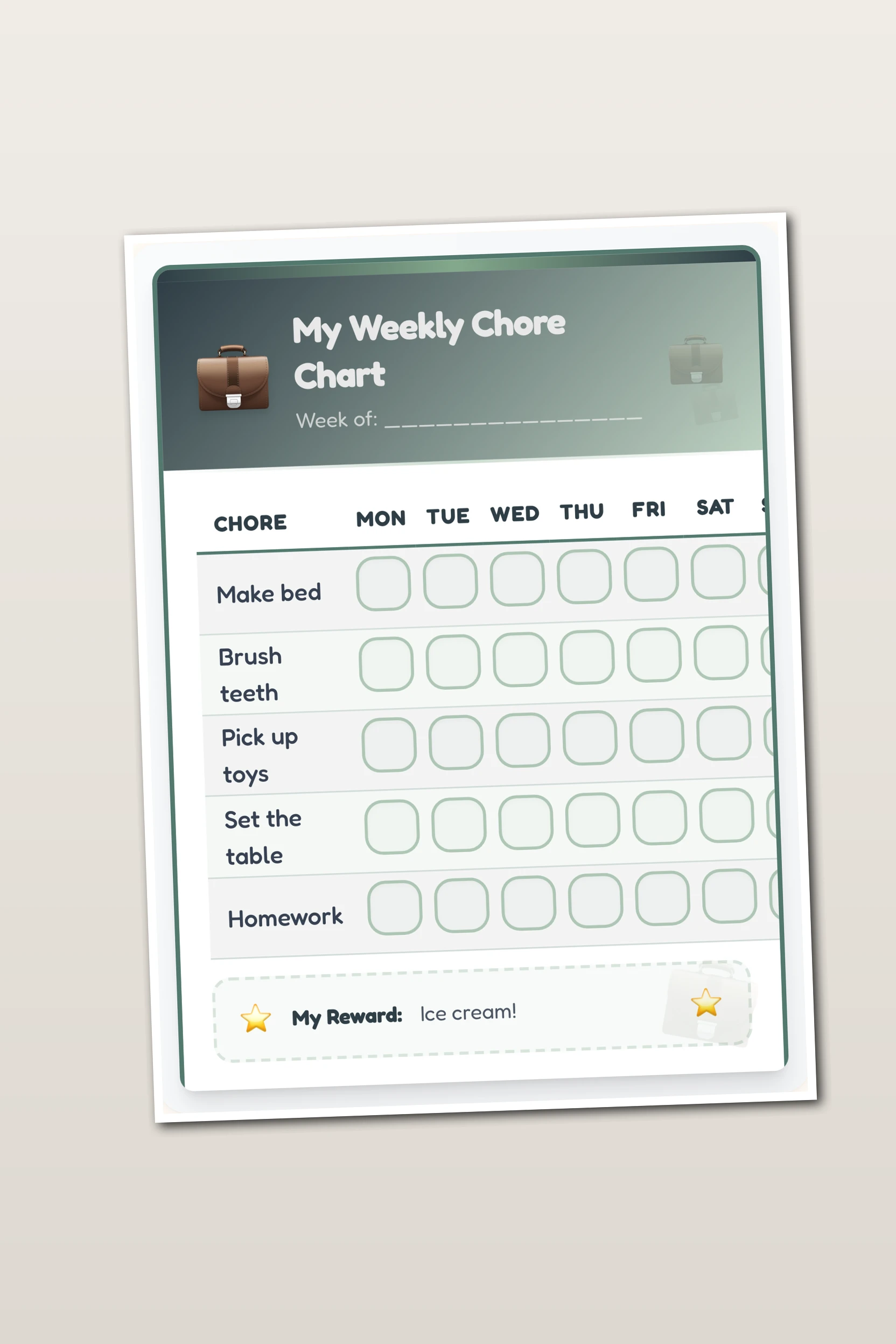
How to Make a Chore Chart That Actually Works (Step-by-Step Guide)
A practical, step-by-step guide to creating a chore chart your kids will actually use. Covers choosing the right format, age-appropriate tasks, and motivation strategies.
8 min read
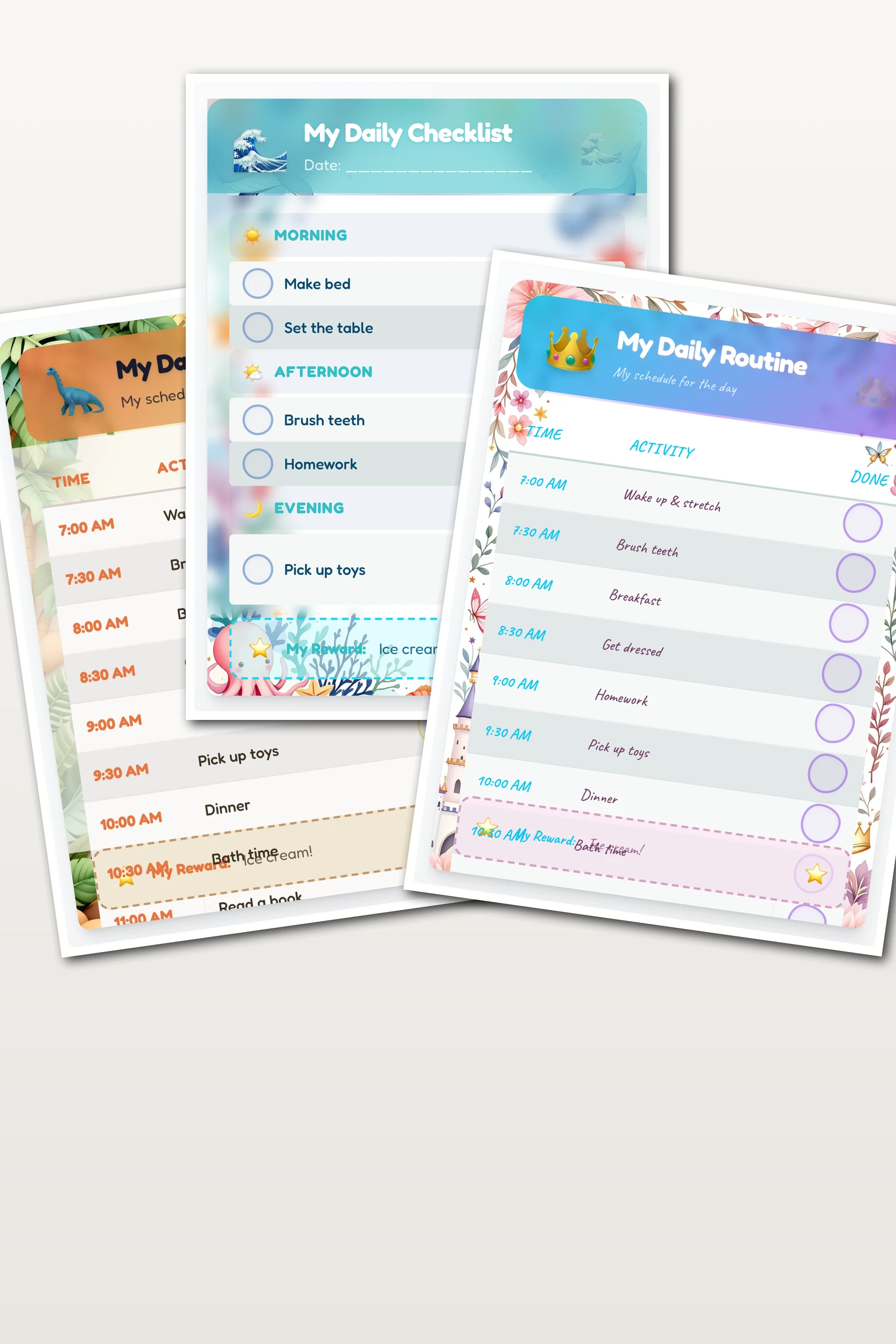
Building Lasting Habits With Chore Charts: The Parenting Science
How chore charts build lifelong habits in children — the psychology of routine, consistency, and intrinsic motivation explained for parents.
7 min read
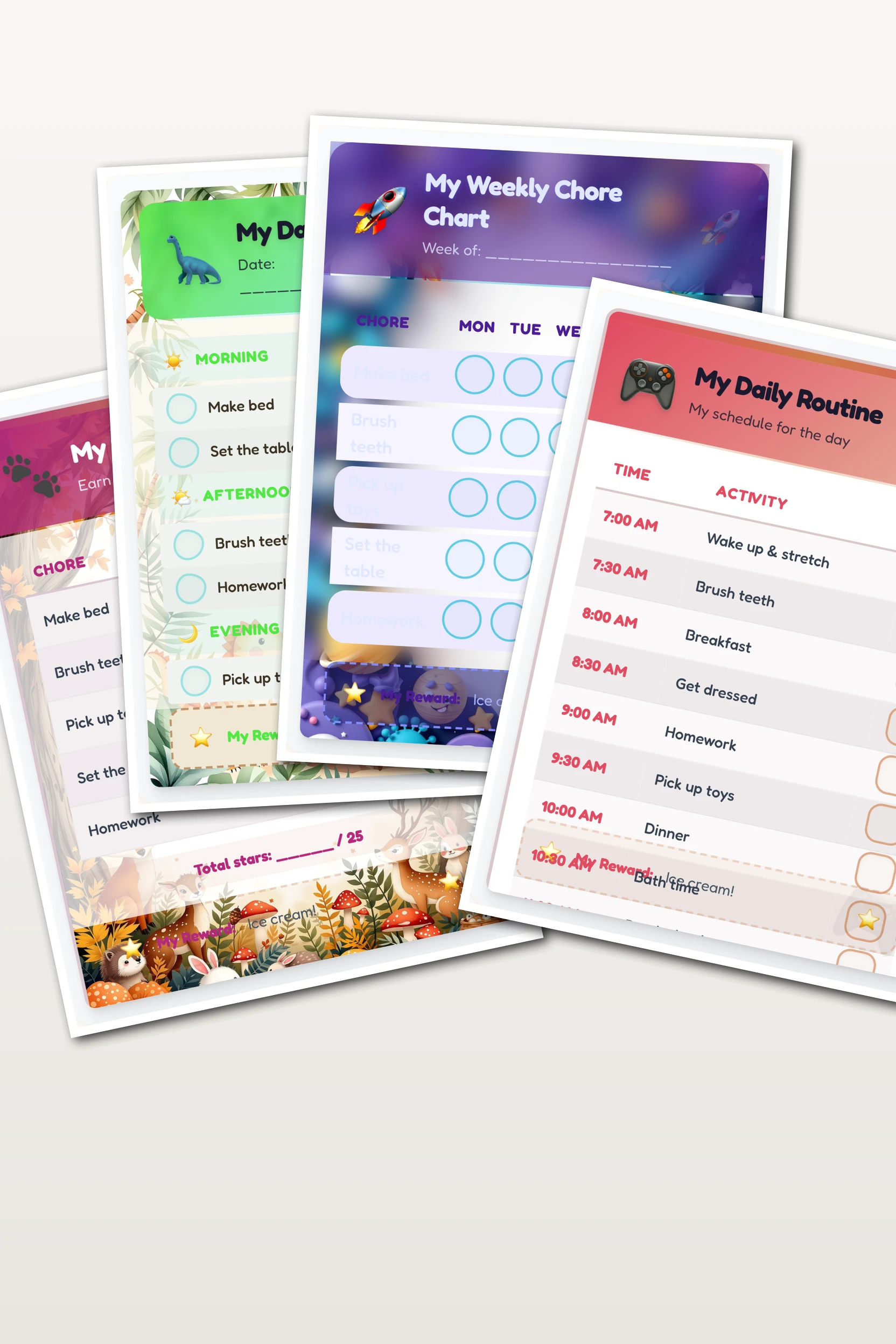
Age-Appropriate Chores for Elementary Kids (5-8)
A complete guide to chores for elementary-age children. Which tasks build responsibility at each age, plus strategies for pushback, allowance, and sibling fairness.
10 min read