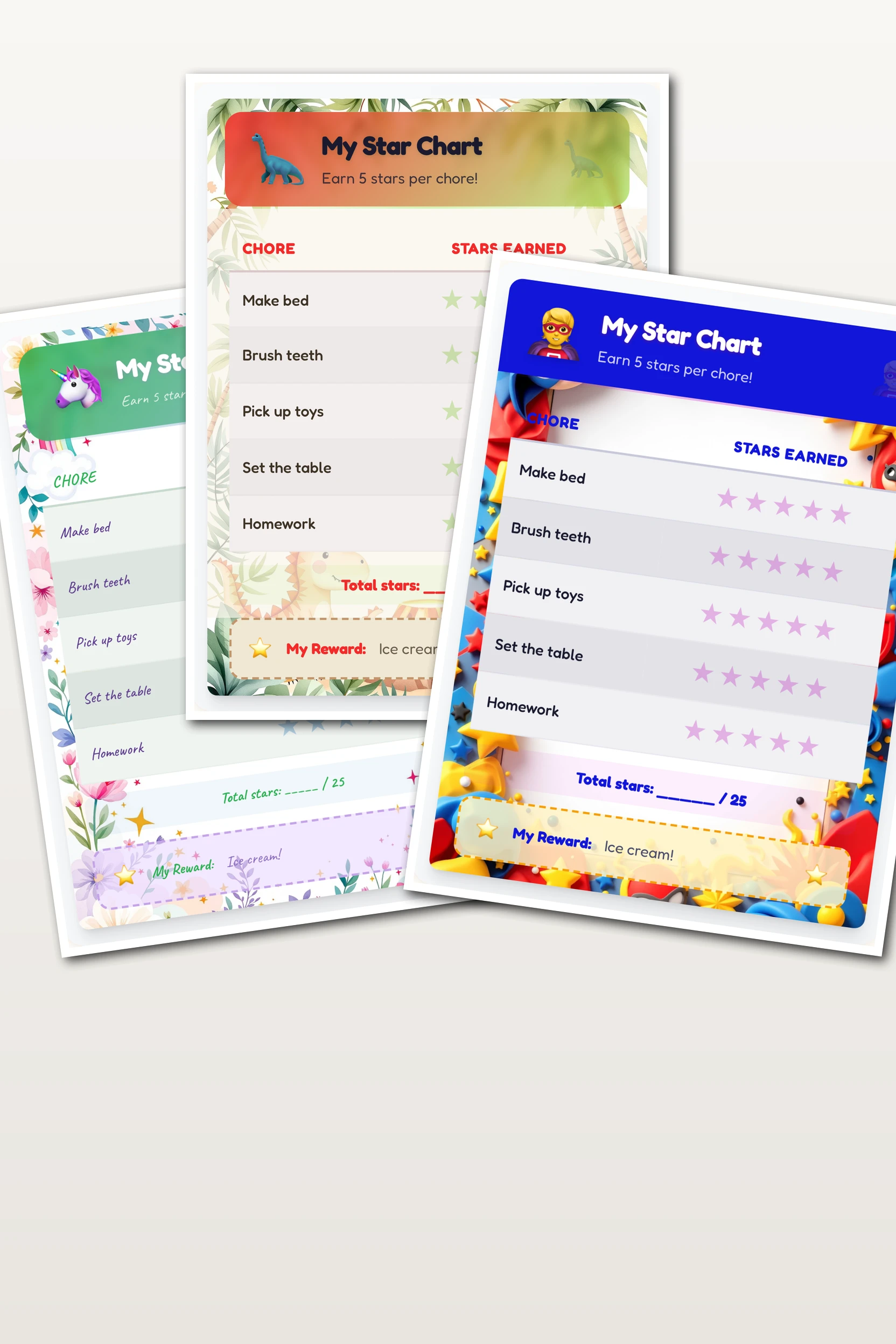
아이를 위한 행동 차트
아동 심리학에 기반한 인쇄용 템플릿 — 일상의 어려움을 아이들이 진심으로 자랑스러워하는 작은 성공으로 바꾸세요.
Why Behavior Charts Actually Work
If you have ever wondered whether sticking gold stars on a fridge chart actually changes anything, the research is reassuring. Behavior charts work because they tap into a principle psychologists call positive reinforcement — when a child receives recognition immediately after a desired action, the brain links that action with a reward, making it more likely to happen again.
Dr. Alan Kazdin, director of the Yale Parenting Center, has spent decades studying what he calls the Kazdin Method. The core idea is deceptively simple: instead of punishing bad behavior, you catch kids being good and reinforce it visually. A 행동 차트 gives that reinforcement a tangible, daily presence in your home.
For younger children (ages 2 to 5), the visual feedback of a sticker or star is powerful on its own — they can literally see their progress growing. Older kids (ages 6 to 12) benefit from the goal-setting aspect: earning a set number of stars toward a meaningful reward teaches delayed gratification and self-regulation.
The key insight from the research is consistency. A 행동 차트 only works if it is used every single day, at roughly the same time, for the same clearly defined behaviors. That is why having a printable template you can stick on the wall matters — it removes friction and keeps the system visible.
Types of Behavior Charts Compared
| Type | Best Age | How It Works | Best For |
|---|---|---|---|
| Star Chart | 2–8 | Child earns a star for each positive behavior. Stars accumulate toward a reward. | Daily habits like brushing teeth, getting dressed, saying please |
| Sticker Chart | 2–5 | Similar to 별 차트s but uses themed stickers the child picks. More tactile and engaging for toddlers. | Potty training, bedtime routines, sharing with siblings |
| Traffic Light Chart | 4–10 | Green / yellow / red zones track behavior throughout the day. Child moves between zones. | Classroom behavior, emotional regulation, screen-time limits |
| Token Economy | 6–12 | Child earns tokens (points, coins, checkmarks) redeemable for privileges or items. | Chores, homework completion, long-term goals like saving for a toy |
아이의 나이와 장려하고 싶은 구체적인 행동에 맞는 유형을 선택하세요.
Recommended Age Range
행동 차트는 2~12세 아이들에게 가장 효과적입니다. 유아는 즉각적인 칭찬이 동반된 간단한 별 차트나 스티커 차트에 가장 잘 반응하고, 학령기 아이들은 더 큰 보상을 향해 쌓아가는 토큰 시스템에서 잘 성장합니다.
5단계로 행동 차트 설정하는 방법
- 1
구체적인 행동 3~5가지 선택하기
구체적으로 쓰세요. "착하게 행동해"가 아닌 "방과 후 신발을 신발장에 넣기"나 "저녁 식사 시 조용한 목소리 사용하기"처럼 쓰세요. 아이들은 무엇을 해야 별을 받는지 정확히 알아야 합니다. 가끔은 이미 할 수 있는 행동부터 시작하세요 — 초반의 성공 경험이 중요합니다.
- 2
차트 스타일을 선택하고 인쇄하기
아이가 신나할 테마 템플릿을 선택하세요 — 공룡, 유니콘, 슈퍼히어로. 인쇄해서 냉장고나 침실 문처럼 눈에 보이는 곳에 걸어두세요. 차트는 아이가 주인의식을 느낄 수 있도록 아이 눈높이에 있어야 합니다.
- 3
Explain the rules together
아이와 함께 앉아 차트를 살펴보세요. 어떤 스티커나 마커를 사용할지 결정하는 데 도움을 주게 하세요. 한 줄을 채우거나 목표 별 수에 도달했을 때 보상이 무엇인지 합의하세요. 보상을 차트에 직접 쓰세요.
- 4
Reinforce immediately and consistently
아이가 목표 행동을 완료하는 순간, 소리 내어 인정하고 함께 별을 붙이세요. 구체적인 말을 하세요: "시키지 않았는데 혼자 그릇을 싱크대에 가져다 놨네 — 별을 받을 만해!" 타이밍이 보상 자체보다 더 중요합니다.
- 5
매주 검토하고 조정하기
매주 말에는 보상을 완전히 받았는지에 관계없이 진전을 축하하세요. 어떤 행동이 이제 일관되게 일어나고 있다면, 새로운 것으로 바꾸세요. 차트가 아이와 함께 성장하도록 기대치를 점차 높여가세요.
인쇄 가능한 행동 차트 템플릿
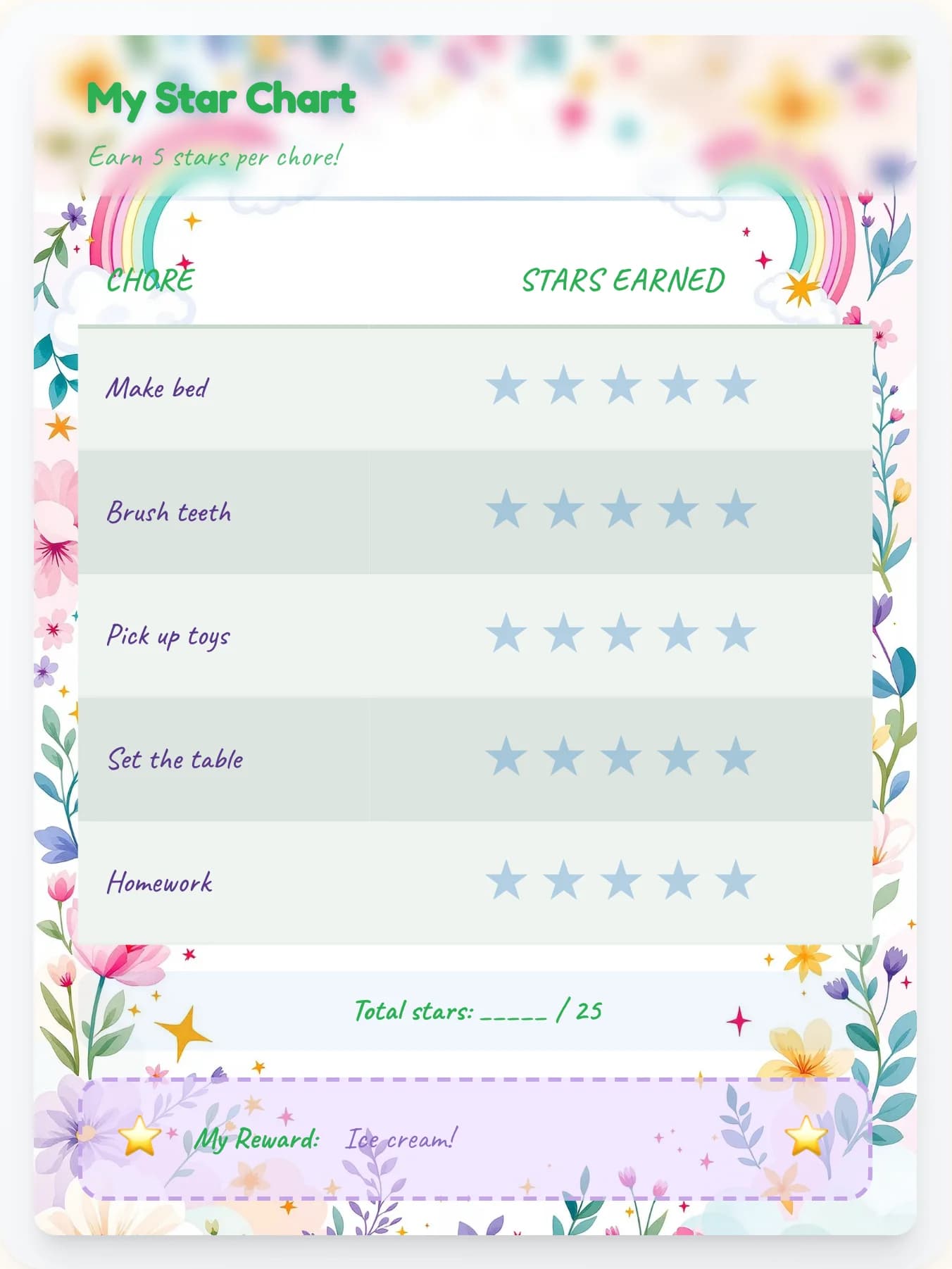
Zen Unicorn Star Tracker
Zen Unicorn Star Tracker — a 3d clay style star chart with unicorn theme. Unique colors and layout for kids.
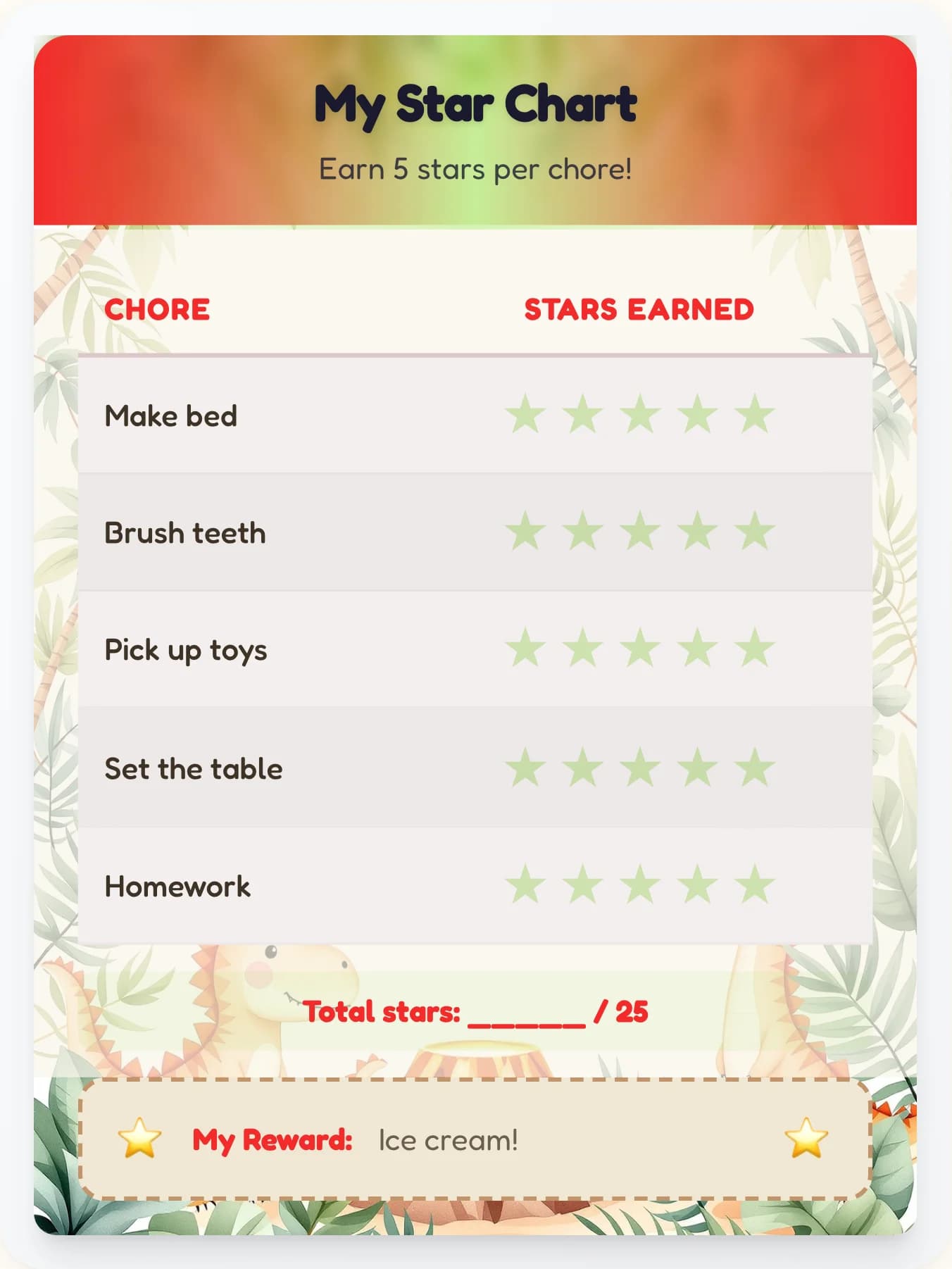
Bright Dinosaur Star Tracker
Bright Dinosaur Star Tracker — a 3d clay style star chart with dinosaur theme. Unique colors and layout for kids.
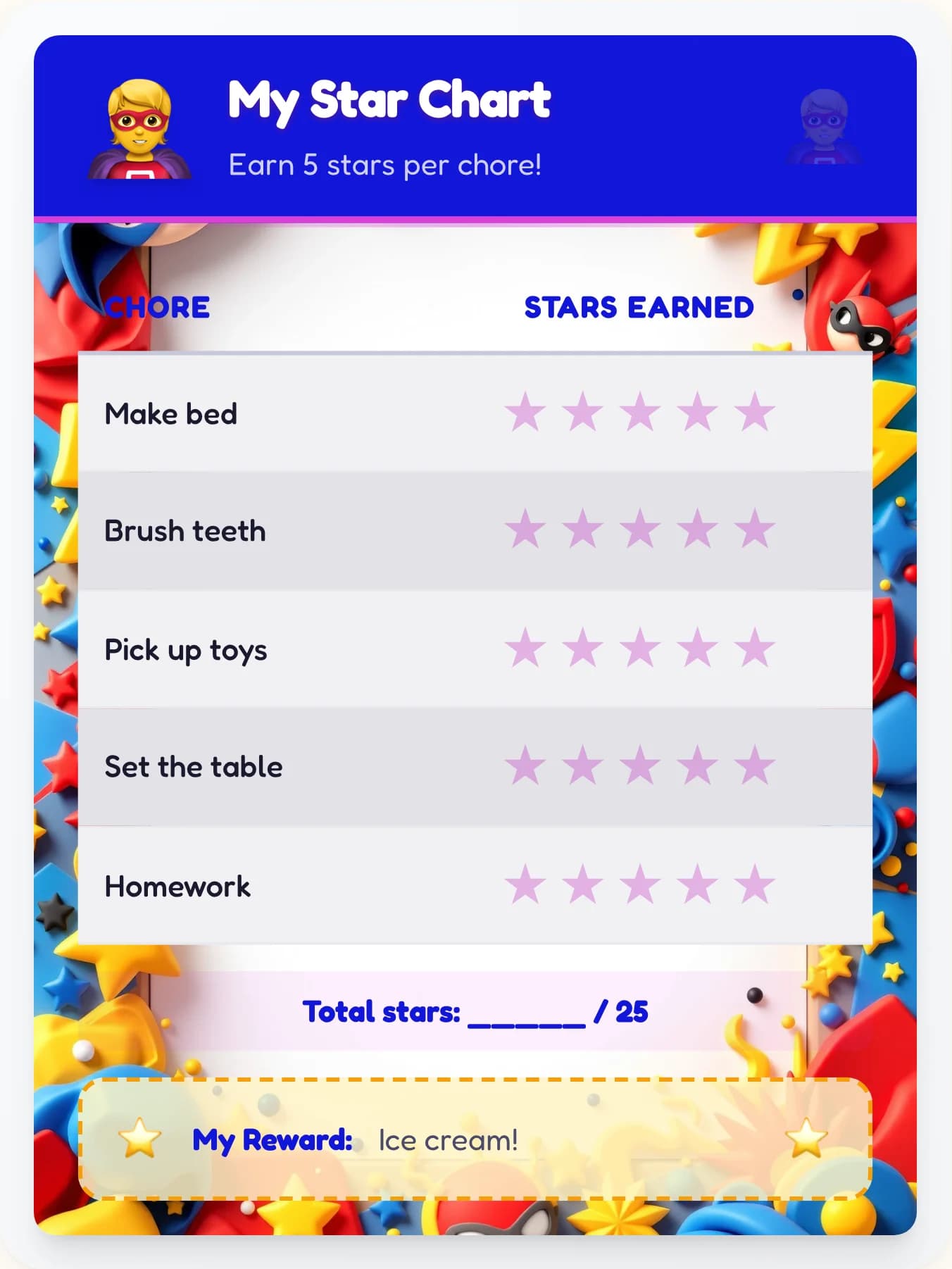
Natural Superhero Star Board
Natural Superhero Star Board — a 3d clay style star chart with superhero theme. Unique colors and layout for kids.
부모들이 행동 차트에서 흔히 저지르는 실수
한 번에 너무 많은 행동을 추적하면 아이들이 압도됩니다 — 3~5가지에 집중하세요. 이미 받은 별을 벌로 빼앗지 마세요; 그건 시스템에 대한 신뢰를 파괴합니다. '착하게 행동해'처럼 아이들이 실행할 수 없는 모호한 목표를 피하세요. 보상을 너무 멀리 설정해서 동기가 식지 않도록 하세요 — 어린 아이들은 몇 주가 아닌 1~3일 안에 보상이 필요합니다. 그리고 아마도 가장 큰 실수: 일주일 후에 포기하기. 행동 변화는 자리를 잡기 전까지 매일 3~6주의 일관성이 필요합니다.
행동 차트를 언제 사용해야 하는지(그리고 언제 사용하지 말아야 하는지)
Behavior charts shine for building daily habits and routines: morning preparation, homework time, bedtime steps, table manners, and chore completion. They also work well for specific behavioral goals like reducing screen-time arguments, encouraging sharing, or building independence with self-care tasks like brushing teeth.
However, a 행동 차트 is not the right tool for everything. Emotional struggles like anxiety, grief, or anger outbursts are better addressed with empathy, conversation, and sometimes professional support — not a star on a chart. Similarly, behaviors rooted in developmental stages (a two-year-old having tantrums, for example) are normal and not something to "chart away."
A good rule of thumb: if the behavior is something your child can control and choose to do, a chart can help. If it is something they are struggling with emotionally or developmentally, they need support rather than a tracking system. When in doubt, pair the chart with lots of verbal encouragement and never frame missed stars as failure.
자주 묻는 질문
시작할 준비가 되셨나요?
아이들이 좋아할 재미있는 테마의 인쇄용 별 차트 전체 컬렉션을 둘러보세요. 오늘 하나 인쇄해서 오늘 밤부터 긍정적인 행동 추적을 시작하세요.
모든 행동 차트 템플릿 둘러보기관련 글
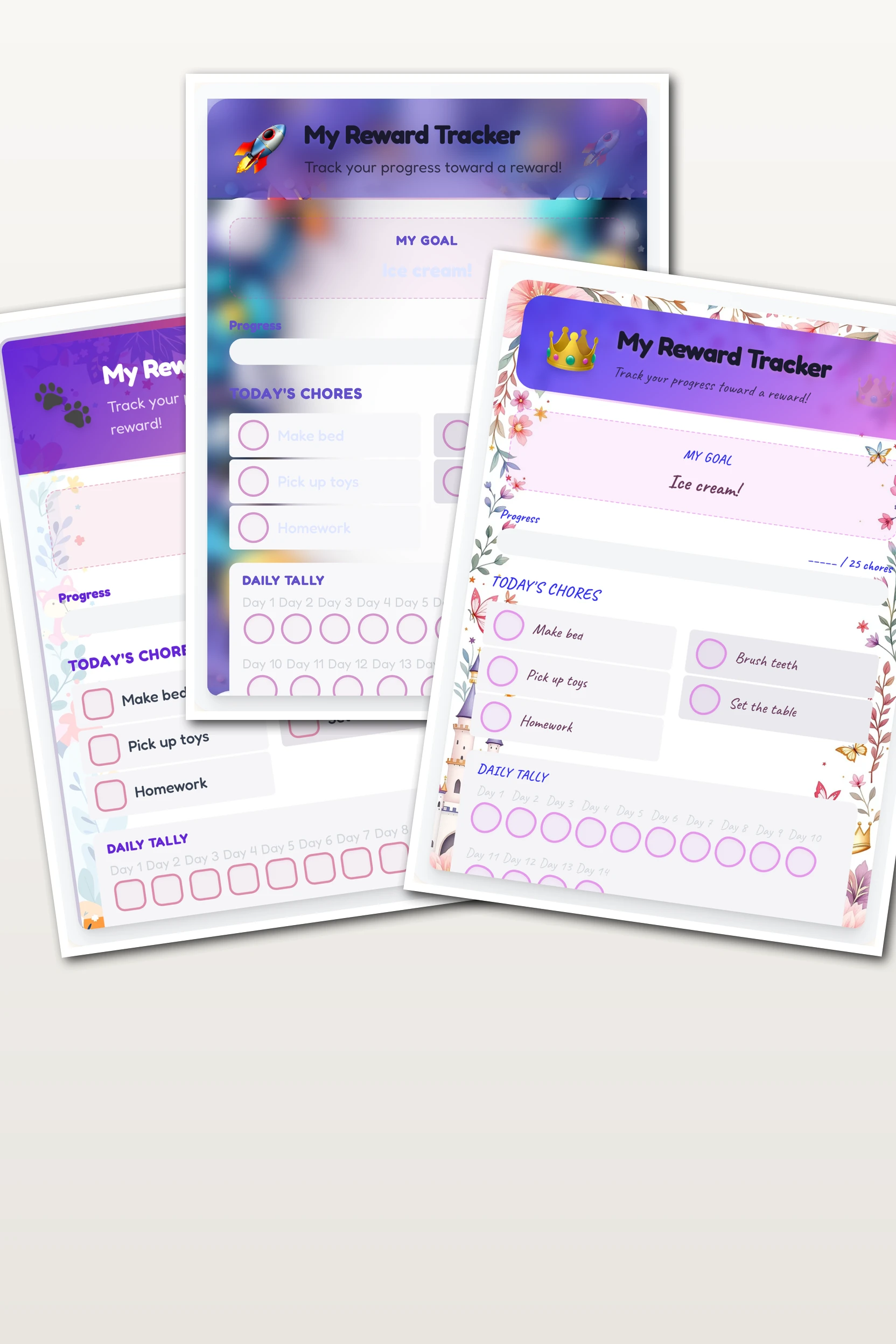
아이 집안일 차트를 위한 최고의 보상 시스템 (연령 그룹별)
어떤 보상이 실제로 아이들이 집안일을 하도록 동기를 부여할까요? 유아를 위한 스티커부터 십대를 위한 특권까지 연령 그룹별 전문가 보상 전략.
7분 읽기
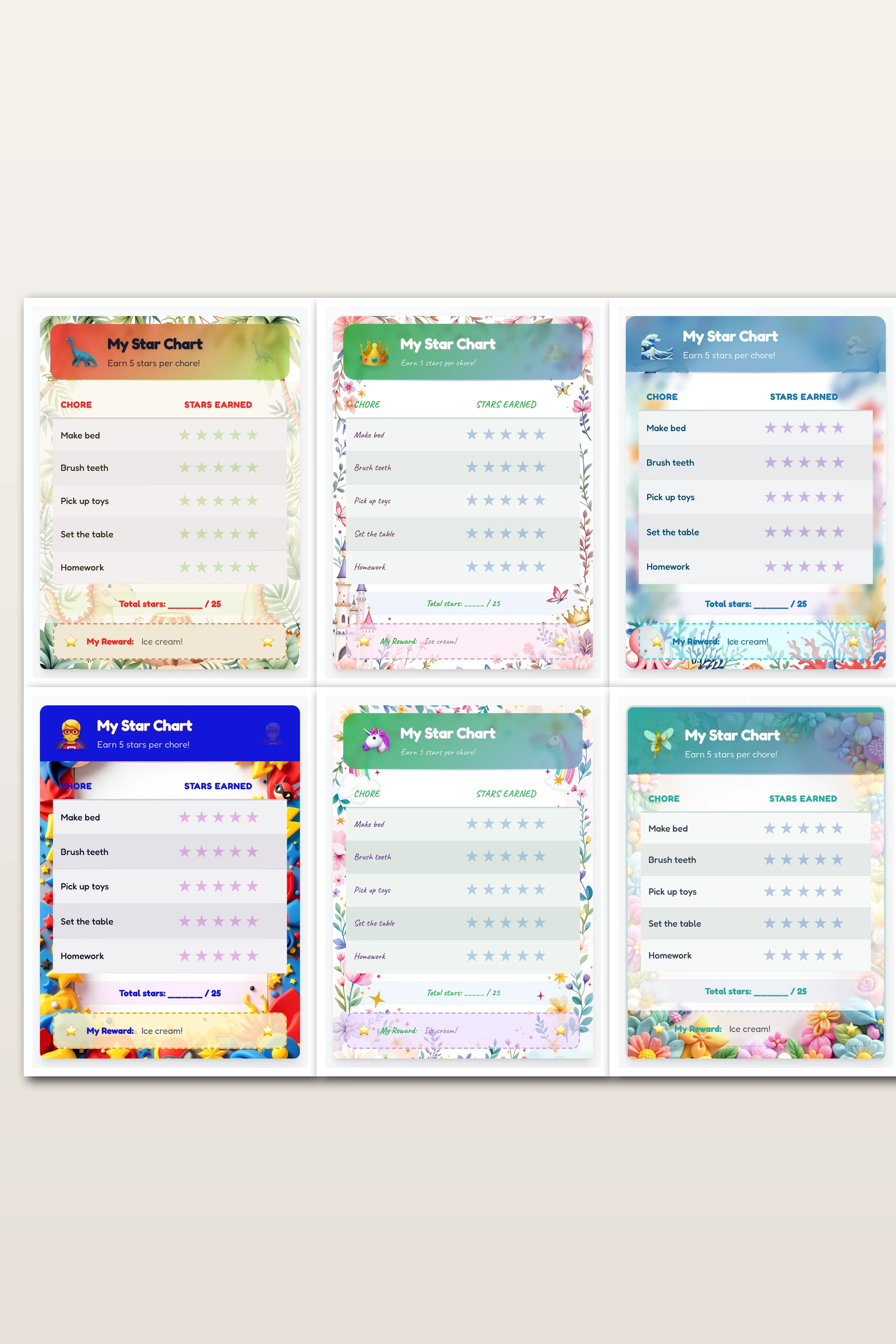
아이를 위한 별 차트: 스티커 보상 시스템 완전 가이드
별 차트와 스티커 보상 시스템에 대해 알아야 할 모든 것. 작동 방식, 사용 시기, 아이 나이에 가장 적합한 형식.
7분 읽기
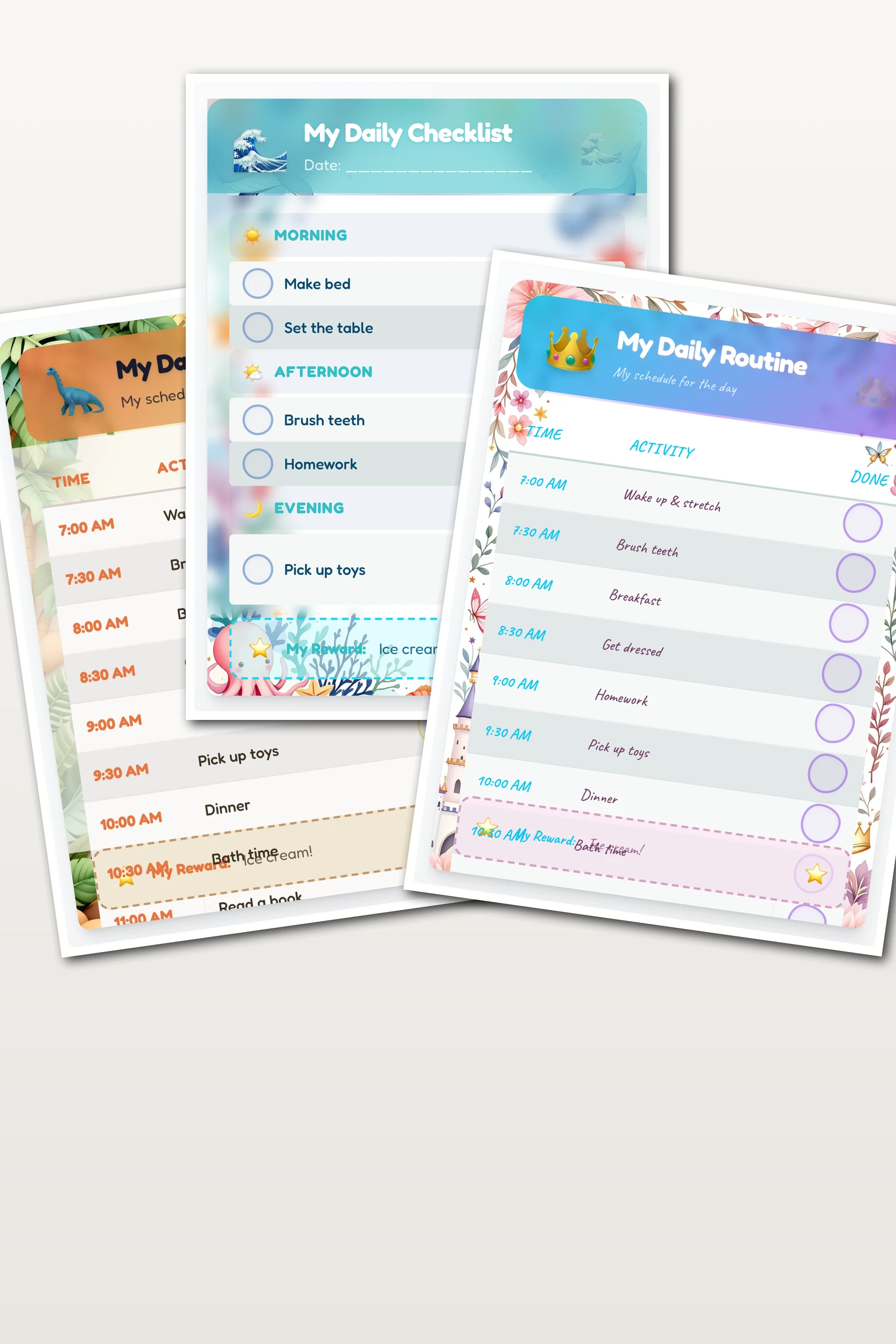
집안일 차트로 지속적인 습관 만들기: 육아 과학
집안일 차트가 아이들에게 평생 지속되는 습관을 만드는 방법 — 부모를 위해 설명된 루틴, 일관성, 내적 동기의 심리학.
7분 읽기
핵심 요점
- 구체적이고 명확하게 정의된 3~5가지 행동으로만 시작하세요 — '신발 치우기'가 '착하게 행동하기'보다 항상 효과적입니다.
- 벌이 아닌 긍정적 강화를 사용하세요. 이미 받은 별은 절대 빼앗지 마세요; 대신 원하는 행동에 대해 별을 추가하세요.
- 아이가 신나할 테마의 인쇄용 차트를 선택하여 아이 눈높이에 걸어두면 주인의식이 극대화됩니다.
- 즉시 강화하세요 — 행동이 일어나는 순간 별을 추가하고, 구체적인 말 칭찬과 함께 하세요.
- 행동이 자동으로 이루어지길 기대하기 전에 최소 3~6주간 일관성을 유지하세요.
- 행동이 습관이 되면 순환하고 아이가 성장함에 따라 보상을 조정하세요 — 차트는 아이와 함께 발전해야 합니다.